1925 – 2019
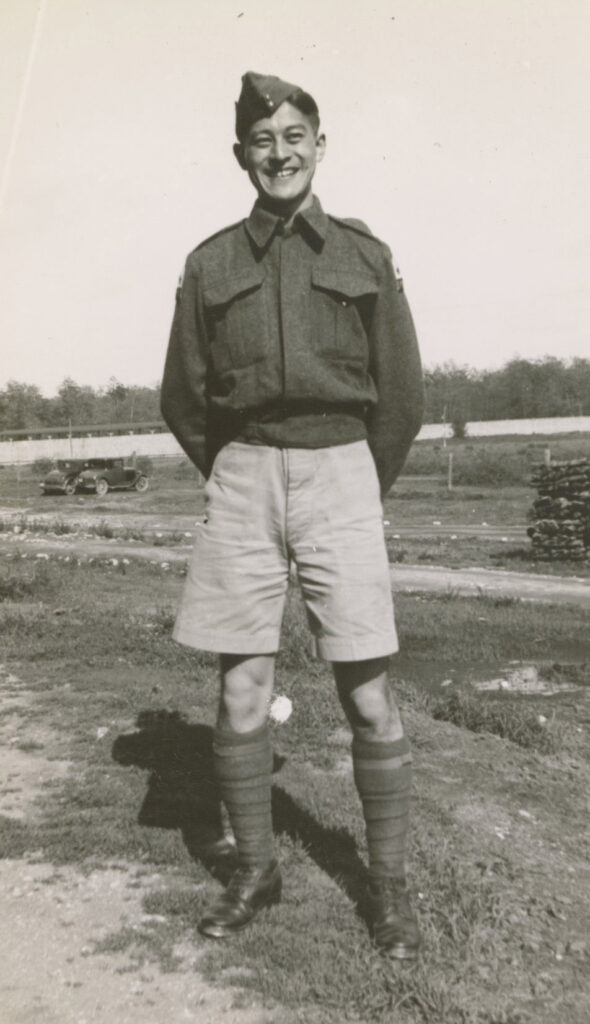
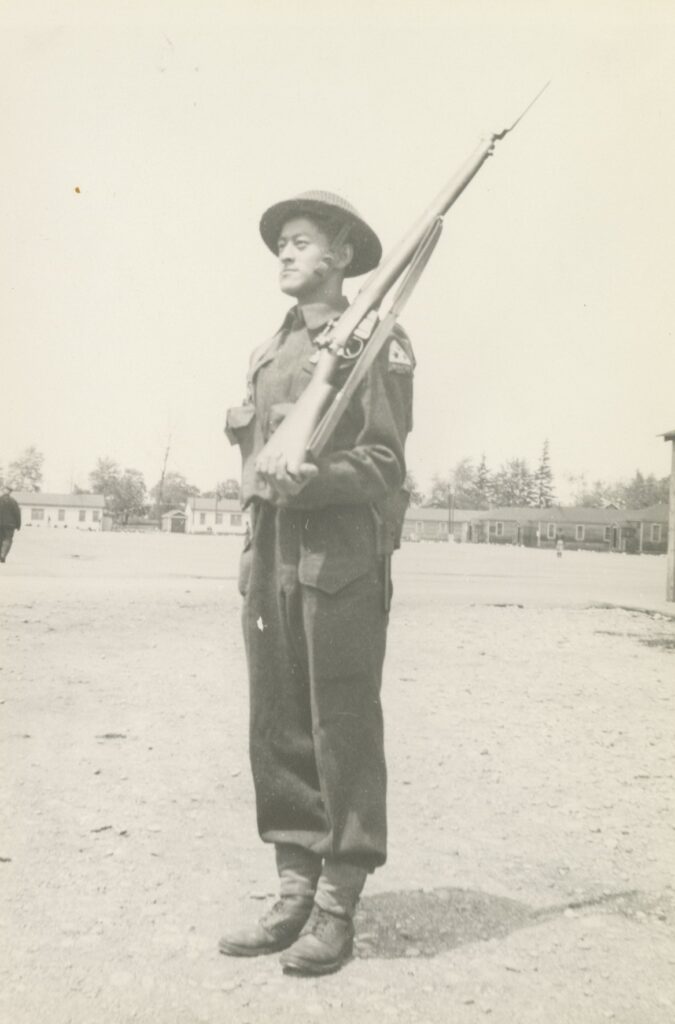
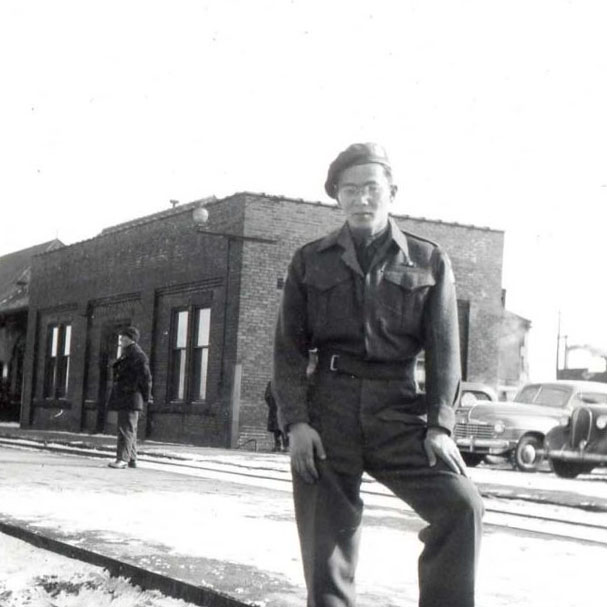
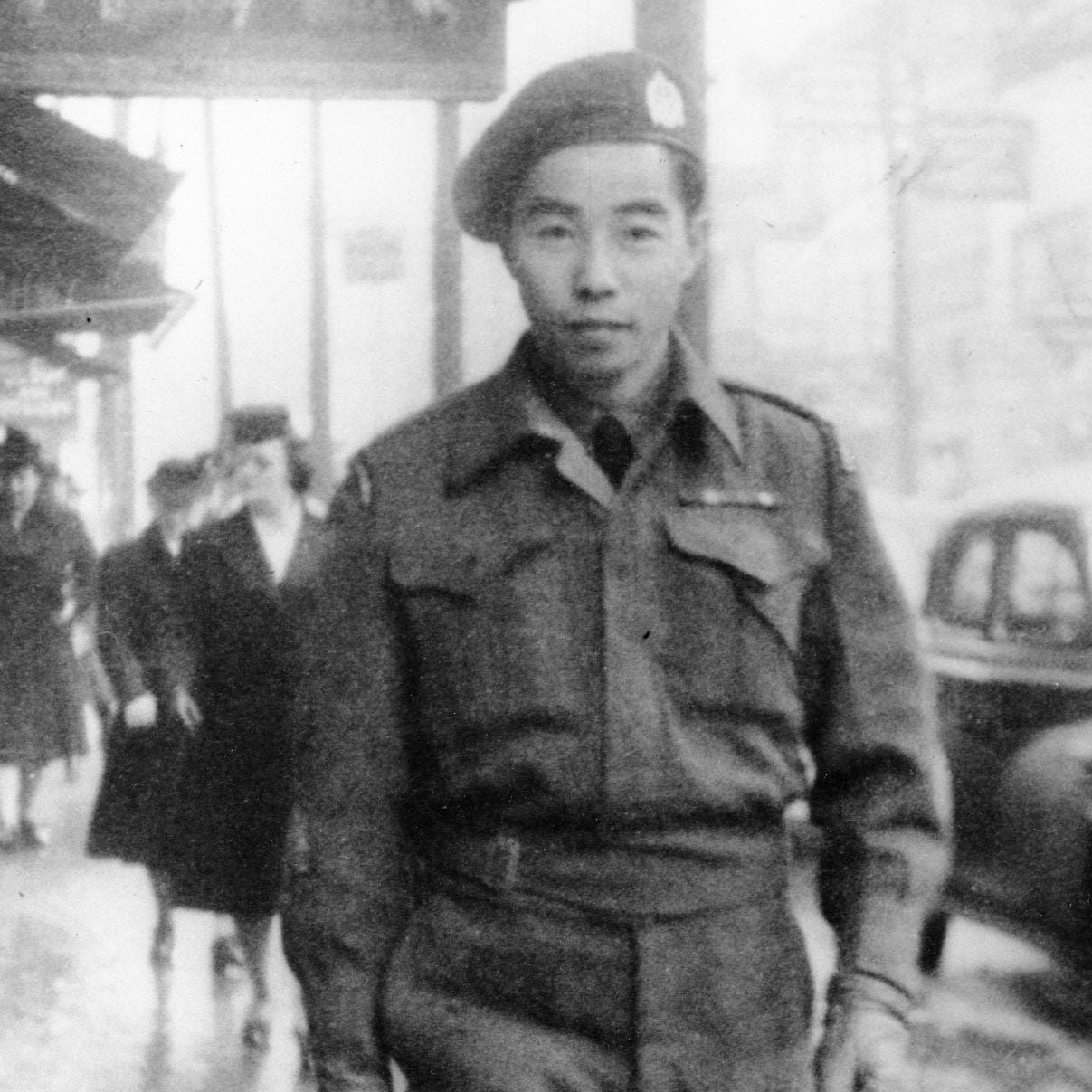
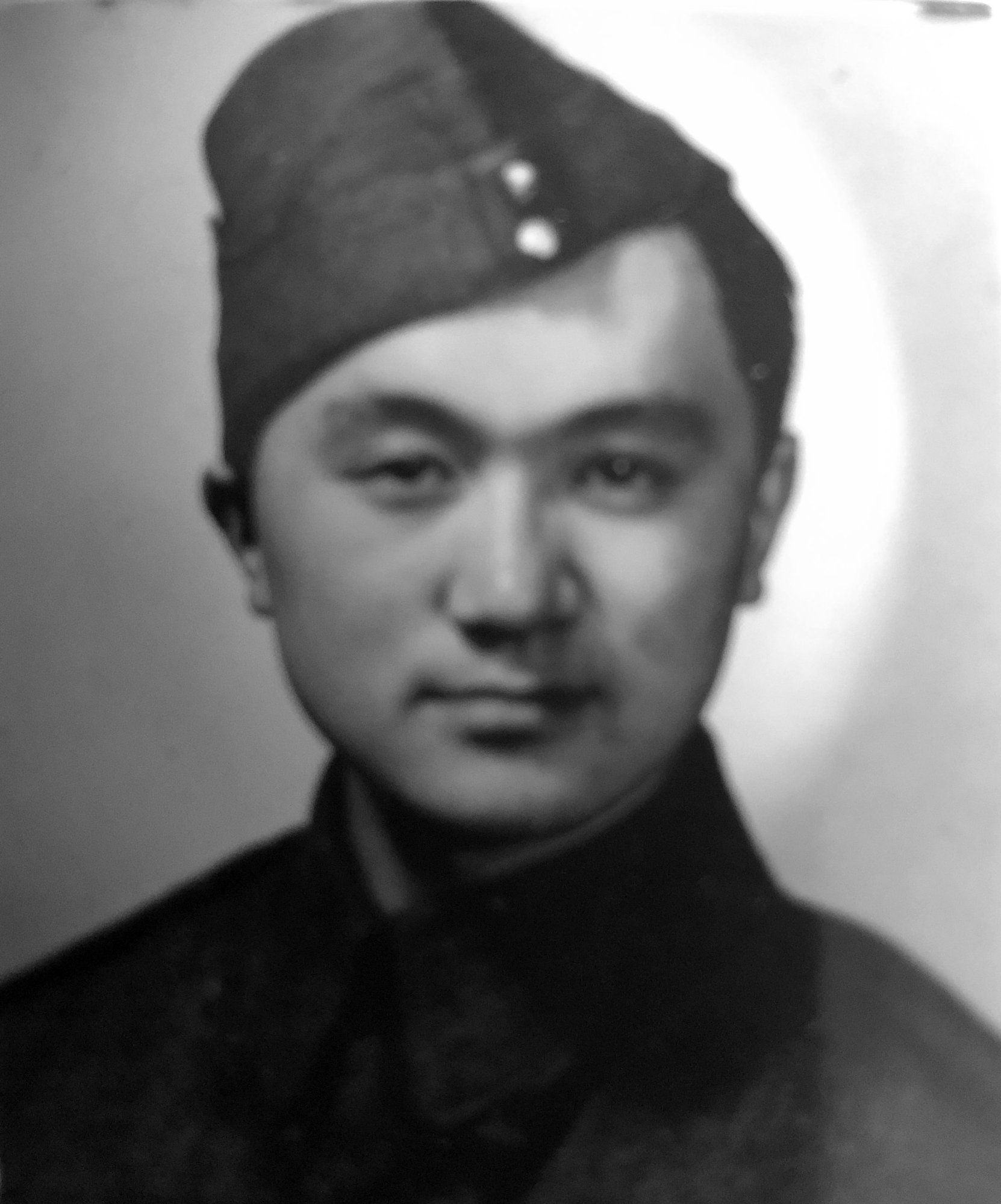
Roy Matsui (1925-2019) was born in the Vancouver suburb of Marpole to issei parents from Unoshima, Fukuoka-ken, a small town near Beppu (Sedai interview, August 16, 2010, JCCC). At the time of internment, they were Japanese nationals, not naturalized Canadians. Roy was the youngest of seven children.
In Vancouver, Roy’s father worked at the Canada Box factory and his mother worked in a laundry (Sedai interview, August 16, 2010, JCCC). The family lived in Unoshima for a year in the mid-1930s. Roy remembered being bullied by fellow schoolmates in Japan because of the prevailing anti-western sentiment (Sedai interview, August 16, 2010, JCCC, 21:00). They returned to Marpole and later moved to Kerrisdale. Roy and his family were forcibly uprooted from Kerrisdale to Sandon during the Second World War. Roy was eager to leave Sandon (Sedai interview, August 16, 2010, JCCC, 50:00), and as soon as possible, he left on the train for Toronto, where he found work at an electrical company that hired many nisei. Accustomed to racism in Vancouver, he and his roommate encountered similar attitudes when they tried to rent accommodation (Sedai interview, August 16, 2010, JCCC, 52:00).
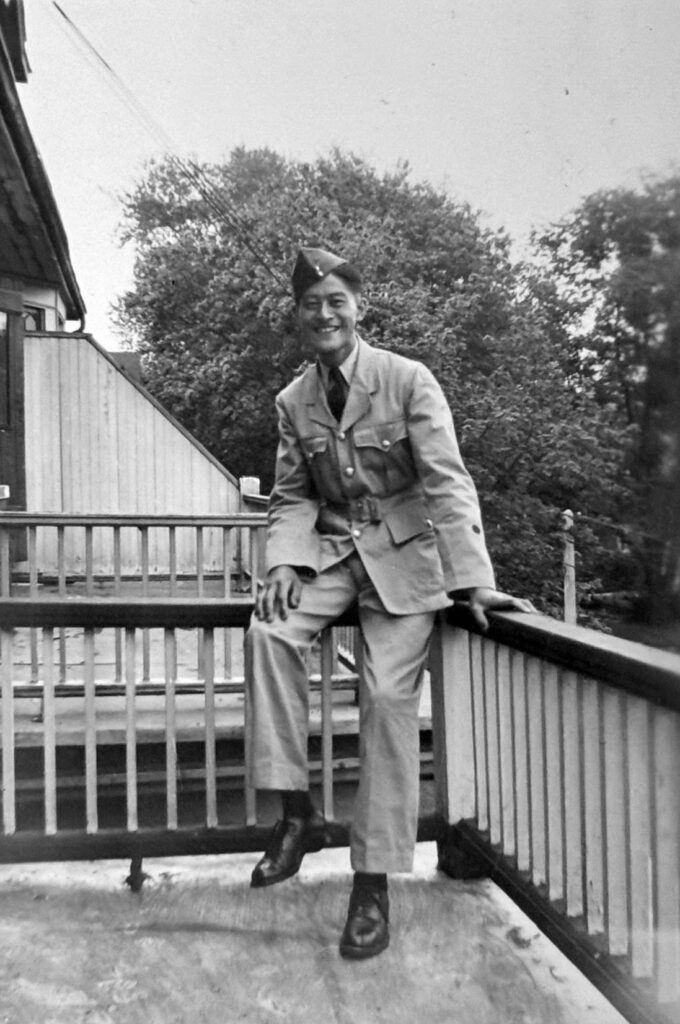
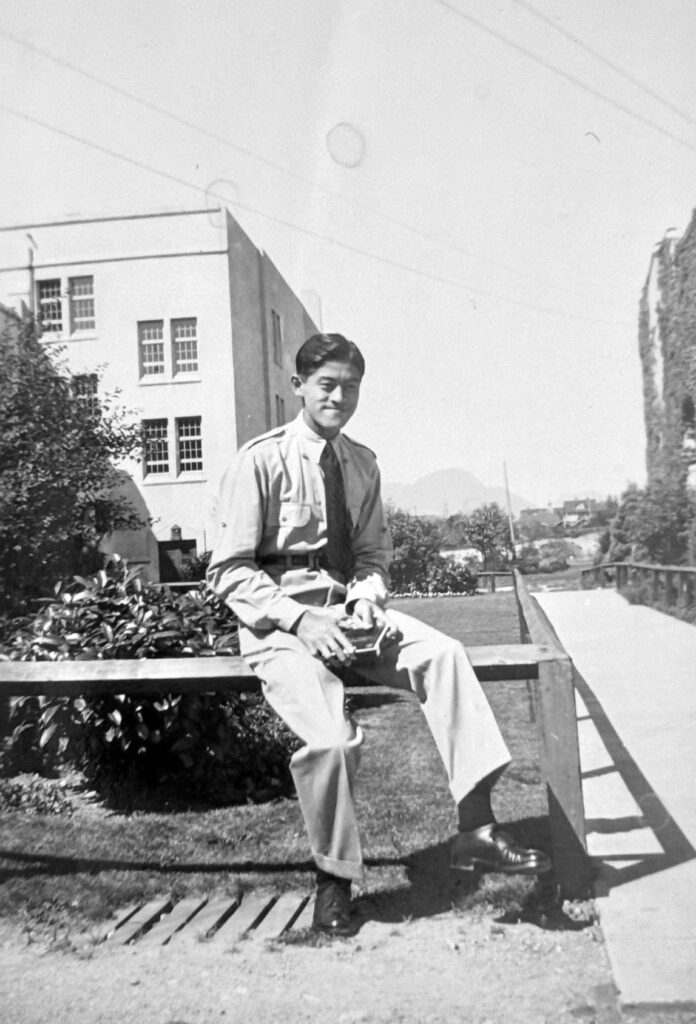
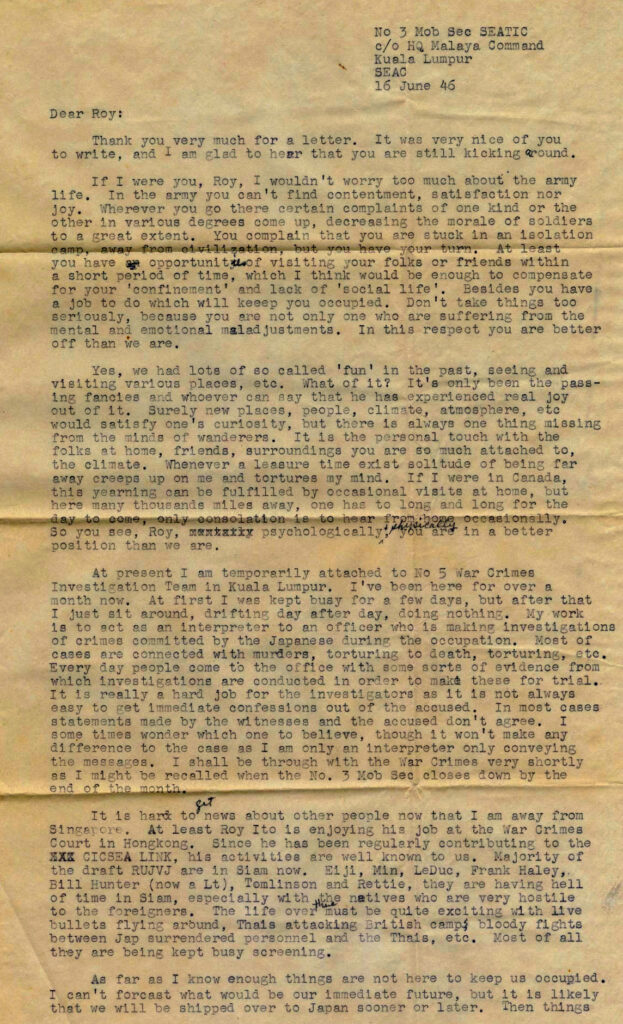
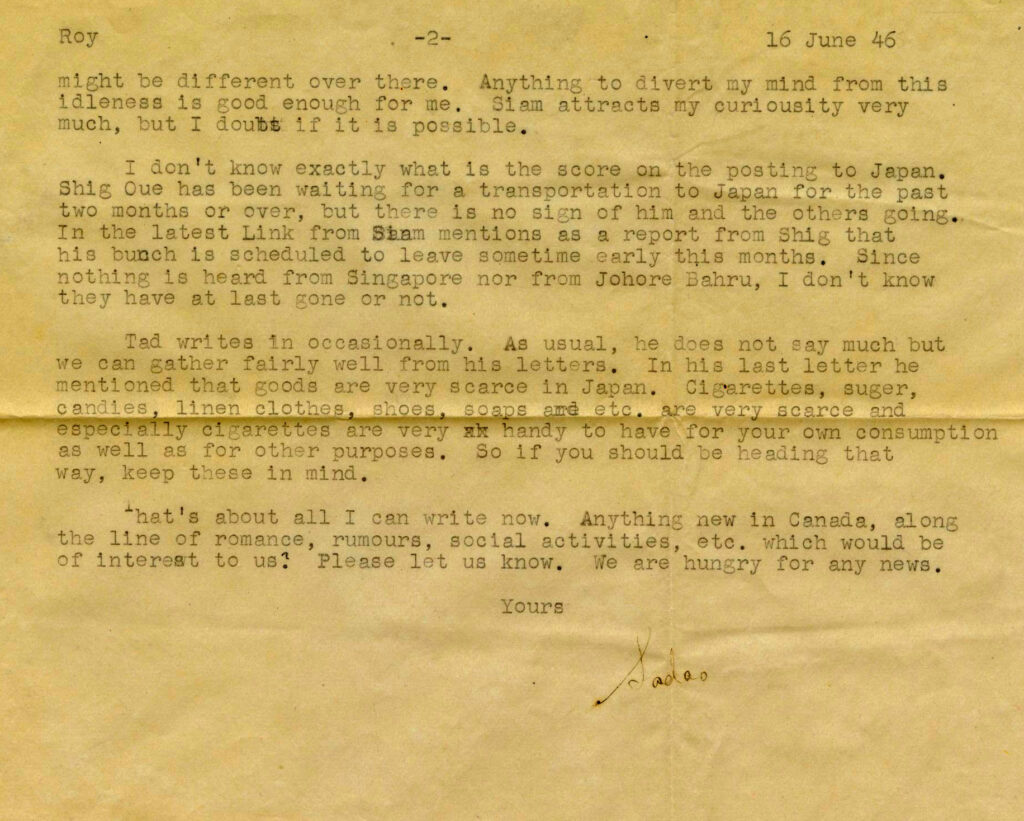
In January 1945, the Canadian Army began recruiting nisei, and Roy and his friends enlisted (Sedai interview, August 16, 2010, JCCC, 1:00:00) in Toronto. His parents were extremely angry about his enlistment (Sedai interview, August 16, 2010, JCCC, 1:12:00). He attended basic training in Brantford, Ontario and was sent to Vancouver’s S-20 Japanese Language School, where his schooling in Japan landed him in the advanced class (Sedai interview, August 16, 2010, JCCC) of six nisei students. After graduating at the end of September, the group was granted leave to Ontario, and Roy requested an extension. On his return, he was upset that his five fellow students had been deployed to southeast Asia without him, and he had been assigned as the interpreter at the Angler P.O.W. camp in northern Ontario (Sedai interview, August 16, 2010, JCCC, 1:08:00). Roy received letters of support from two of the deployed S-20 students, Eiji Yatabe and Sadao Nikaido, urging him to see the positive aspects about his posting.
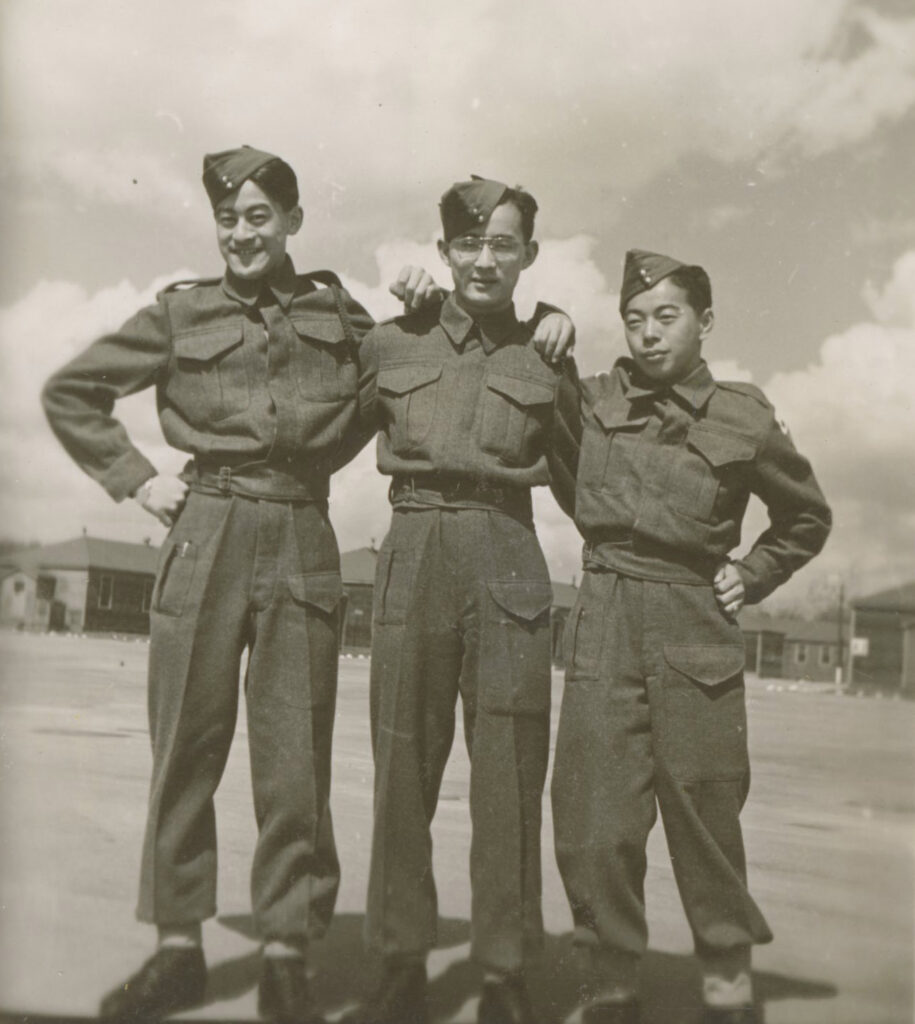
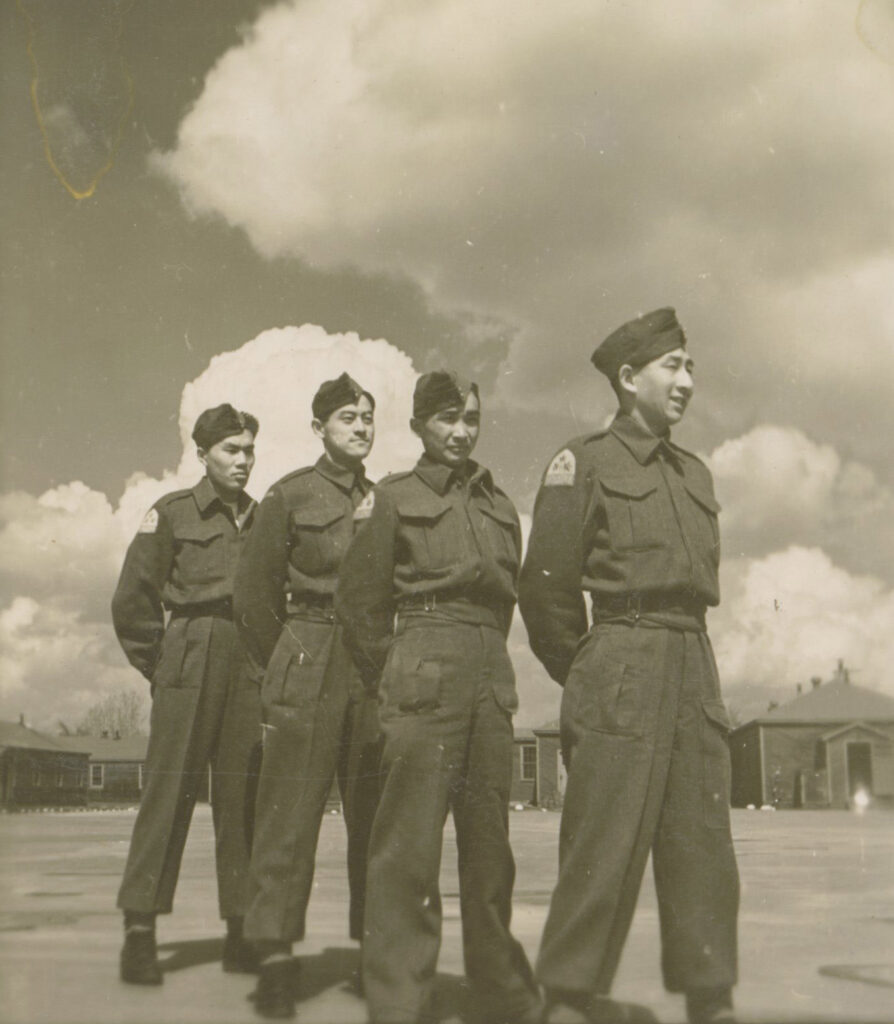
The inmates at Angler were issei and nisei who were not actual prisoners of war. They were imprisoned for protesting separation from family members and for loss of their basic rights (Okazaki book POW Camp 101, 1996; Nikkei Voice article by Megan Koyanagi, 21 March 2023), had not been charged with a crime and had not stood trial. He was acquainted with some of the prisoners already, including several of his Japanese language school teachers.
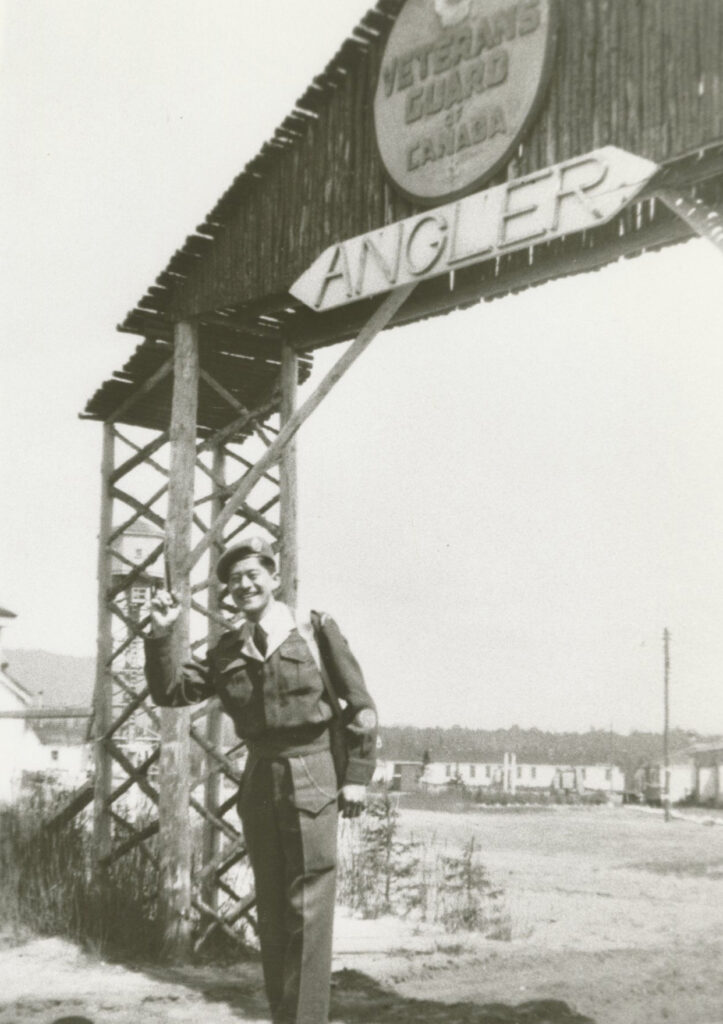
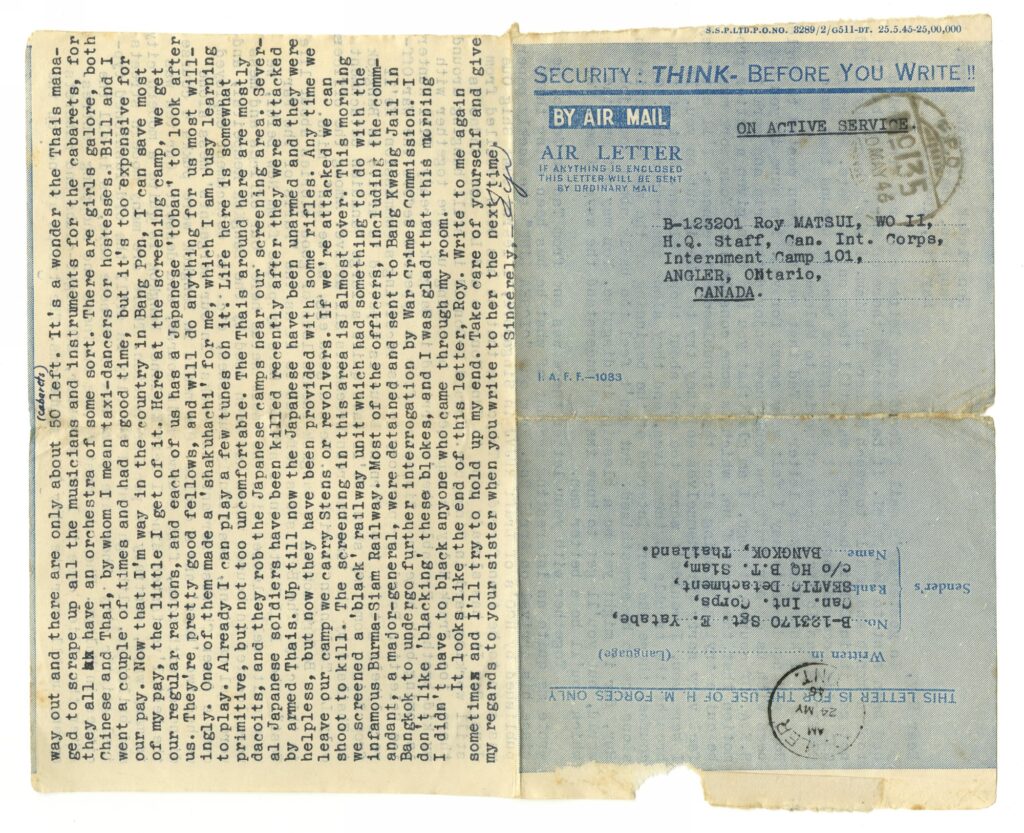
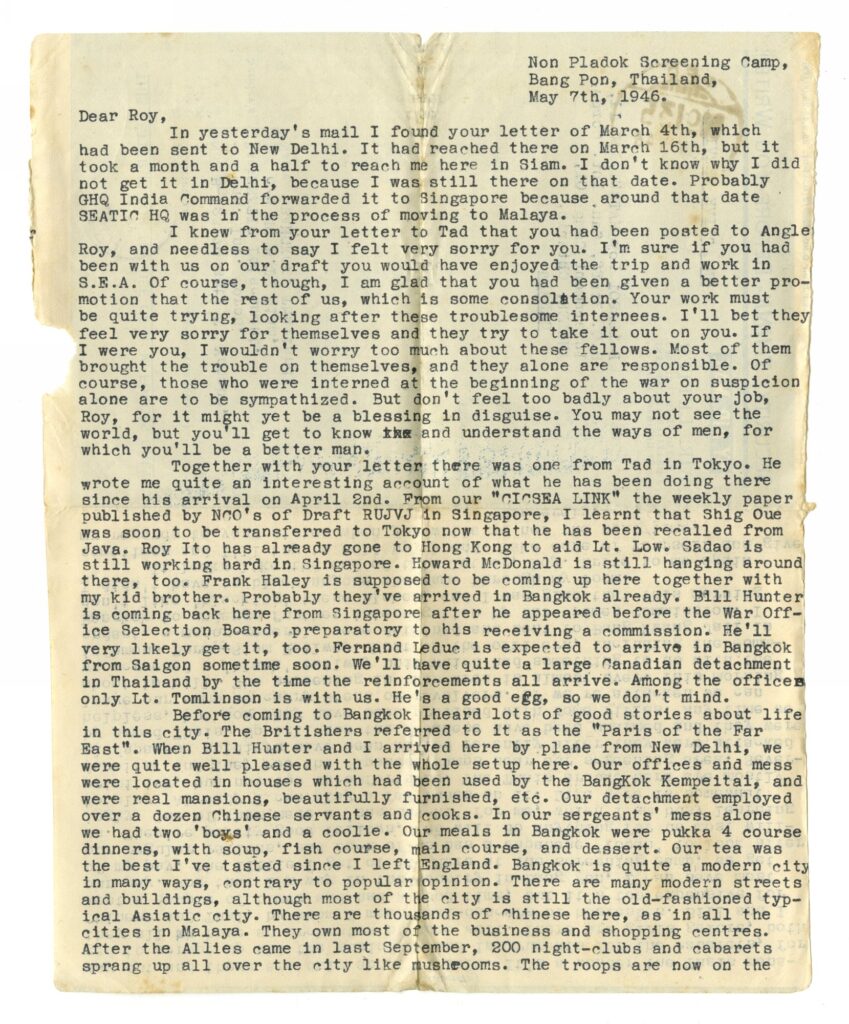
Angler closed in April 1946 and Roy returned to civilian life. He became an architect and worked on various projects in the Toronto area. He married Mary Mizutani while attending university. Mary’s family was from Vancouver, but they escaped wartime internment by moving to Toronto. Over his 40-year career, Roy’s projects included hotels, office buildings, schools, prisons, libraries, community centres and churches in Ontario and overseas. His daughter Naomi recalls many family fishing trips in Northern Ontario and regular ski vacations in the Laurentians. Roy, a jazz fan, amassed a large Big Band record collection from the 1940s and 1950s.
His final project was as architect for the Momiji Centre (Sedai interview, 2010, 1:30:00), a retirement home for Japanese Canadian senior citizens. After retirement, Roy and Mary participated in downhill skiing until their late 80s. They enjoyed fine dining, travelled the world in their 70s and 80s, and made two trips to Japan, in 1997 and 2001 (Sedai interview, 2010).
He was a recipient of the Massey Medal in 1968 and the Governor General’s Medal in 1980 (Momiji Matters, Fall 2019).