May 20, 1920 – July 8,1978
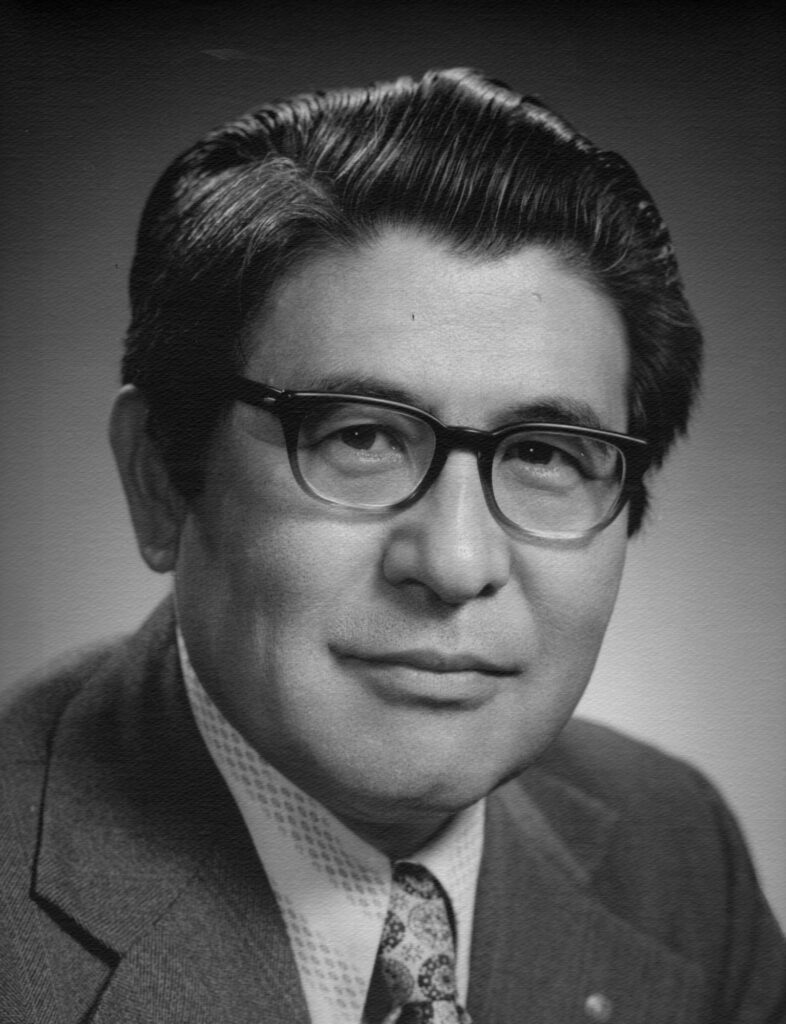
Shig Oue was born in Vancouver, BC. His father Shigeyoshi Hane Oue, from Chichioni, Osaka Prefecture, arrived in Vancouver in 1907. His mother Shima Maikawa, born in Matsubara, Shiga Prefecture, was the youngest sister of Tomekichi Maikawa, owner of the T. Maikawa General store on Powell Street in Vancouver. Shig attended school in Vancouver, graduating from Grandview High School of Commerce. He was a bookkeeper-accountant at T. Maikawa Stores Limited when the forced removal of Japanese Canadians began.
The Maikawa and Oue families went to the Bridge River self-supporting camp in May 1942 during the internment years. They stayed as a group with other families and rented part of the hotel at Bridge River. By July 1943, Shig had moved east to Hamilton, eventually working as an accountant for a roofing company and attending night classes at McMaster University to become a Registered Industrial Accountant.
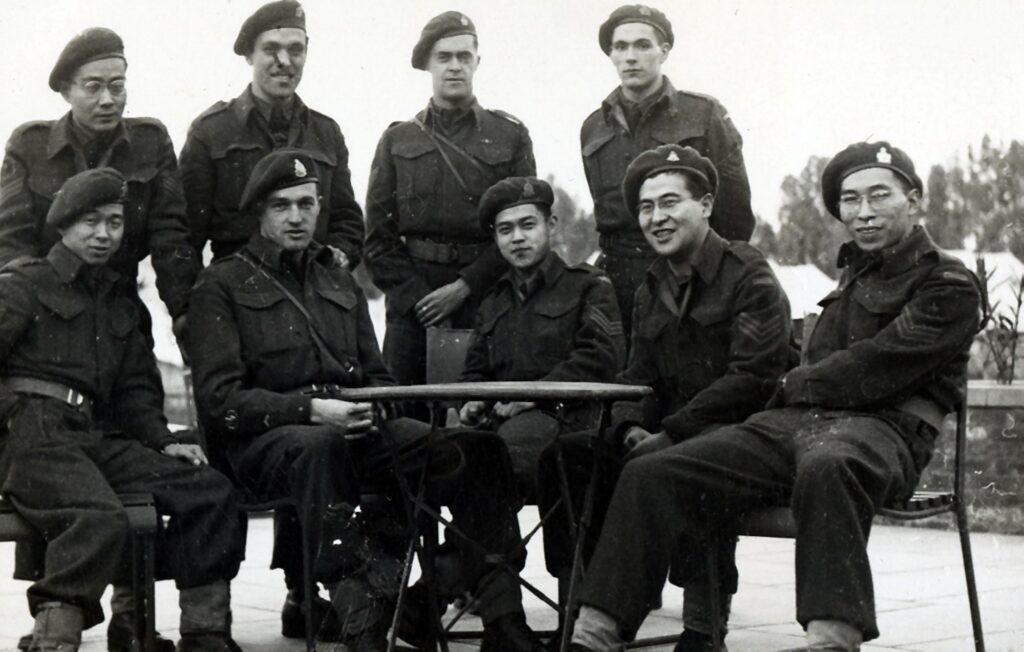
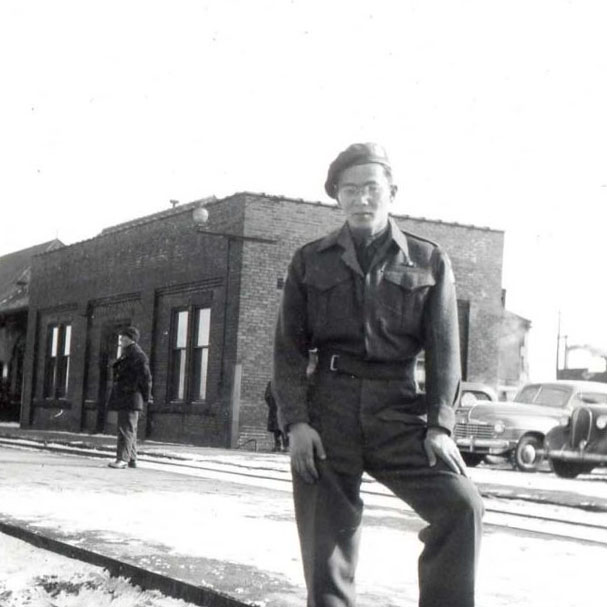
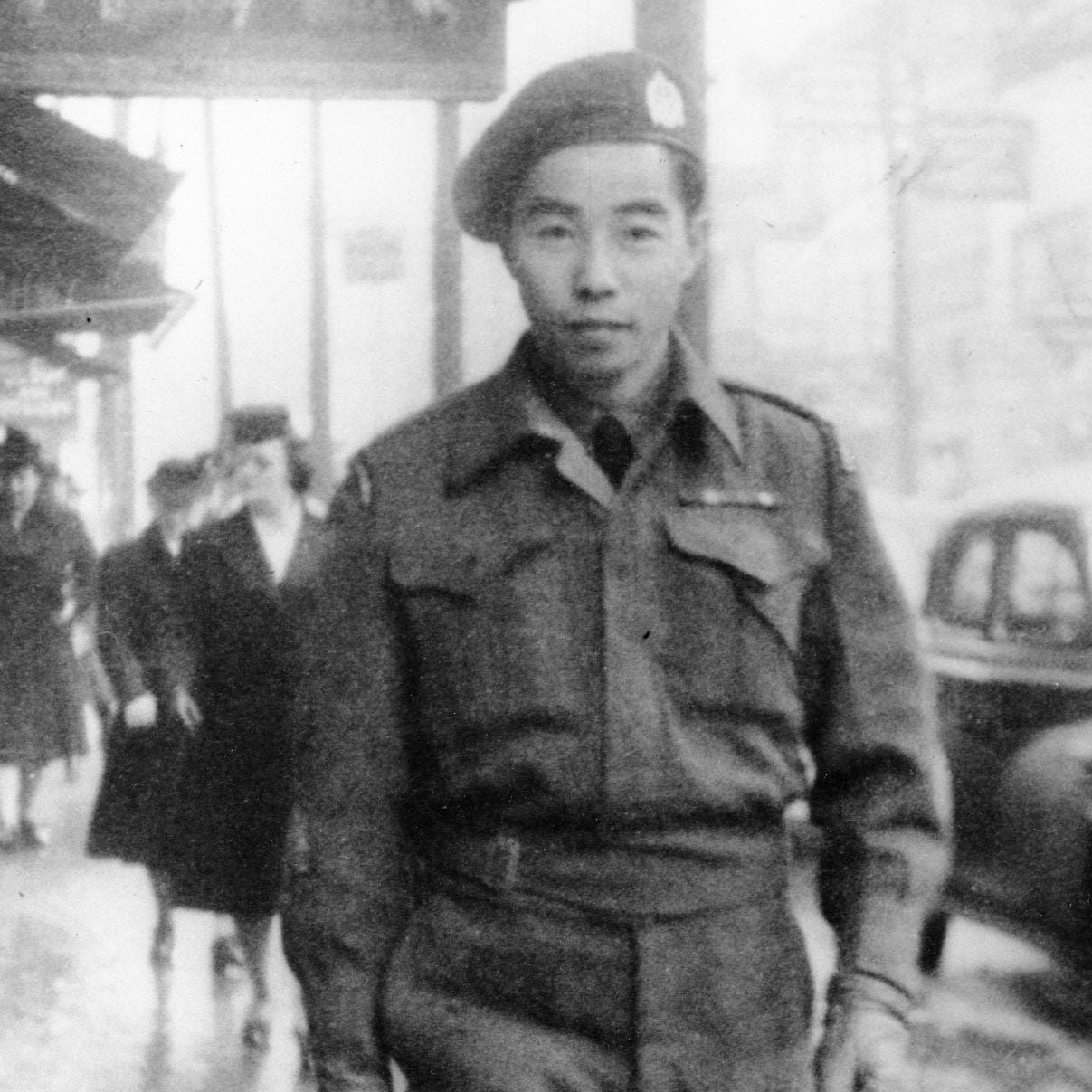
When enlistment for Japanese Canadians was approved in March 1945, Shig, with many of his friends, joined up. He was placed in the S-20 group of 51 recruits and sent to Brantford, Ontario in April, where the group trained together as No. 17 Platoon of B Company. They then travelled by train to BC. Shig spent one week assisting on a recruiting tour in southern Alberta when the need arose for more Japanese Canadian soldiers. The group attended the S-20 Japanese language training school in Vancouver. They were the only Japanese in Vancouver. At the end of September, Shig was in the first group of nisei to graduate. The six had completed the one-year S-20 course in about two months. His fellow nisei graduates were Sadao Nikaido, Eiji Yatabe, Tad Ode, Roy Matsui, and Roy Ito. The other graduates in the group were Ferdinand Leduc, Frank Haley, Bill Hunter, and Howard McDonald. All were promoted to sergeant before going overseas on October 19; Roy Matsui remained in Ontario to work as a translator.
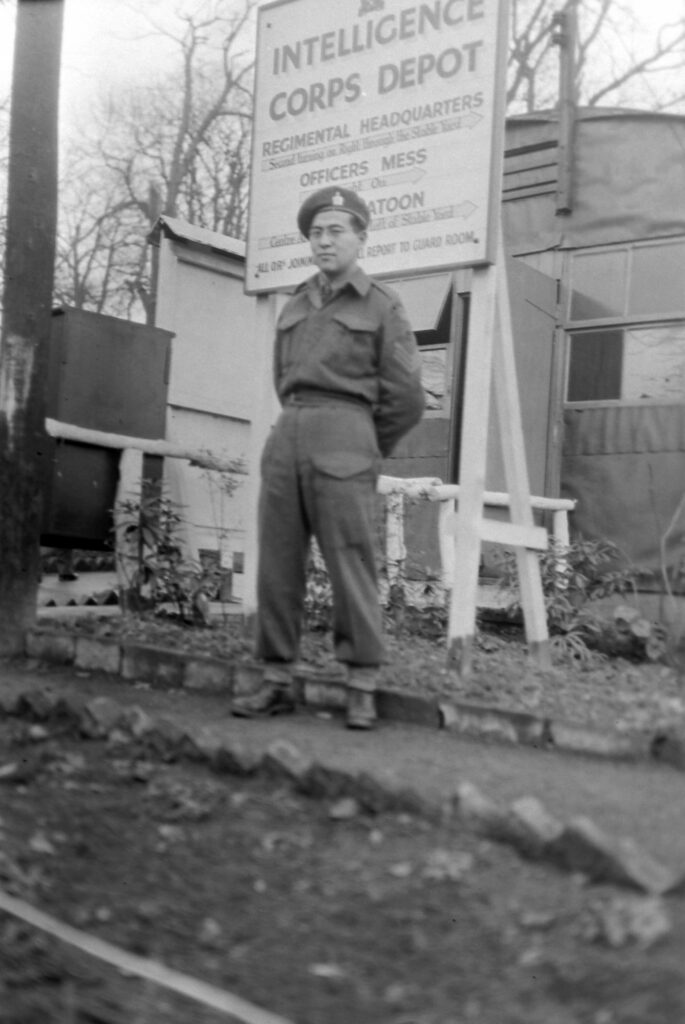
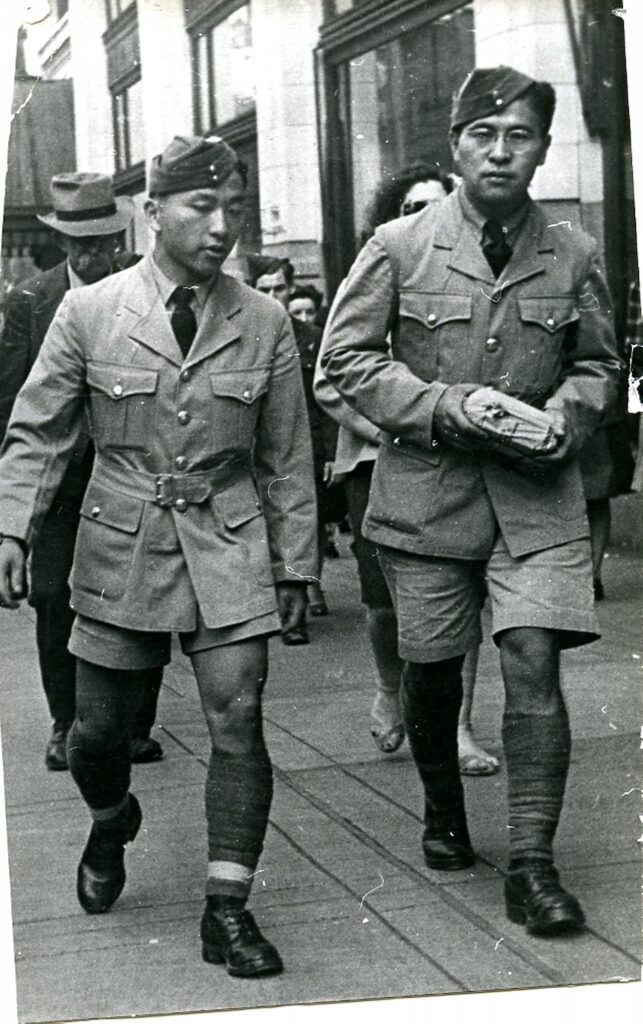
Shig’s diary records their travel on trains, ships, and aircraft from Vancouver to Southeast Asia. The flight from Rotherham, Yorkshire, where the British Intelligence Corps was located, to India, was likely the first time they had flown in a plane. Enroute to Karachi, their York aircraft lost an engine. Their harrowing emergency landing near Cairo enabled a bonus visit to the Sphinx and the Pyramids while awaiting repairs. They continued the trip in a cramped bomb bay of a Liberator bomber which also developed engine trouble over the Persian Gulf. From Bahrain, they continued on a Dakota aircraft, likely relieved to reach Karachi.
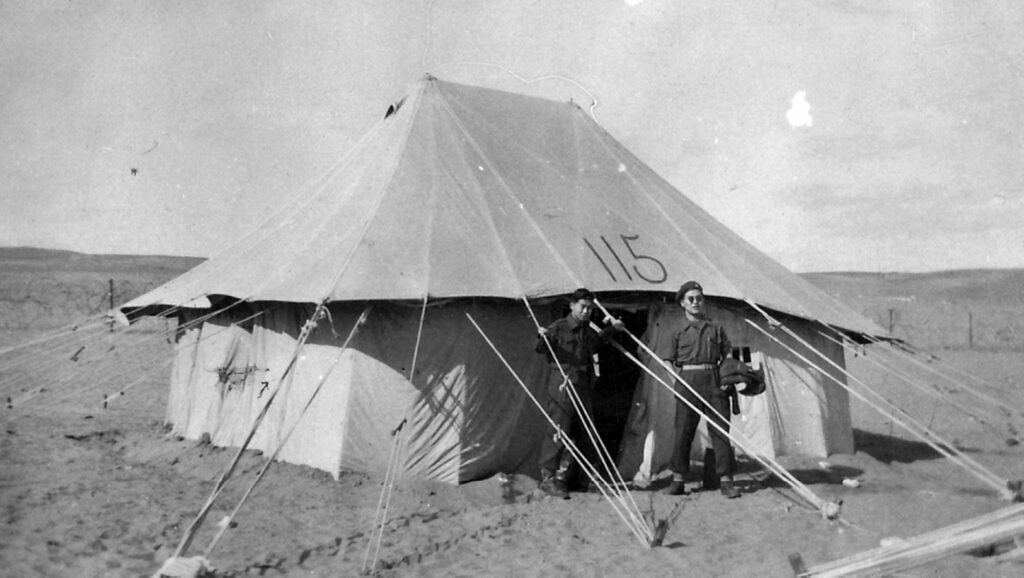
Shig and his group of eight spent January 20 to February 7, 1946 in India, where they were introduced to British army life, saw the wretched state of the country’s poor, and witnessed protestors calling for a separate Muslim state. At SEATIC headquarters in New Delhi, the S-20 graduates were split into small groups and sent to separate destinations.
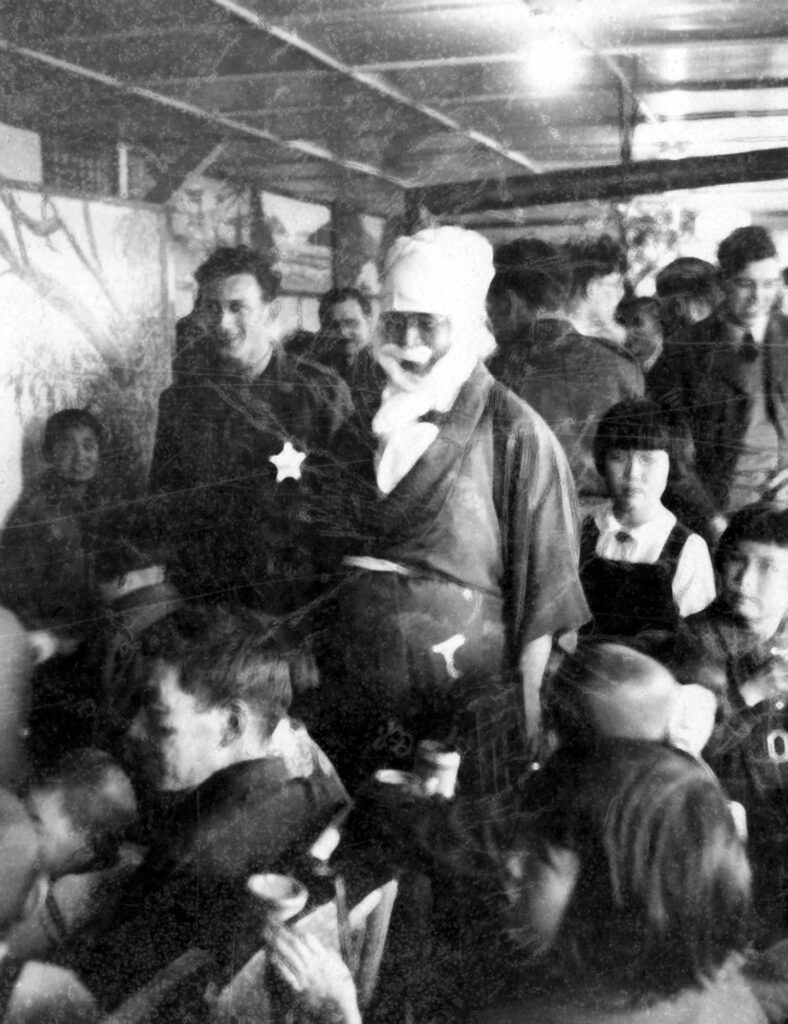
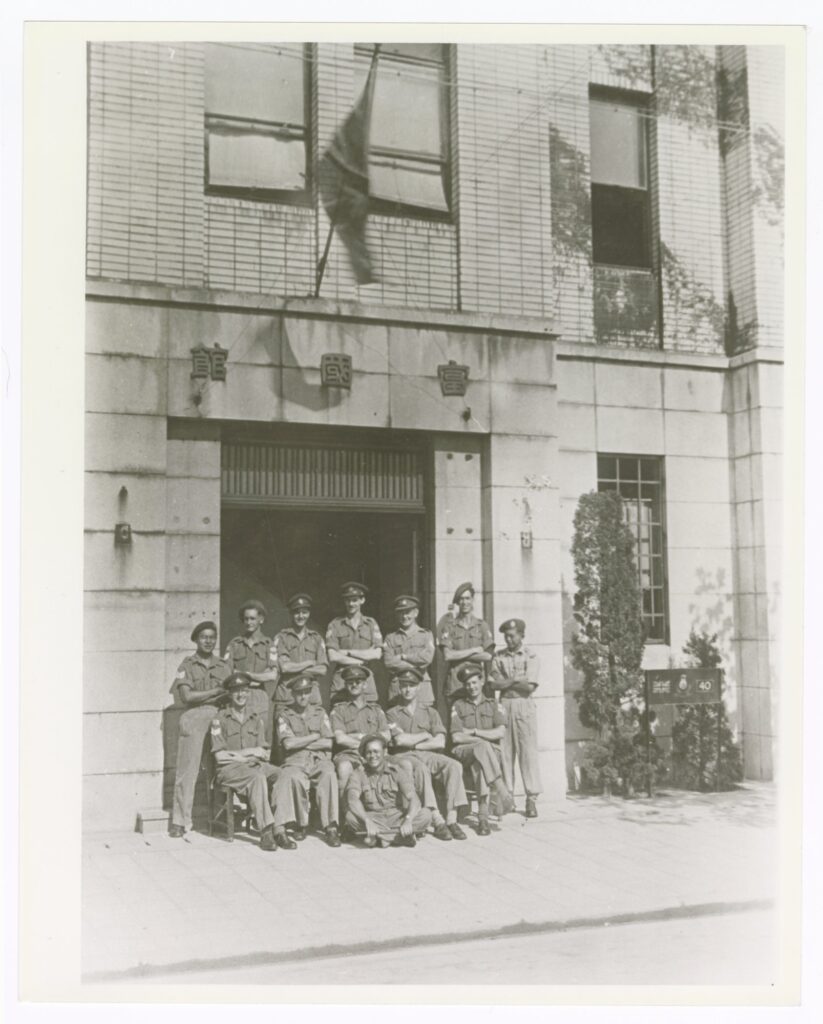
Shig and Captain Bill Salter were sent to the SEATIC detachment of Batavia, Java. Shig helped British Army personnel search for war crimes perpetrators, interrogated a Japanese Intelligence captain at Glodak prison, and conducted searching and screening of surrendered Japanese soldiers returning to Japan. Two months later, both Canadians were recalled to Singapore, as the Canadian Army was concerned about ongoing terrorist activities in Indonesia.
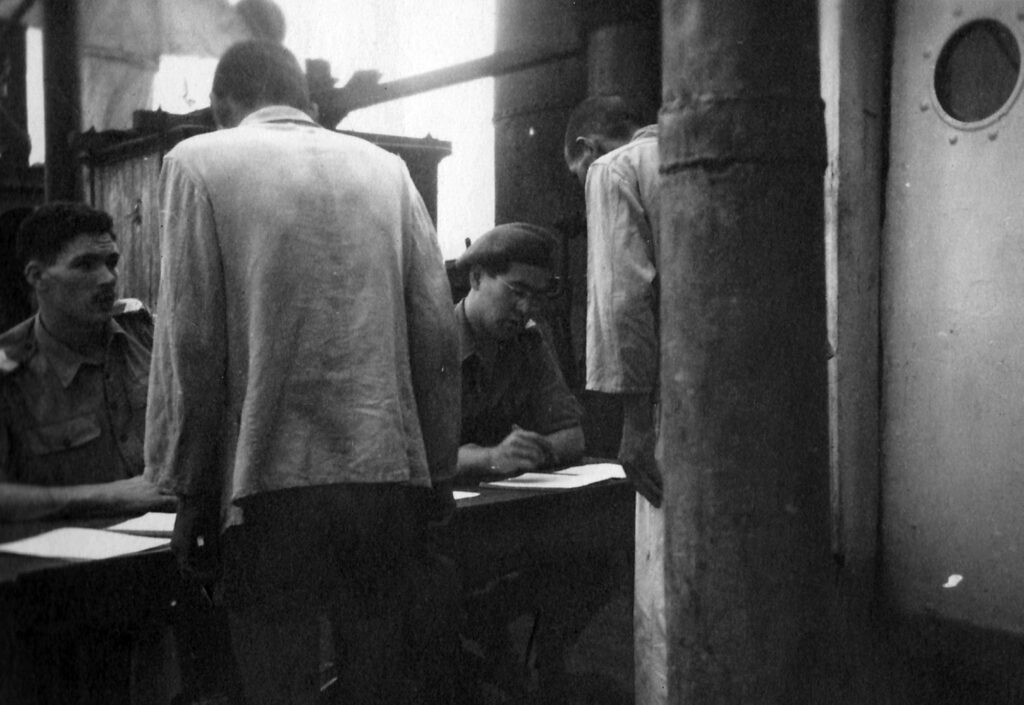
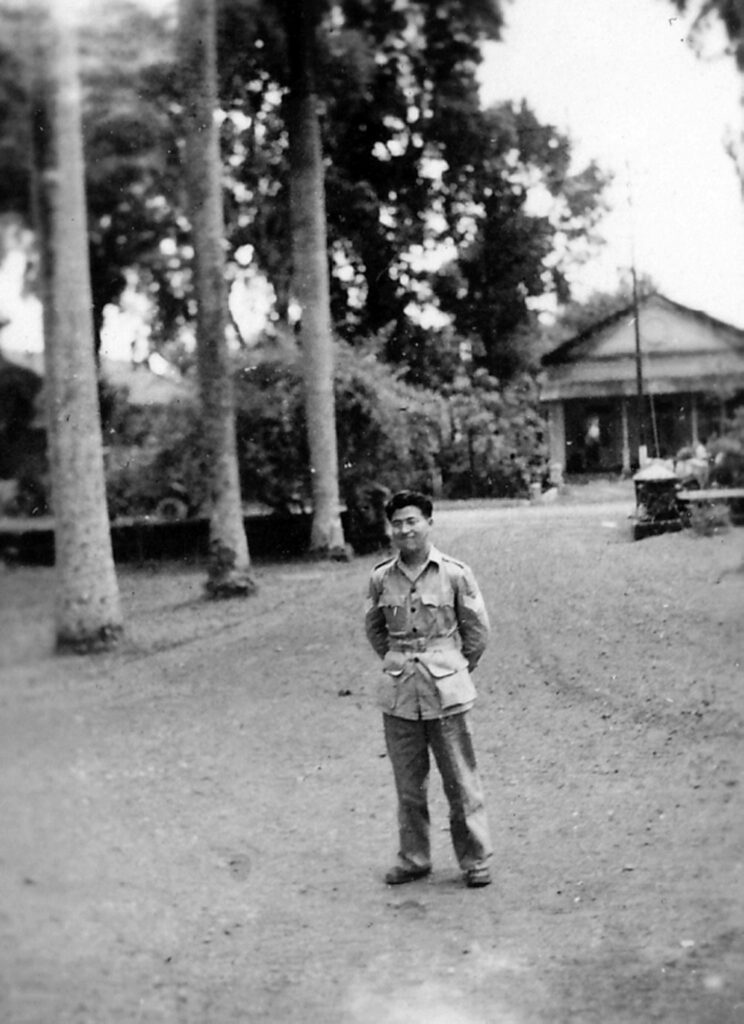
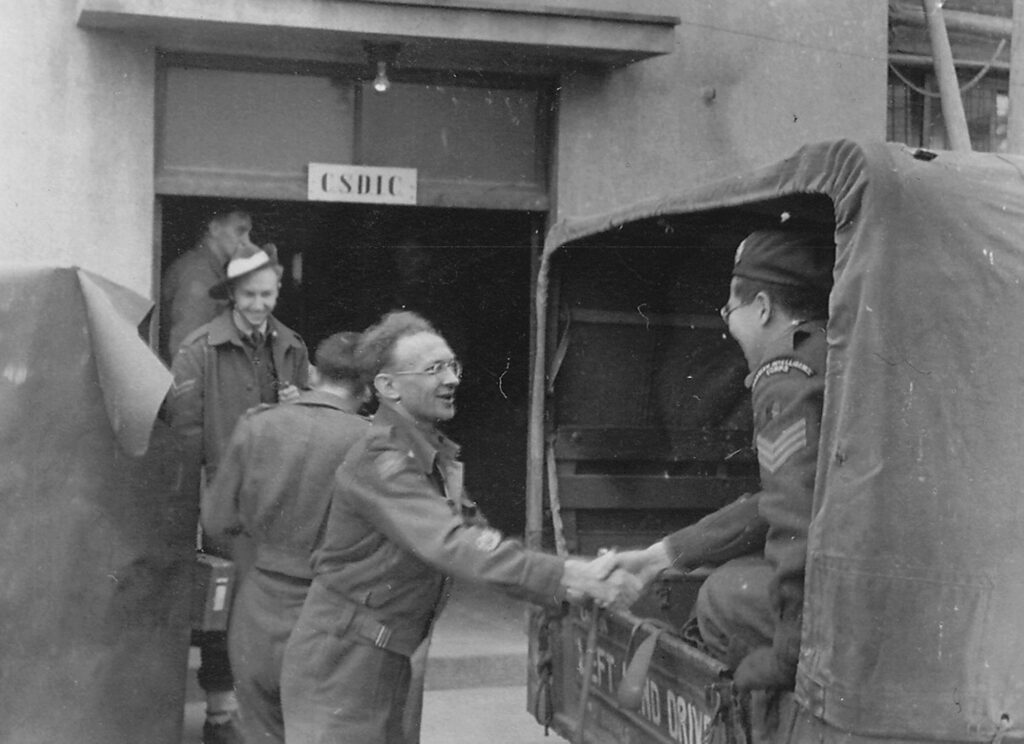
Shig worked in Singapore for three months, then was posted to Takamatsu, Japan with George Hasegawa to the 29th Field Security Section in the British Commonwealth Occupation Force area. Their duties in Japan included interpreting for field security officers and monitoring of Japanese public opinion, as well as acting as liaisons between Japanese police and the Field Security Section. Shig also worked at Kure, a former Japanese naval base, located near Hiroshima, interpreting in the military court and translating at the Combined Services Detailed Interrogation Centre.
Since he was assigned to the British Army, by a Repatriation to Canada order he had to sail to London first rather than return directly from Japan to Vancouver. He left Japan by ship on March 9, 1947; Singapore on March 21; London on April 28, and Montreal May 5. He finally arrived back in Vancouver by train on June 4, three months later.
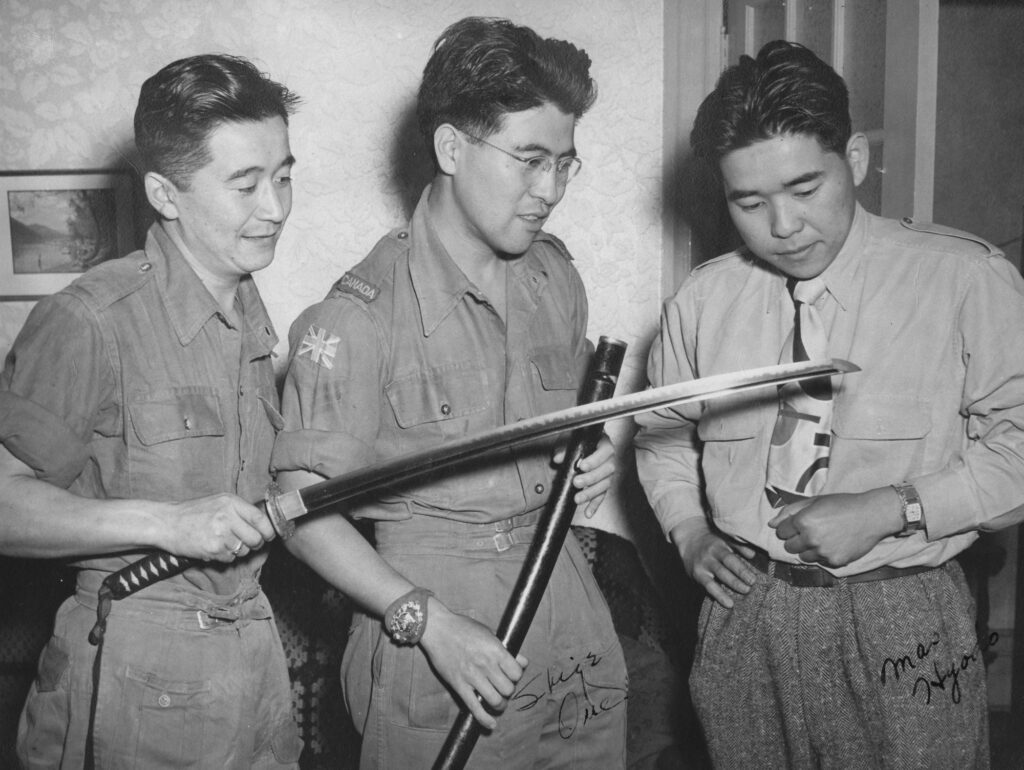
After his discharge from the army, Shig returned to Hamilton where he had previously met Sachiko Takimoto. Sachi had been interned at Kaslo. Her brother Albert Takimoto was also a nisei veteran who had served in India. Shig and Sachiko were married in 1948 and they eventually had a son and a daughter. Moving to Toronto, Shig first worked as an accountant at Tip Top Tailors.
Shig’s Japanese language skills served him well for the remainder of his career. Shig and his cousin formed a company in 1949 called the Canada Trading Company, which distributed Japanese Mamiya cameras. He left the company in 1953 to work for the Japanese External Trade Research Organization (JETRO) as its first Canadian liaison officer, eventually becoming the Director of the Japan Trade Center. His work promoted the tremendous growth of trade in both countries for their mutual benefit. His public relations work helped change the perception of the “made in Japan” label from cheap merchandise to high quality products. Shig volunteered with several organizations over the years. He was involved with the Kiwanis Club, at one point serving as the President of the Kiwanis Music Festival in Toronto. He was also active in the S-20 and Nisei Veterans Association and the Japanese Canadian Centennial Society. Because of Shig’s connections, the 1200 lb solid bronze bell, originally commissioned by JETRO for its trade exhibit at the CNE in 1977, was offered to the Toronto Japanese Canadian Centennial Committee as a centennial gift from Japanese Canadians of Ontario.