January 9, 1919 – October 22, 1986

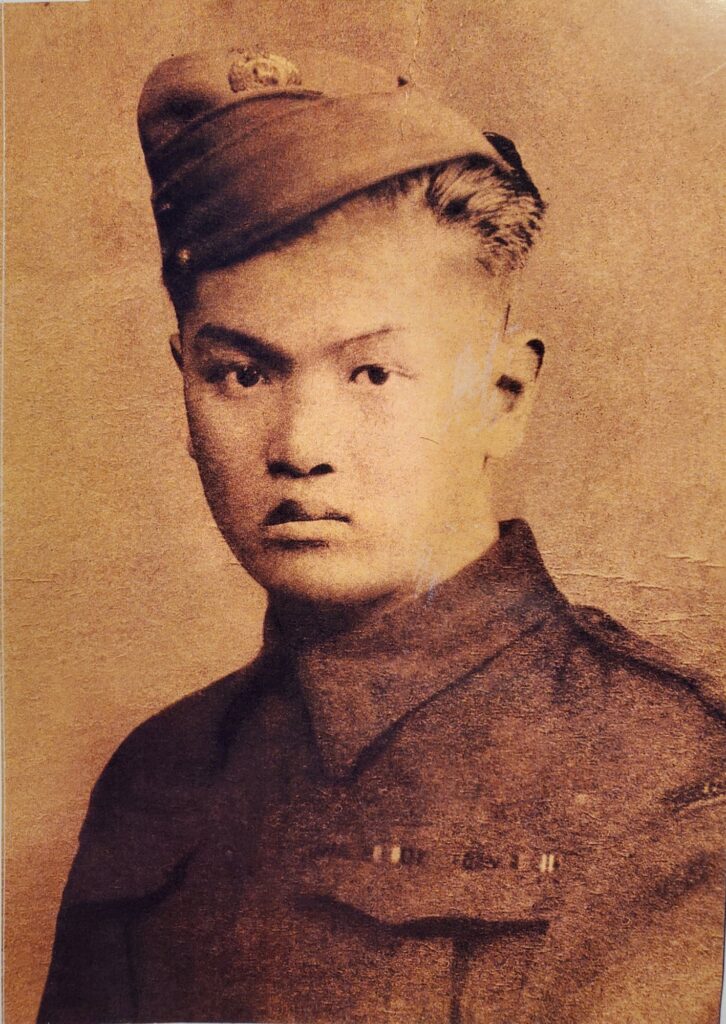
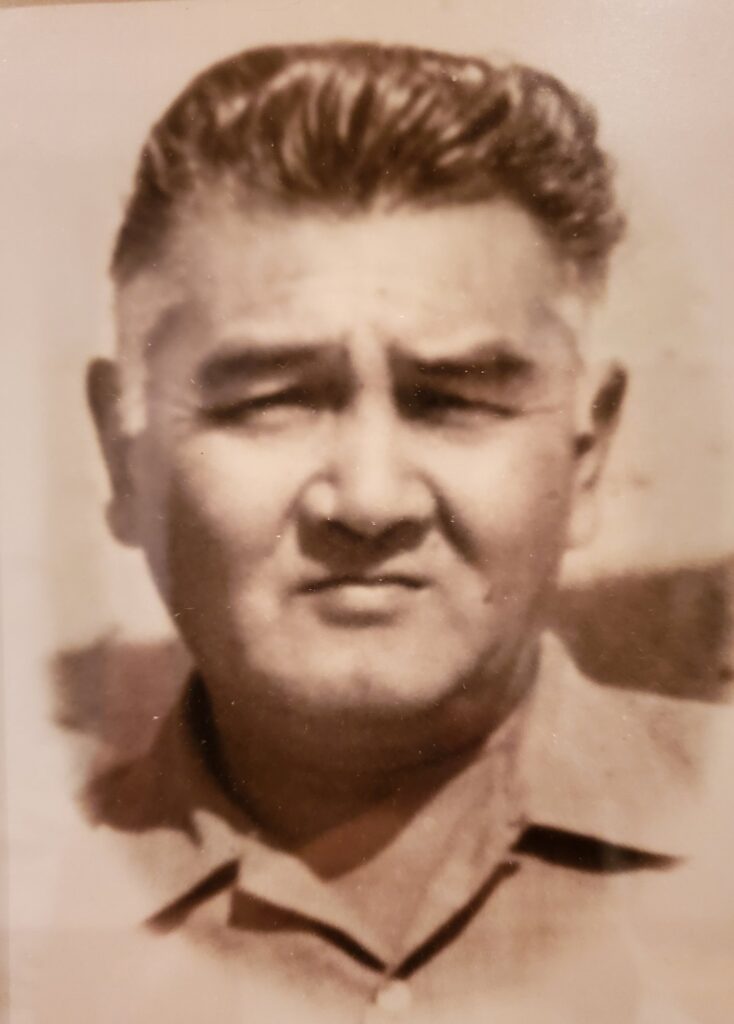
Tom (Tamotsu) Matsuoka was born in Ocean Falls, BC to parents who had emigrated from Japan to Canada. When Tom was six years old, he and his younger sister were sent to an orphanage in Victoria, BC. Four years later, they were sent unescorted on a ship to live with their maternal grandparents in Ehime, Japan. In 1935, at the age of 16, Tom received a letter from his mother asking him to return to Canada to help her work on a farm in Coaldale, Alberta. His sister would stay in Japan for two more years.
His stay in Japan was a positive experience. He went to school six days a week, excelled in sports and worked hard on his grandparent’s humble farm. Japanese culture made a huge impression on him, and he strove to live by example. Not only was he finally living a structured, disciplined, healthy life, but most importantly it meant him not having to constantly protect his younger sister from the kind of abuse that they had suffered at the orphanage or on the ship to Japan. Because his life was frequently disrupted by the moves to the orphanage, to Japan and back to Canada, Tom never finished high school.
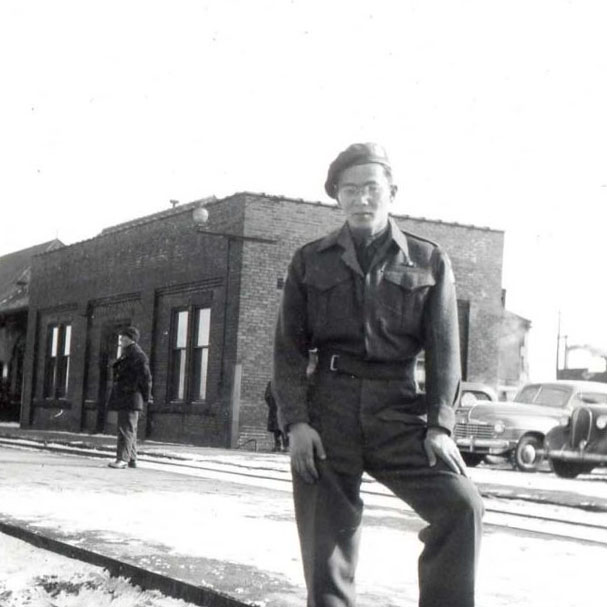
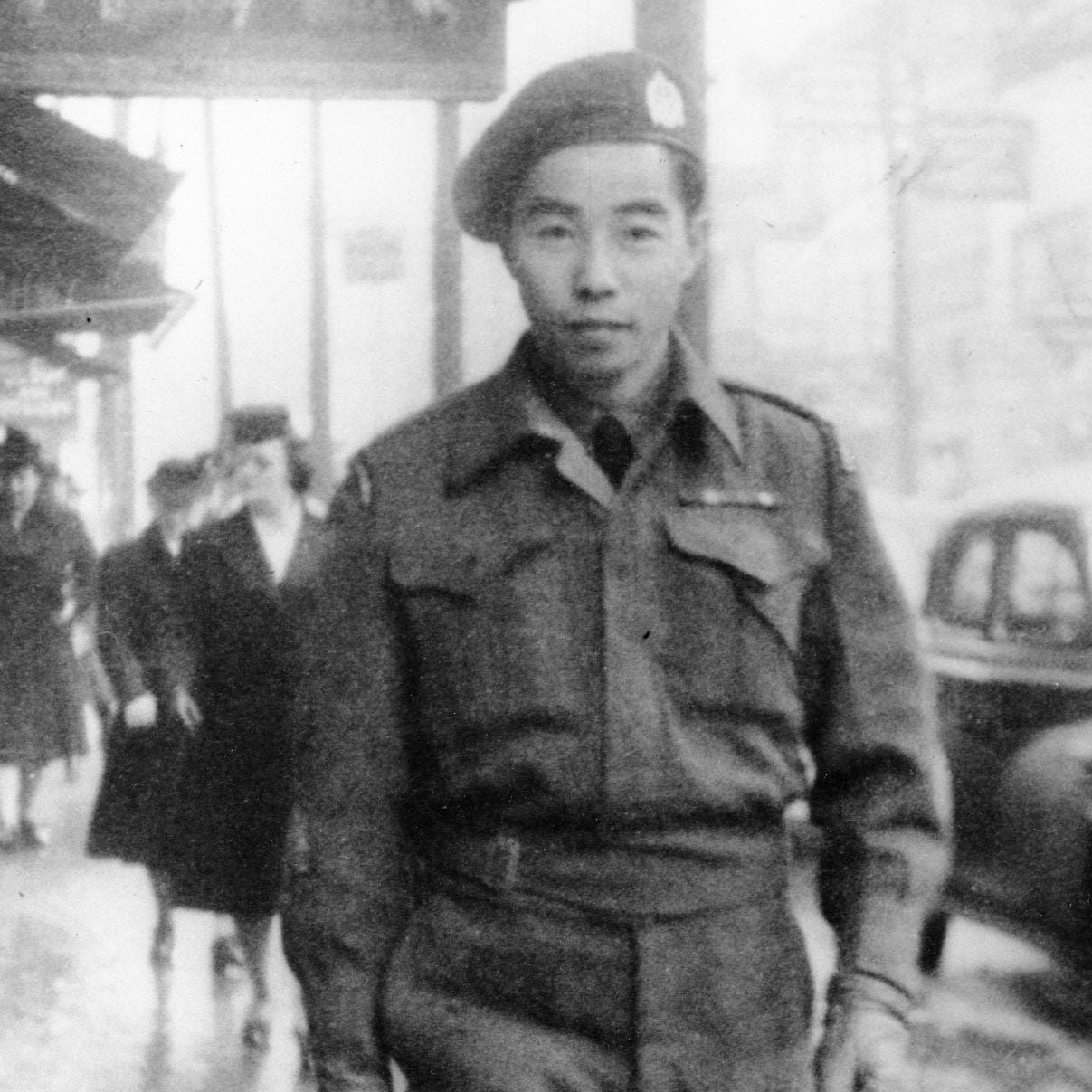
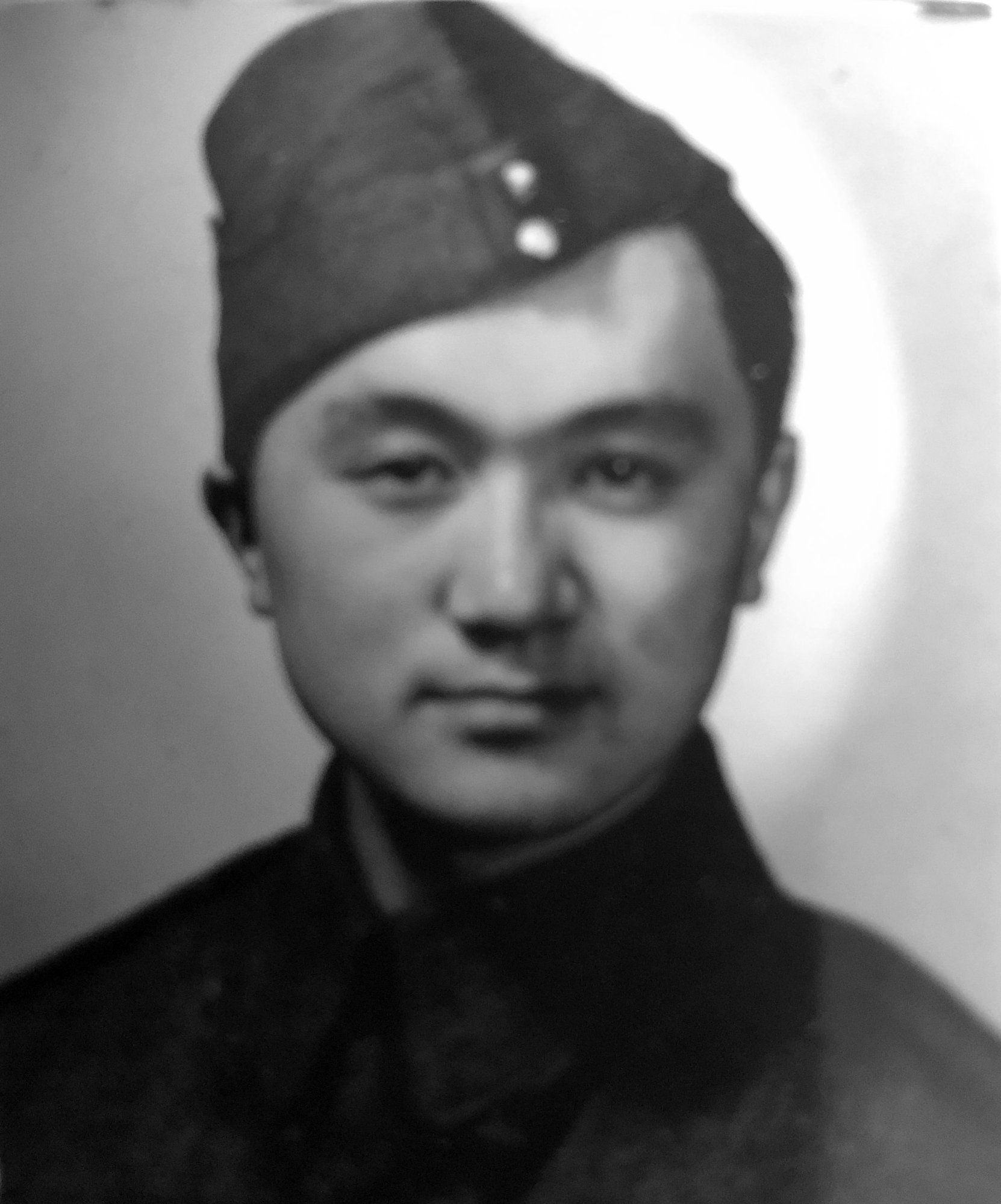
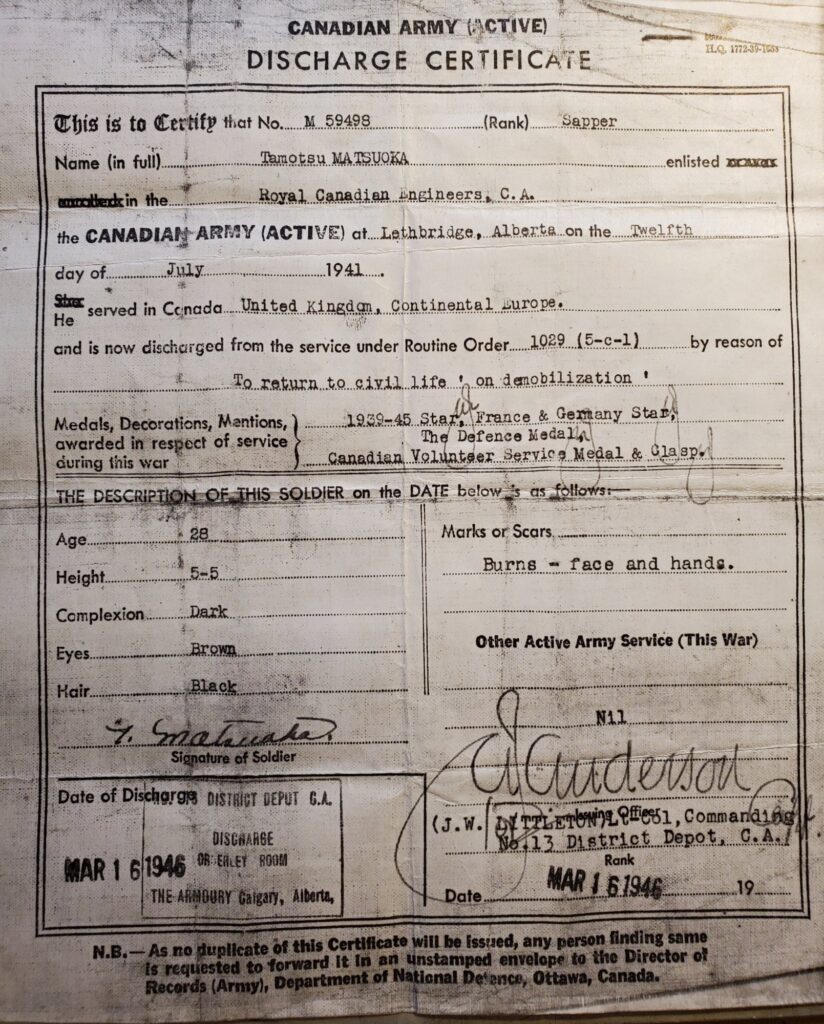
Since British Columbia had banned Japanese Canadians from joining the military, Tom, who was again living in BC, travelled to Lethbridge, Alberta to enlist in the Army. He joined the Royal Canadian Engineers on July 12,1941 and was assigned to the First Canadian Army and later in March, 1944 to the 2nd Canadian Army Troops Engineers.
He was later assigned to the 34th Field Company. Tom Matsuoka was a Sapper (Combat Engineer) – Regimental No. M 59498. He was deployed to the U.K. to complete his training and landed on Juno Beach, Normandy two weeks after D-Day (June 6, 1944), where his Unit encountered heavy fighting around Caen. The Company built roads near Fontaine-Henry, north of Caen. During the crossing of the Seine, they ferried the Regina Rifles and the Canadian Scottish Regiment in storm boats over the river. When the Battle of the Scheldt launched on October 2, 1944, they cleared mines. Based from a chateau near Antwerp, they operated and maintained floating bridges in the area. The Unit trained other Companies in mine clearance and supported the 2nd Army Corps in a wide range of bridging and mobility tasks. Tom was with the 34th Field Company when he was injured by a phosphorus mine on April 4,1945. He sustained burns to his face, hands and both legs. He was evacuated to the UK where he received plastic surgery and celebrated VE day in a hospital bed in England.
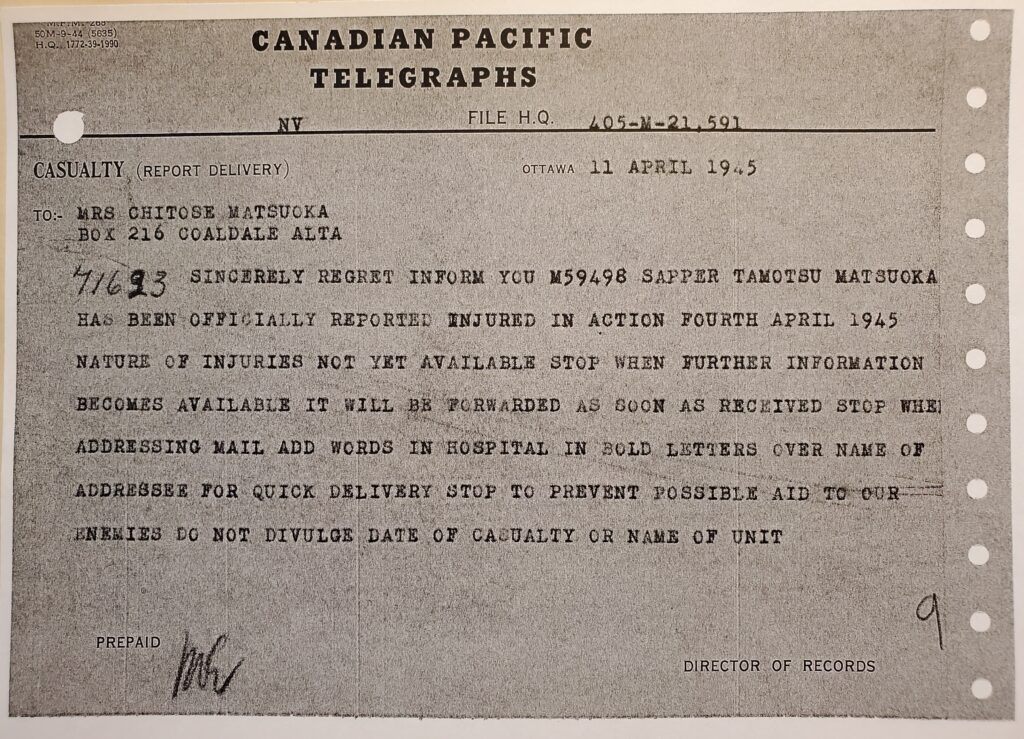
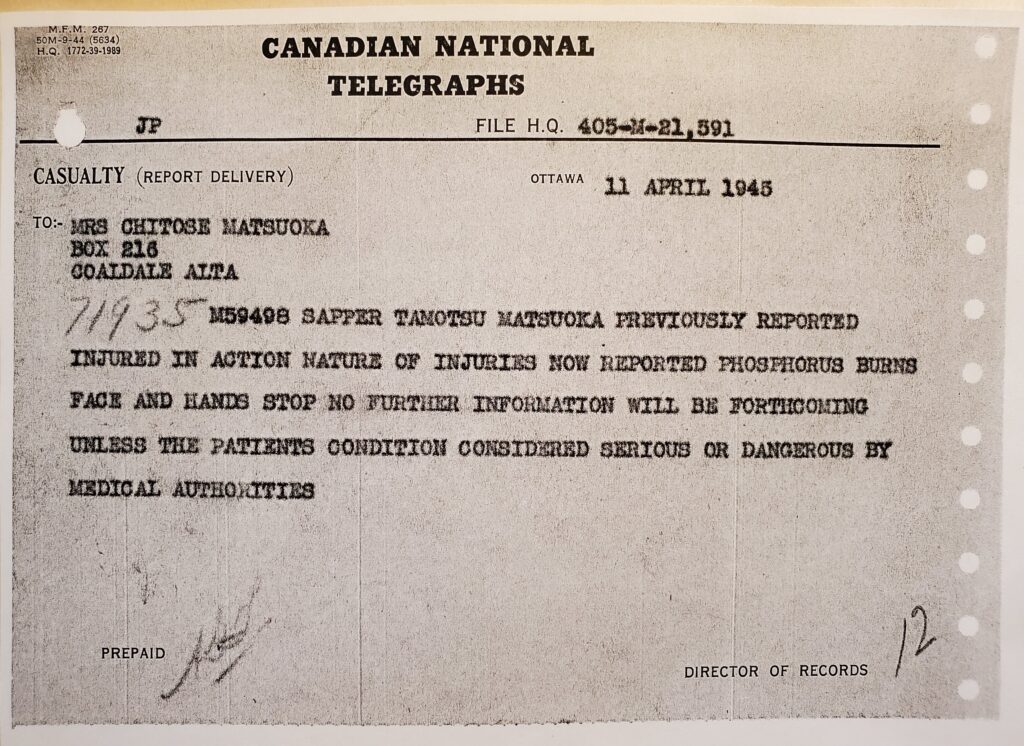
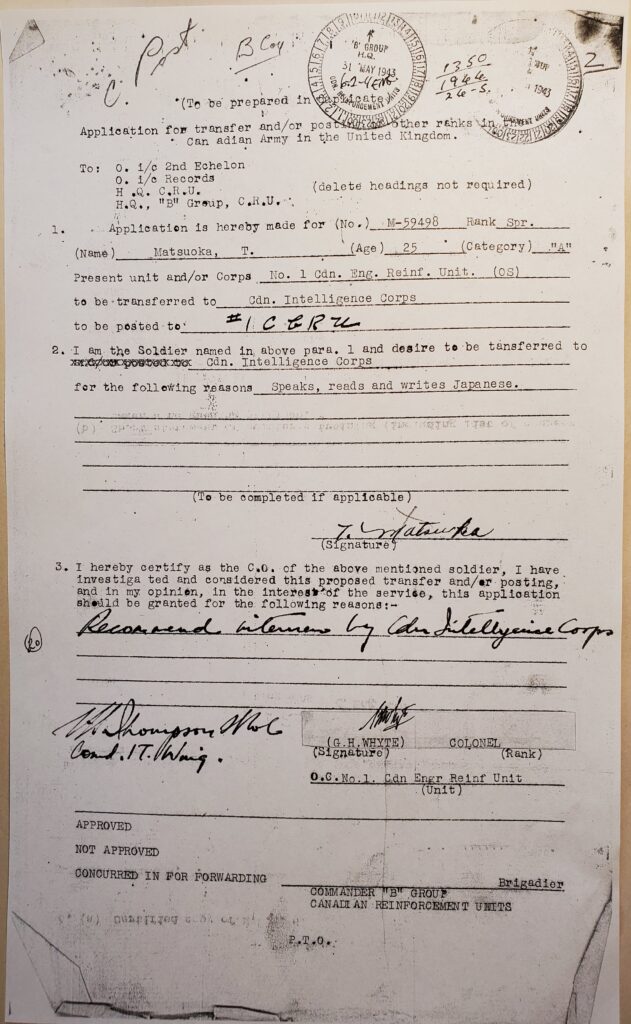
Tom’s scars healed and eventually faded, but his sinuses were destroyed in the blast. He had a constant sniffle for the rest of his life. The injury also affected his nerves. Tom’s family has documents that indicate that his request to transfer to the Canadian Intelligence Corps (as he could speak, read and write Japanese) was turned down on May 31, 1943. No reason was given for this refusal.
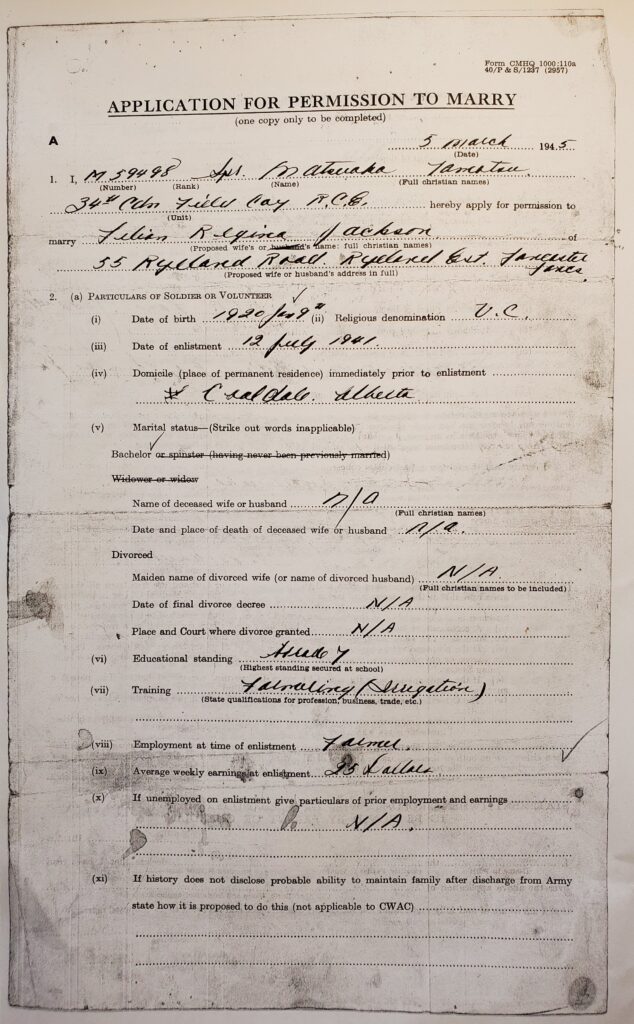
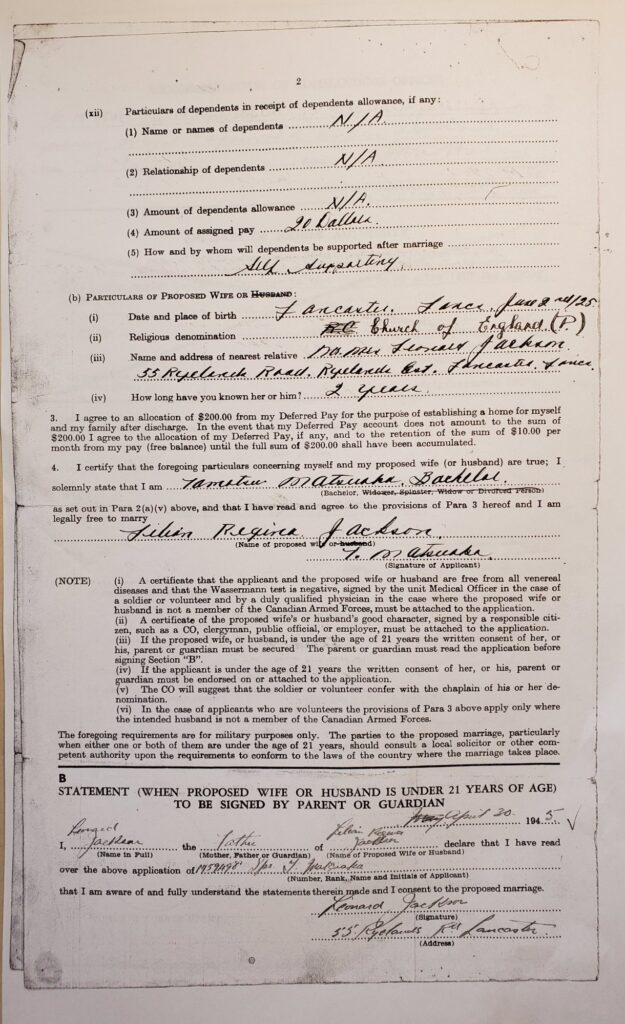
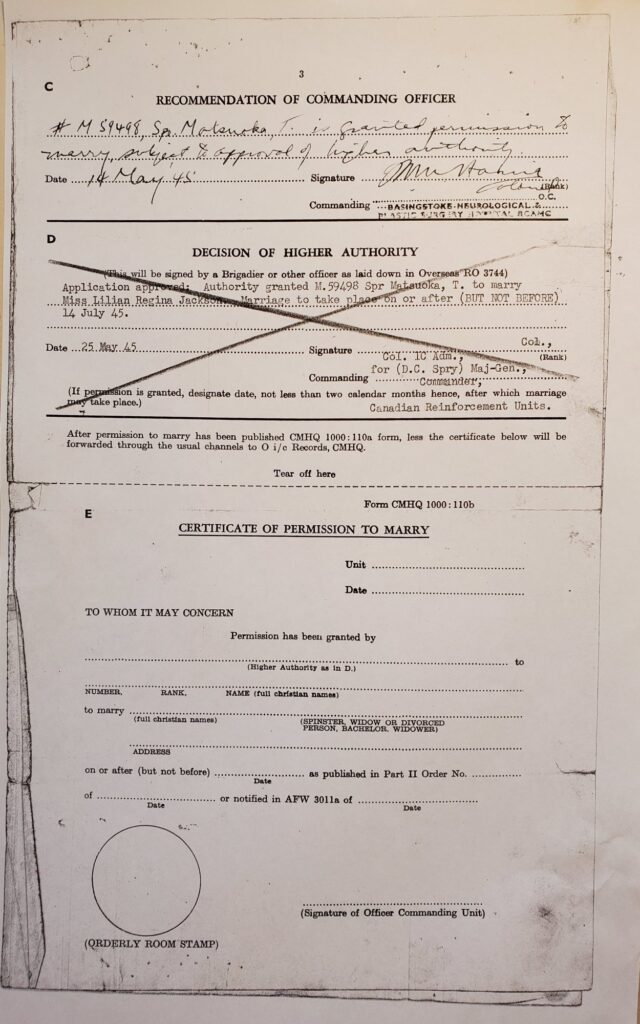
He completed a “Permission to Marry” form on March 5, 1945 and indicated that his bride-to-be was Lilian Regina Jackson of Lancaster, UK. Her father approved the marriage on April 30, 1945 and Tom’s commanding officer signed his approval on May 14, 1945. However, after the section for a ‘Decision of Higher Authority’ was submitted and approved on May 24,1945, it was later crossed out. No reason was given for this decision.
Tom served in the UK, France, Belgium, Holland and Germany. He was awarded the 1939 – 1945 Star, the France & Germany Star, the Defense Medal, the Canadian Volunteer Service Medal & Clasp, and the 1939 – 1945 War Medal.
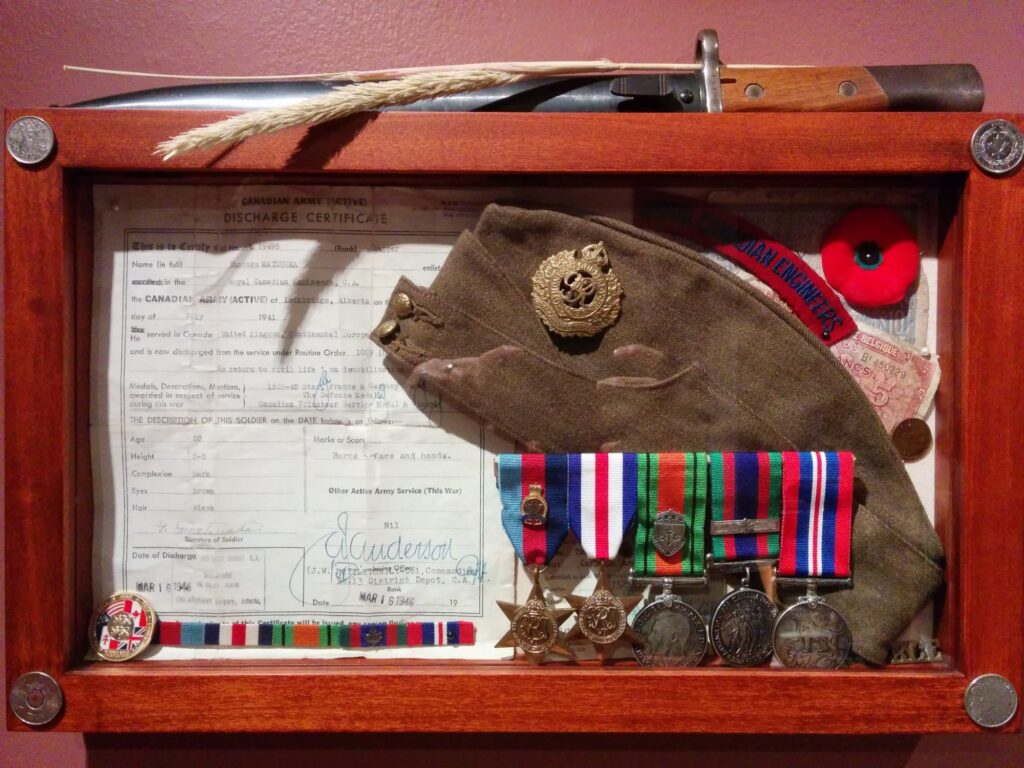
After his discharge from the Army in March 1946, Tom returned to Coaldale, Alberta to once again work on the farm with his mother and stepfather who had been living there since before the internment of Japanese Canadians. Tom met his future wife, Sumiko Nomura (Kamiya) in Coaldale. She was born in Vancouver, but her family, like thousands of other Japanese Canadians, were forced to relocate to work farms in the prairies. Tom and Sumiko moved to Saskatoon with two of her daughters from a previous marriage to work on a farm there. They had a daughter while living in Saskatoon and their son was born after they moved back to Coaldale during their migration back to B.C. The family finally returned to Vancouver in 1956 and lived there until Tom and Sumiko moved to Toronto in the 1970s. Sumiko passed away in Toronto in 1978 and Tom passed away in Vancouver in 1986.
Their son, Max, sums up his parents’ wartime experience as follows: My father was a Canadian soldier fighting for his country. Because of the War Measures Act, my mother was uprooted from her home in BC and sent to work on a beet farm in Alberta. The irony of the fact that my mother, after losing everything and being forced into servitude in another province, while my father fought and was wounded in service to the same country that sanctioned such a disgraceful legislation cannot be overstated.