March 22, 1918 – April 2,1994
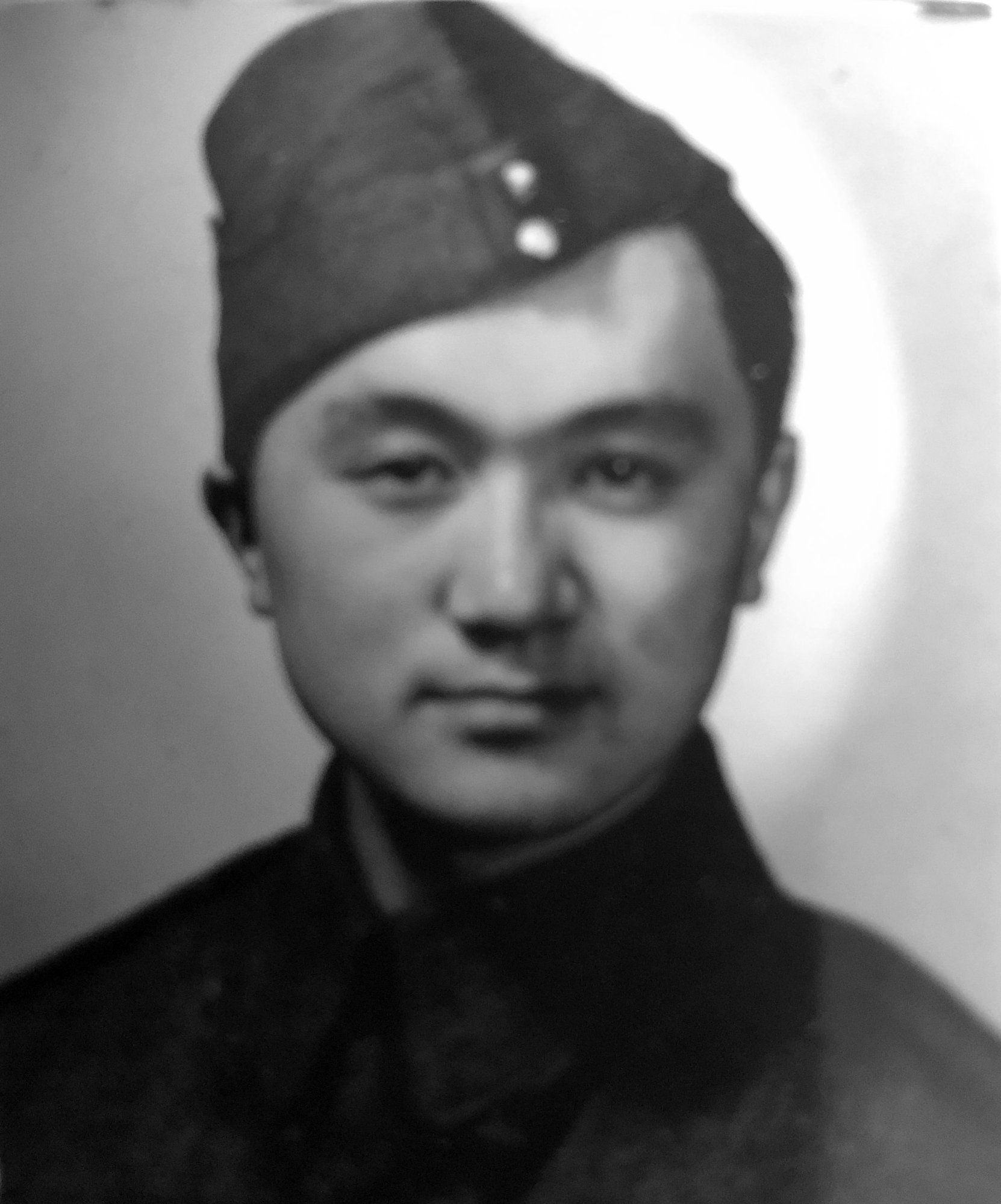
Toru Iwaasa was born on March 22,1918 on a mixed crop farm southeast of Raymond, Alberta.
His parents came from Hiroshima Prefecture. His mother, Ito Yajima, was from a samurai family. His father, Kojun Iwaasa, arrived in BC in 1898, and lived first at Cumberland on Vancouver Island. Kojun’s uncle, Matsutaro Iwaasa, had arrived in Cumberland in 1894, where he established a grocery store. Kojun later moved to San Francisco to improve his education, and after finding work in many different areas in the Western United States, returned to Canada, ultimately ending up in the Raymond area in 1908 to farm sugar beets. There was already a small Japanese community living around Southern Alberta in the Raymond area working in farming, and in Hardieville near Lethbridge in coal mining (Iwaasa, 2011).
Toru was the second oldest of 9 children in the family, and the oldest boy. The children helped their parents on the farm.
Between when the Second World War began in 1939 and Canada declared war against Japan after the attack on Pearl Harbor on December 7, 1941, at least seven Japanese Canadians from the area around Raymond and Lethbridge enlisted in the Canadian Army. They served overseas in Europe, despite the strong opposition, particularly in BC, against allowing Japanese Canadians to serve (Iwaasa, 2011). Prime Minister Mackenzie King was advised by a Special Committee on January 7, 1941 to exclude people of Japanese race from the military (Ito, 1984, pg. 116).

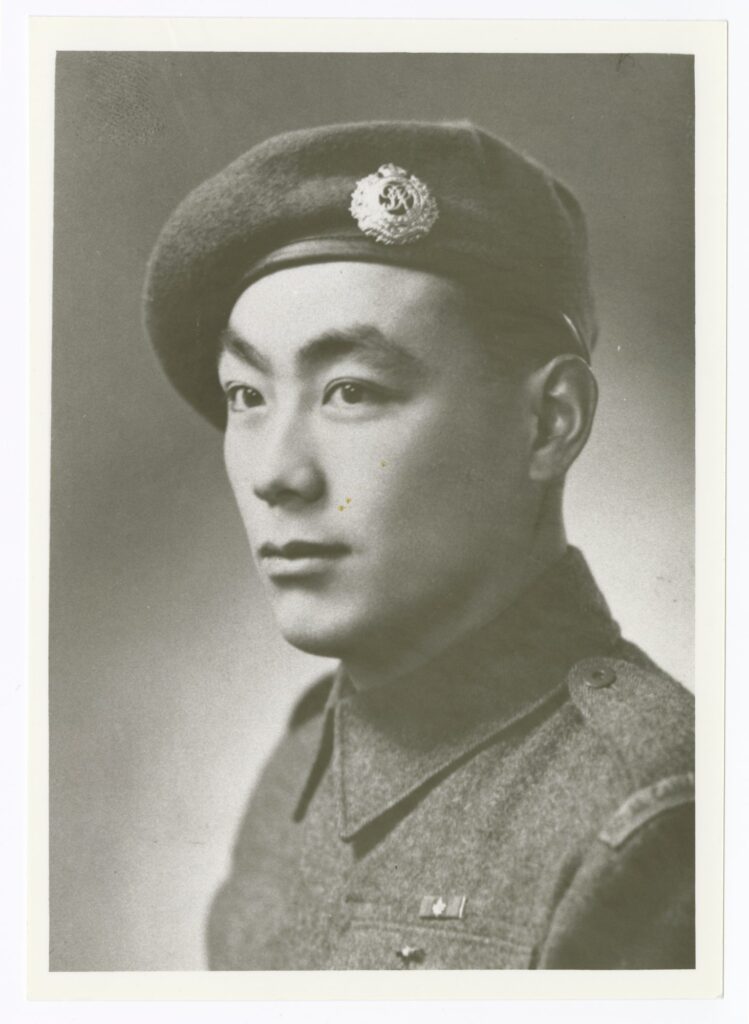
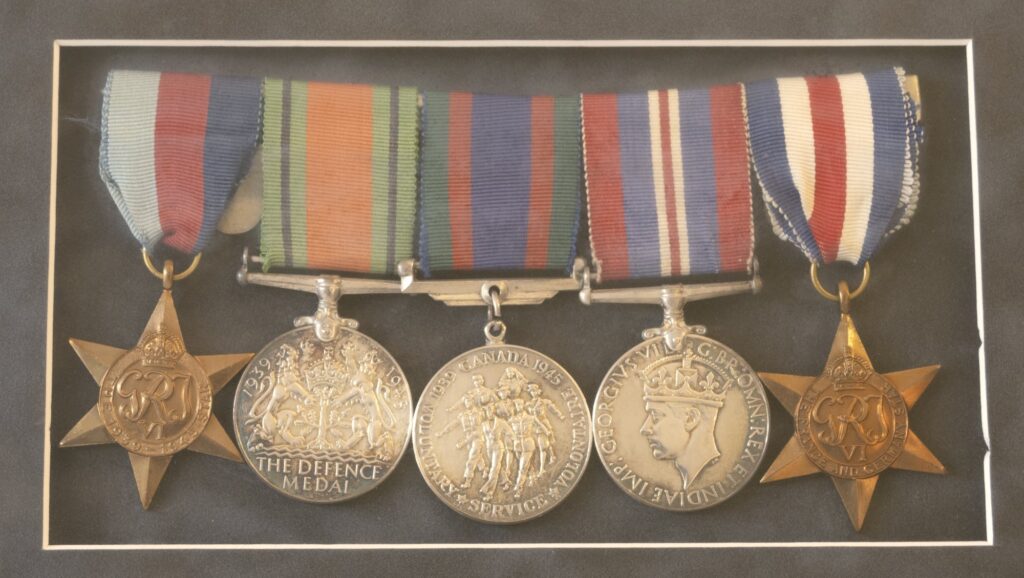
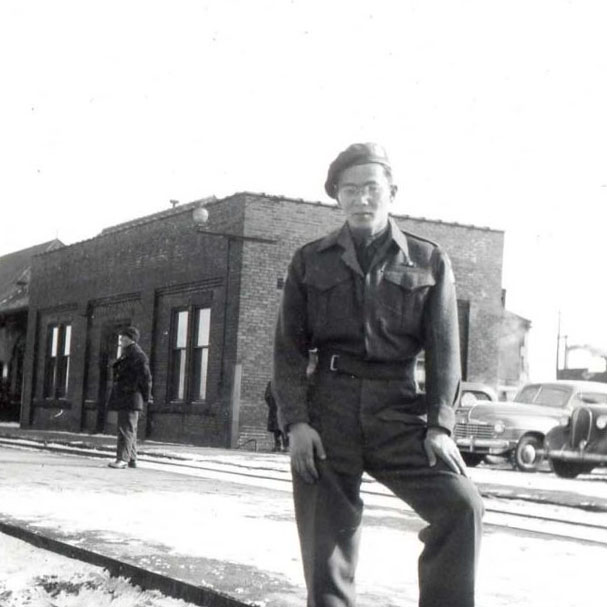
David says his father Toru officially enlisted in the Sixth Field Park Squadron of the Royal Canadian Engineers at Lethbridge on June 10, 1941. This particular unit was largely recruited from within Southern Alberta and with Toru, there were two other Japanese Canadians, Shigeo (Shin) Takahashi and Yasuo (Scotty) Oshiro, in the same unit (Iwaasa, 2011). Units were often recruited geographically, so soldiers from the same neighborhoods and schools were often posted together. Once the units were designated to go overseas, they were incorporated into larger units. The Sixth Field Park Squadron became part of the Fourth Canadian Armoured division.
Toru and his fellow soldiers were posted initially at Debert, NS, for about six months, which included the day of the Pearl Harbor attacks. In Debert, they did their final training with the other units within their newly created division and prepared to go overseas. They boarded the train to Halifax, then travelled in troop ships across the Atlantic, arriving in the UK in 1942.
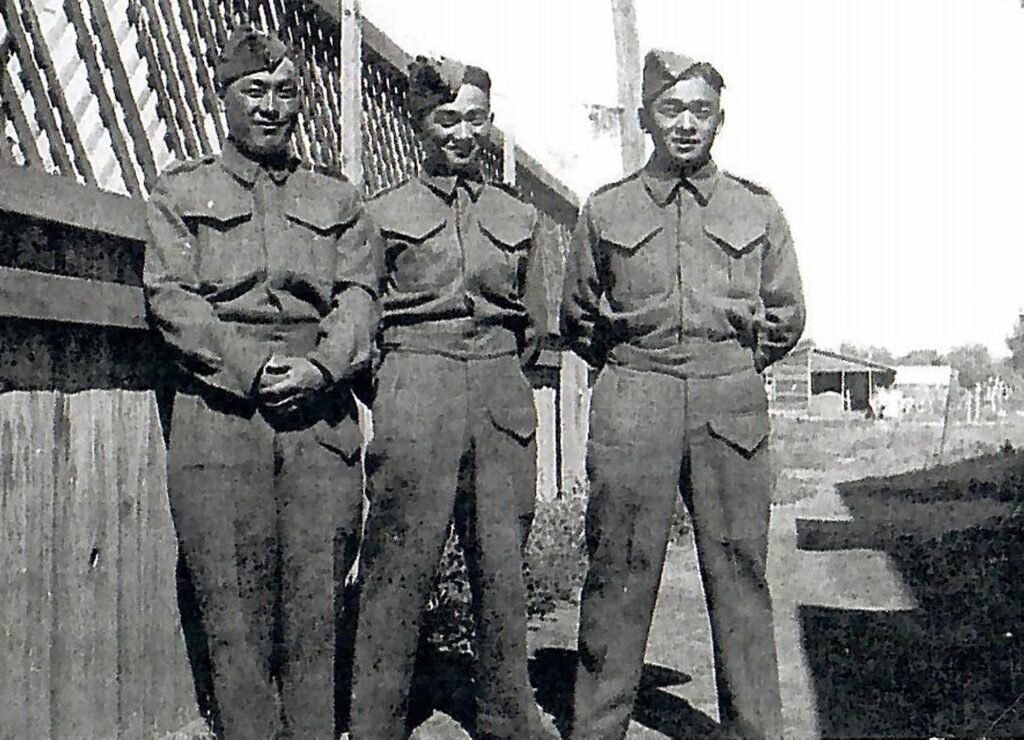
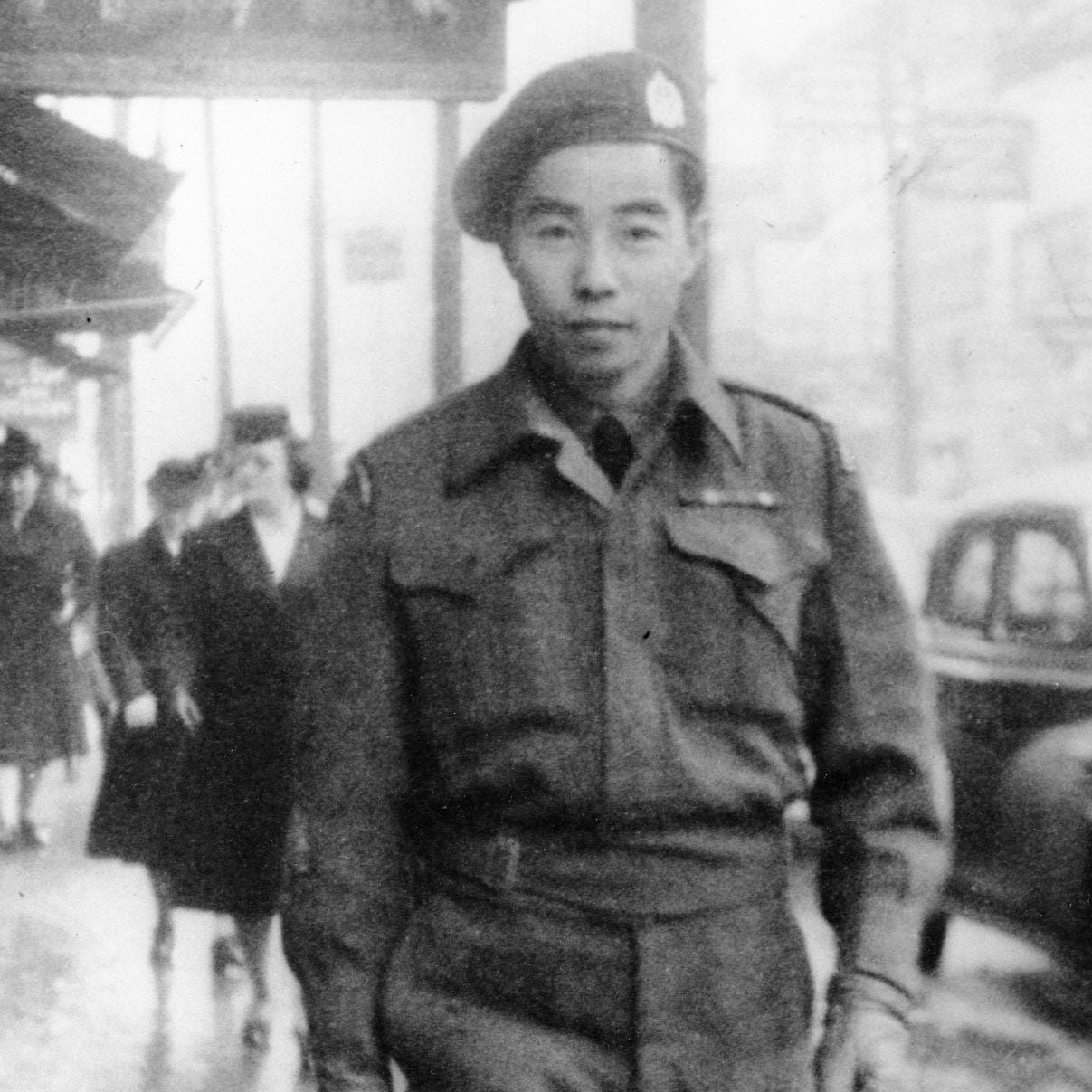
As part of the Fourth Canadian Armoured Division, Toru Iwaasa landed in Normandy and fought in France, Belgium, the Netherlands, and Germany (Iwaasa, 2011).
He attended a specialized engineering school at London Polytechnic, where he became a mechanic. Fellow soldiers took various trades training in the UK. During their service in Europe, they worked with heavy equipment (e.g. bulldozers), drove trucks, maintained and supported roads, and built bridges (pontoon bridges and Bailey bridges). As engineers, they were not on the front lines like the infantry, but were often required to do their work in combat zones and did come under fire. Shin Takahashi dodged machine gun fire as he and his colleagues built a bridge near the border between the Netherlands and Germany (Iwaasa, 2011).
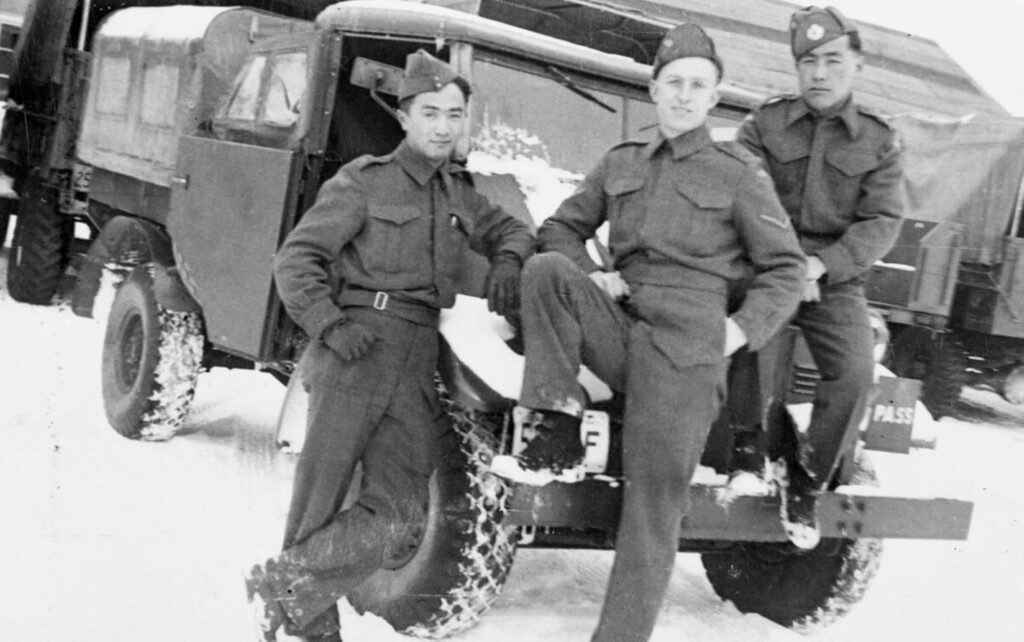
The Fourth Armoured Division was involved in the Battle of the Scheldt and Operation Market Garden at Arnhem (subject of the film A Bridge Too Far, 1977), in which the Canadian engineers evacuated the surrounded Allied paratroopers back across the Rhine River to safety in the Netherlands.
While in England in 1943, Toru was asked by the Canadian Intelligence Corps in 1943 to join Japanese Canadians Peter Yamauchi, Eichi Matsuyama, Fumi Yamamoto, and Jitsuei Tsubota as Japanese language instructors at the School of Oriental and African Studies in London. The job would include a promotion to sergeant and would have moved him out of the combat zones in Europe. However, becoming a Japanese language translator/interpreter would have required shifting to the Pacific theatre and possibly having to face the Japanese army. As he also felt his Japanese ability was not sufficient, and he wanted to remain with his unit, he turned down the offer (David B. Iwaasa, personal communication, 2024).
Toru Iwaasa served until February 20, 1946, returning to Raymond after his release from the army. He received a soldiers’ settlement and through the Veterans’ Land Act, he purchased his own sugar beet farm.
He married Seiko Kinoshita in November of 1947. Seiko’s family had lived in Langley, BC, where her father Kuichi owned a strawberry farm. In the spring of 1942, her family was forcibly removed from BC and relocated first to Hillspring, Alberta and then to Raymond, where they did sugar beet farming and other work.
Toru and Seiko had three sons, including David.
Toru remained close with his military colleagues, participating in many Legion events, and in the biennial reunion of his former unit, which included visits from soldiers from other parts of Alberta.
Toru was involved with his community and in volunteer work, such as helping with the Boy Scouts while his sons were young. Toru’s father, Kojun, was an active community leader in the Raymond area and had been the first leader of the Japanese Community Association in Raymond. Kojun had brought the first Buddhist minister to the Raymond area and held the first Buddhist services at his home. While Kojun and son David went on to become Mormons, Toru did not formally join any church.