Category: Japanese Canadian Military Service

  • Deployment to India

    At a meeting between British Security Coordination and Canada’s External Affairs ministry, a decision was made to send 35 nisei for attachment to British Forces serving in Southeast Asia Command (SEAC).

    The first of the twelve nisei that Captain Mollison had found to serve in the British Army was Albert Takimoto, who became the group’s leader (Ito, 1984, p. 235).  The ability of each recruit in the Japanese language was assessed at a civilian house in Toronto.  Those who passed the test were to travel to England as civilians, to be inducted into the British Army. The twelve recruits waited six months for their passports to go overseas, paid by the British Army. On February 24, 1945, just before they were sent to Britain, they learned that the Canadian government had decided to let them go overseas in Canadian uniforms (Oki, 1967, Adachi, 1976, p.294). They were quickly inducted into the Canadian army with no training and departed on a ship, on loan to the British Army (Adachi, 1976, p.294).
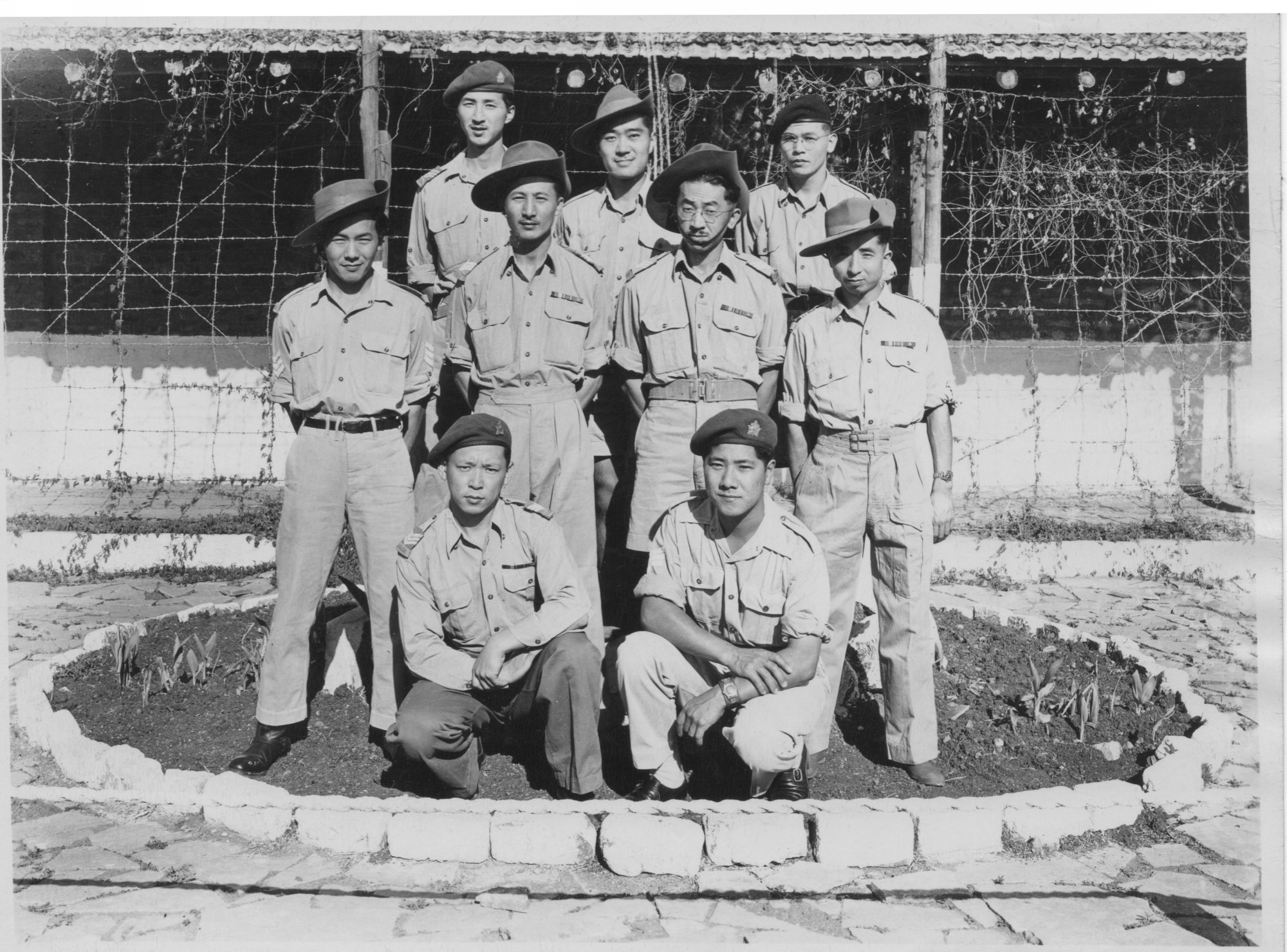
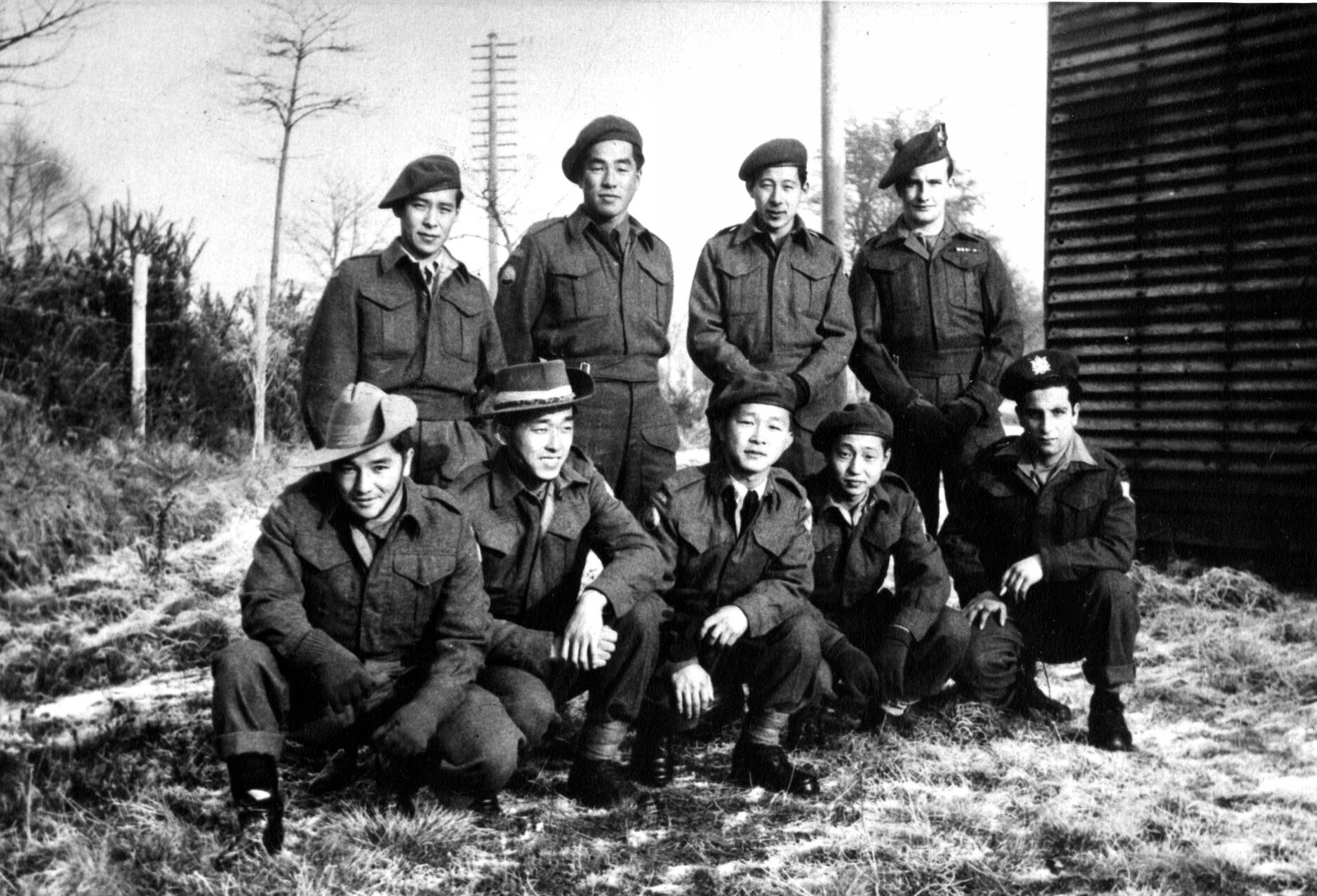
    Trooping Depot; Deolali, India, ca. 1945. These men are nine of the 12 in the first group of Nisei sent to India. Courtesy of Patti Kagawa, daughter of Tatsuo Fred Kagawa. Front row L to R: Sid Sakanashi, Jin Ide. Middle row: Frank Moritsugu, Harold Hirose, Albert Takimoto, Edgar Iwamoto. Back row: Elmer Oike, Tatsuo Fred Kagawa, Ernie Oikawa.
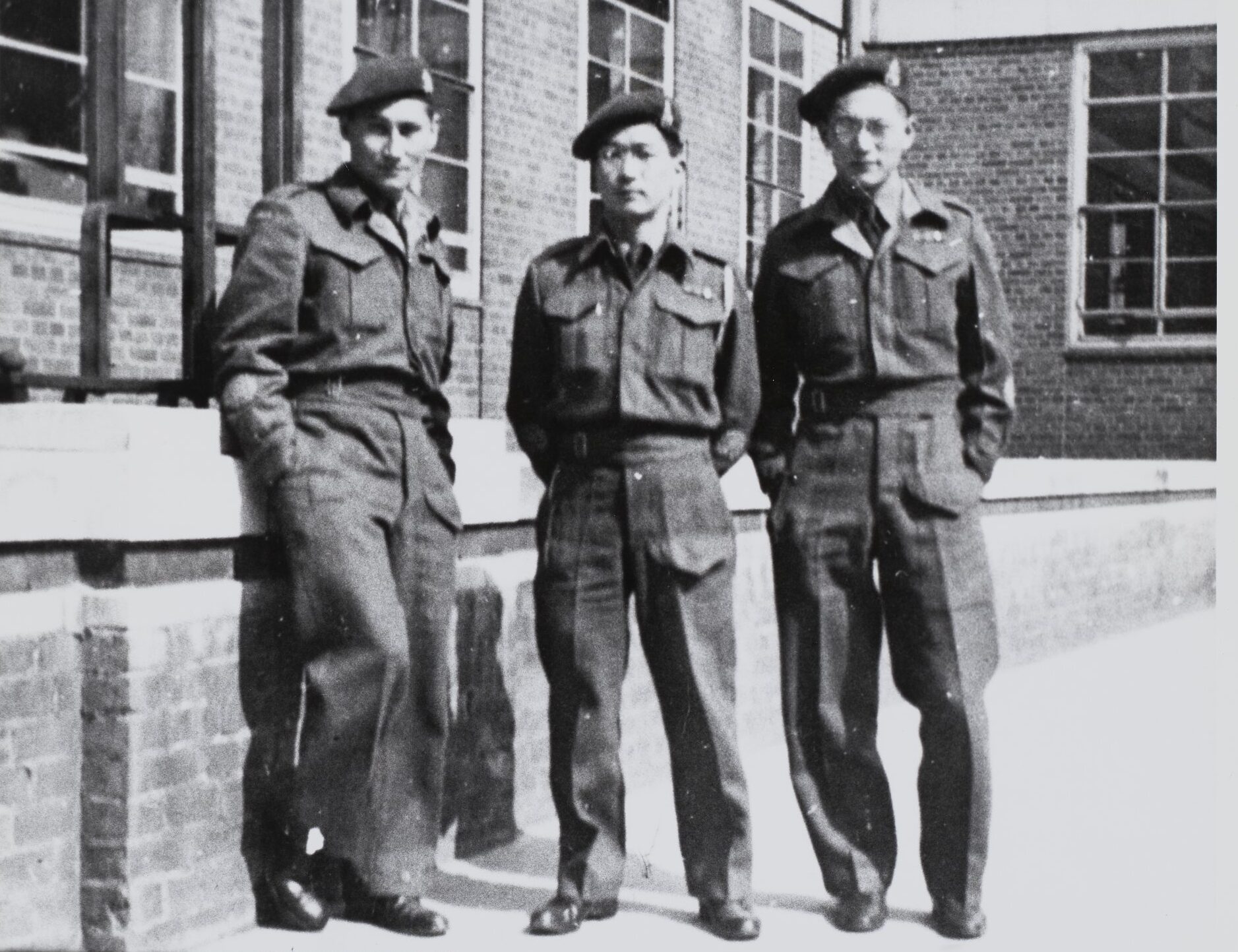
    Photograph of India Group Soldiers, ca. 1945. Courtesy of Yatabe family. Front Row: -, Frank Moritsugu, -, Fred Kagawa; Back row: Edgar Iwamoto, Albert Takimoto, Jin Ide.

    All nisei who were allowed into the Canadian Army after January 1945 became part of the Canadian Intelligence Corps. The nisei soldiers (excluding the three sent to Australia) who served overseas all travelled first to the U.K. to become attached to the British Intelligence Corps. 

    The second group of 21 nisei recruited by Mollison included men from Winnipeg, London, Ontario and other locations. The second group were to be provided with basic training in Toronto and four months language training in Pacific Command (Ito, 1984, p. 177). However, they left for overseas, shortly after the first twelve, with essentially no training (Ito, 1984, p. 182).

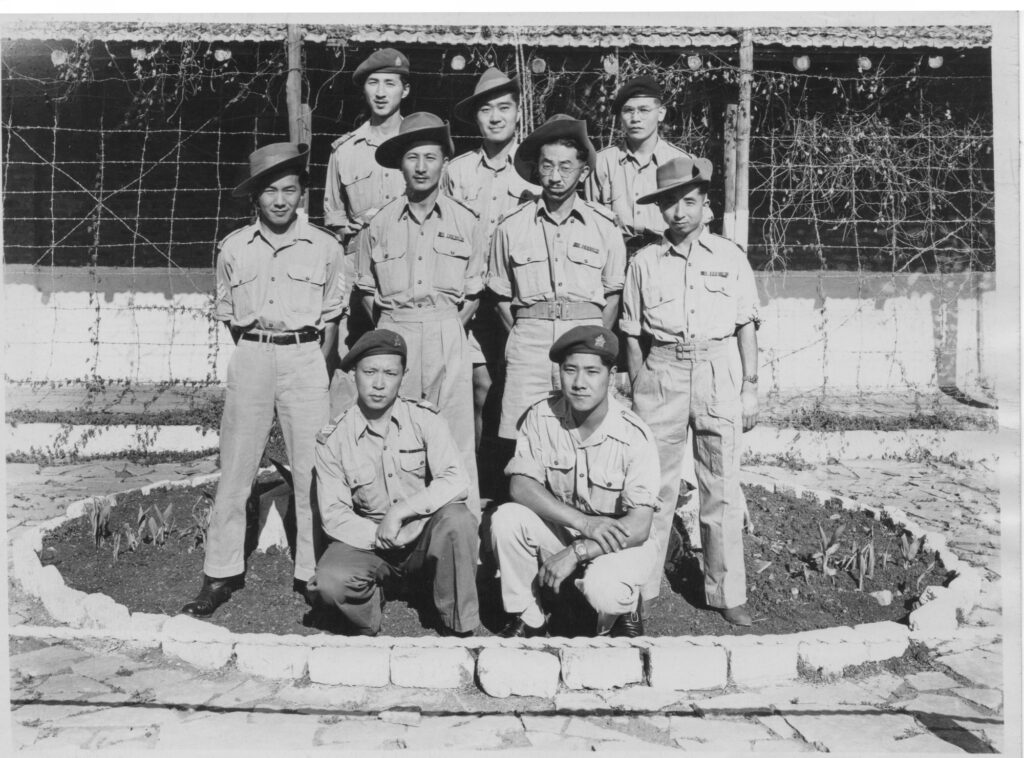
    A Group Portrait of Mollison’s Second Group; Calcutta, India, ca. 1945. Photographed by Jim Miyasaka. Roy Ito Collection. JCCC 2001.76.04.03. Back row, from left: Jim Kagawa; Tom Imada; Nobby Koyama; Ray Takeuchi; Katsu Oikawa; Deo Suzuki; Bill Sasaki; Bob Hoita. Middle row: George Higa; Jim Matsuo; Pat Saito; Tom Nishio; Tak Maekawa; Bob Kayahara; Frank Takayesu; Jim Miyasaka. Front row: Goro Suzuki; J.F. Seyer; D.M. Davies; Doug Uchida; Kaide Shimizu.
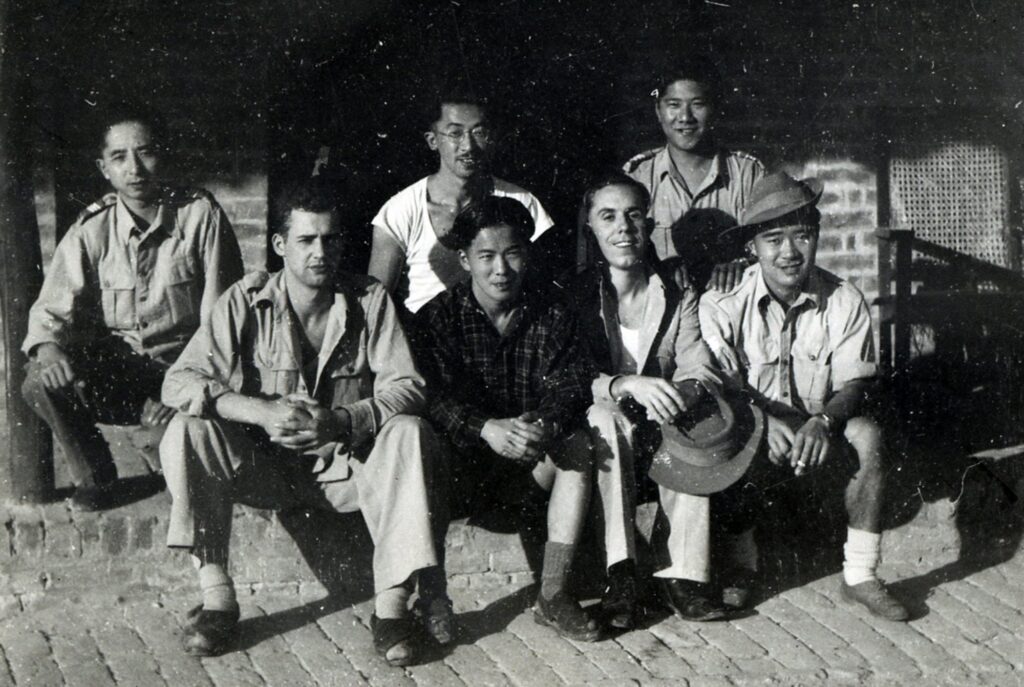
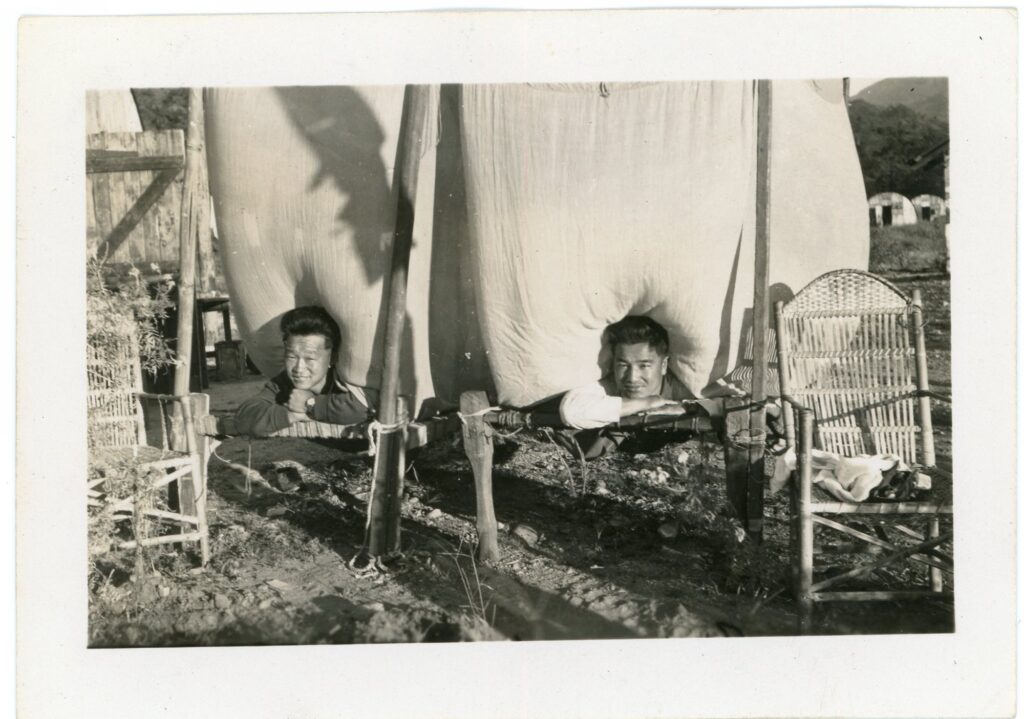
    Goro Suzuki and Tom Nishio in Fagu, India, ca. 1945. Tom Nishio Collection. JCCC 2007.22.02.10B.

    The remaining 33 nisei left Canada for England in February 1945.  They sailed from London to Bombay, and were sent to Poona for basic training at the Force 136 Far Eastern Warfare School (Ito, 1984, p. 235), then to Calcutta for language testing.

    As the nisei were arriving in India, the Japanese Army was retreating from Burma. The focus of the Allied forces under Commander Mountbatten shifted from Burma to Malaya.
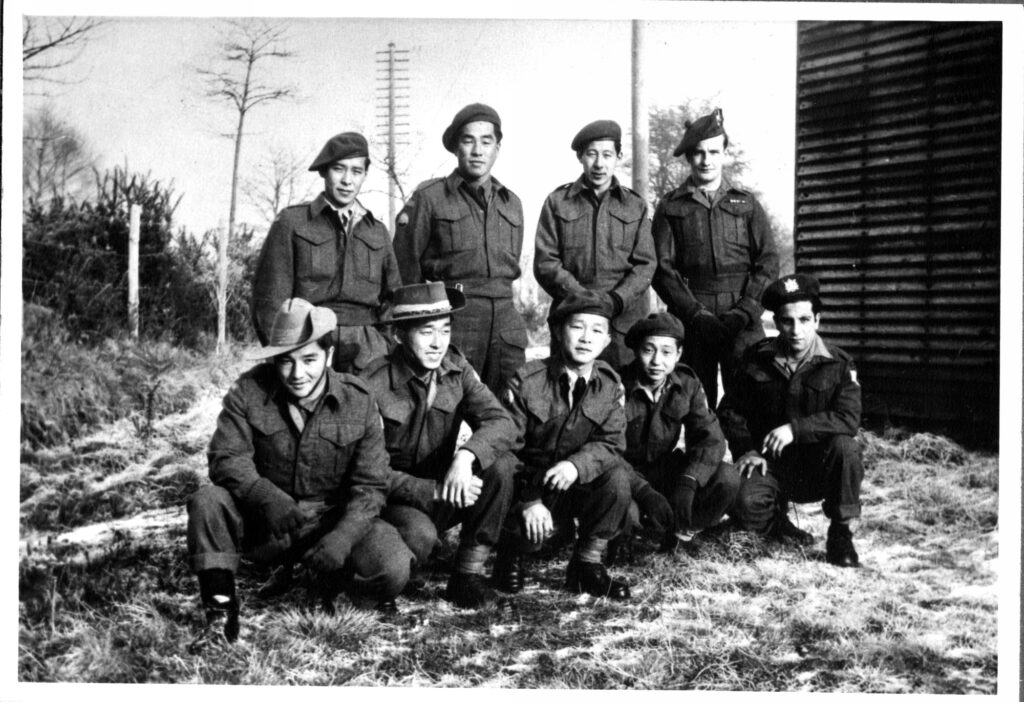
    Photo of Canadian Nisei Veterans; Farnham Camp, England, ca. 1946. JCCC Original Military Collection. JCCC 2005.01.01.06.

    The Canadian nisei were divided into groups and sent to different locations, based on their Japanese language ability.  They were attached to SEAC. Some worked at the SEAC Headquarters in Ceylon. Some worked in psychological warfare, using loudspeakers to intimidate the enemy. Some were assigned to radio broadcast work in Ceylon and Rangoon.  Several nisei were in the invasion force that landed in Malaya, then disarmed Japanese soldiers, and assembled Japanese civilians in Kuala Lumpur (Oki, 1967).

    George Suzuki and Fred Nogami, in the second group sent to India, were in a plane that crashed into a barge in the Singapore Strait on March 27, 1946. Out of the 23 on board, only 7 survived; Suzuki and Nogami were lucky to escape with minor injuries. They were the only Canadian nisei to be injured during Pacific service (Ito, 1984, p. 260).
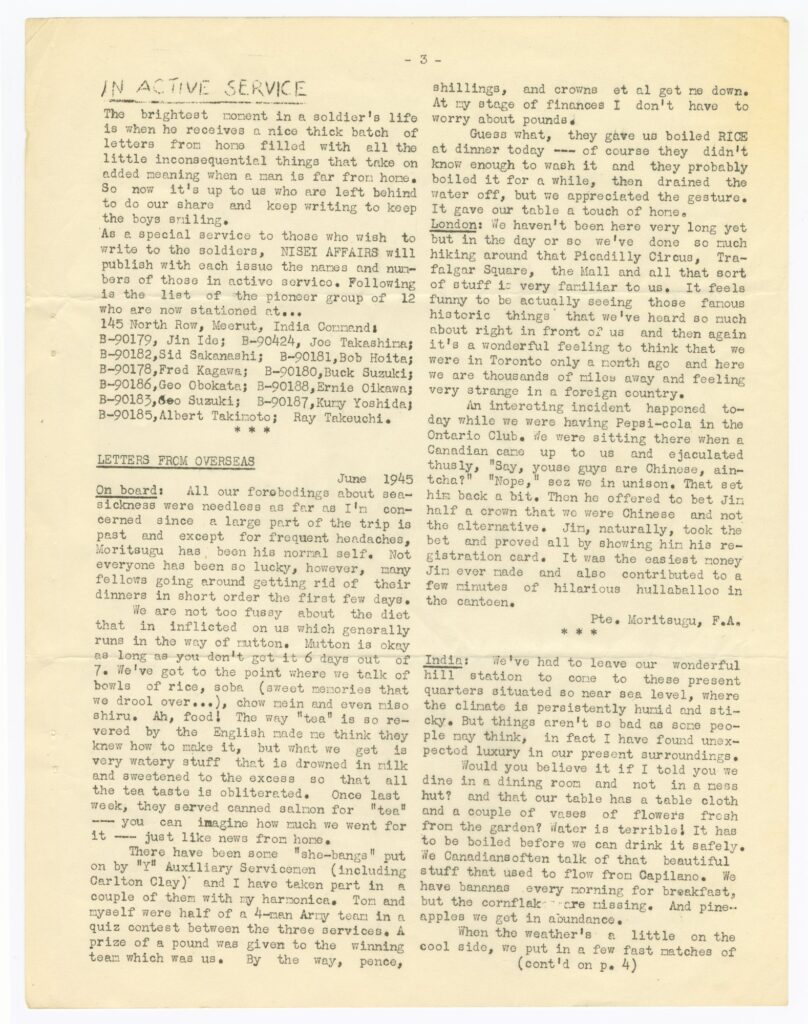
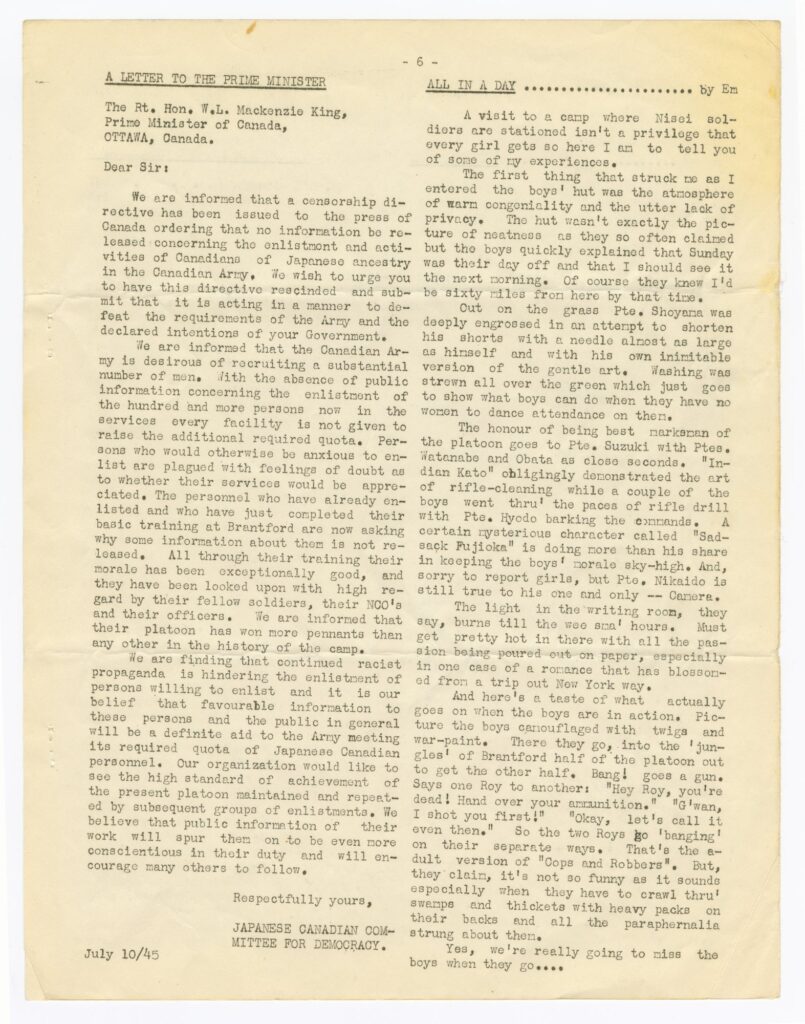
    Nisei Affairs; Vol. 1, No. 1; Toronto, ON; 20 July 1945, pages 3 and 6. Ed and Muriel Kitagawa Collection. NNMCC 2010.30.7.2.3.
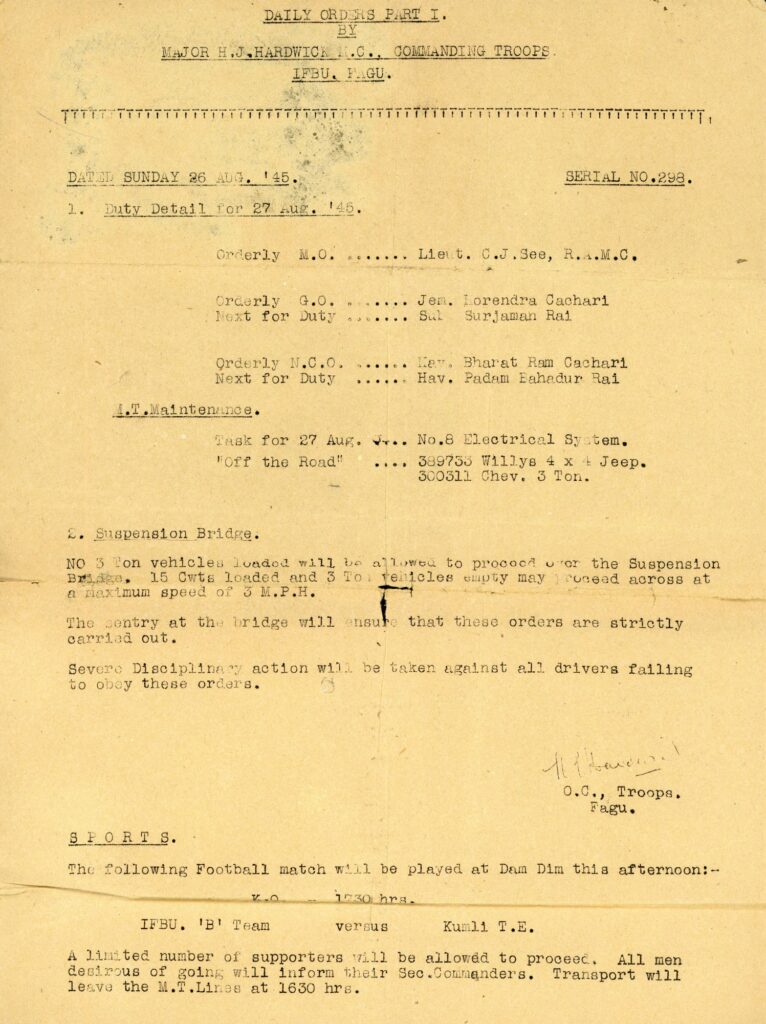
    Scrapbook Page of Tom Nishio, 26 August 1945. Tom Nishio Collection. JCCC 2007.22.02.07.
    Nisei Affairs; Vol. 1, No. 1; Toronto, ON; 20 July 1945, pages 3 and 6. Ed and Muriel Kitagawa Collection. NNMCC 2010.30.7.2.3.
  • Recruitment Problems

    The Australian Army approached Canada first, in March 1944, about the availability of nisei soldiers with a good knowledge of Japanese.  The Australian Director of Military Intelligence requested the loan of up to 200 Japanese Canadian soldiers for intelligence work (Ito, 1984, p. 164). The Canadian military attaché was embarrassed to admit that Japanese Canadians were not allowed in the Canadian Army, and that the reason was political, not because they couldn’t be trusted (Ito, 1984, p. 163).  The attaché later recommended that Australia, not Canada, enlist the Japanese Canadians.

    The second request came from Captain Don Mollison of the British Army in Burma.  Expecting that it would be easy to request Japanese linguists from the Canadian Army, he was shocked, like his Australian counterpart, to learn that Japanese Canadians were excluded from the military. He also learned from the Canadian representative of British Security Coordination that although Japanese Canadians were the most loyal ethnic group in Canada, nisei might be allowed to join the British Army, but not the Canadian Army (Ito, 1984, p. 168).

    The Japanese Canadian Committee for Democracy continued to send letters to the Minister of National Defence, offering the services of Japanese Canadians in the armed forces.

    By July 1944, the attitude of the Cabinet War Committee was changing, recommending the enlistment of nisei with language abilities to help in the Far East with intelligence and interrogation of POWs (Ito, 1984, p. 168). The Canadian Army began secretly compiling lists of nisei willing to volunteer, with the help of the Japanese Canadian Committee for Democracy (Library and Archives Canada, n.d., Japanese Volunteers for Canadian Armed Forces). The names of Eichi Oike, Louis Suzuki, Frank Takayesu, and Kiyoshi Kitagawa were incorrectly spelled in these volunteer lists.

    At the same time, Admiral Mountbatten, the supreme allied commander of Southeast Asia Command (SEAC) in India, requested nisei to serve in propaganda units in the Special Operations Executive (SOE) established by Churchill to operate behind enemy lines. Canada responded that nisei were not allowed to be enlisted in Canada and they should be enlisted in the Indian Army (Theurer and Oue, 2021, p. 232).

    In October 1944, the Cabinet War Committee again refused to permit nisei enlistment, but permitted them to enlist in the Armed Forces of other members of the United Nations (Ito, 1984, p. 175).

    Captain Mollison was only able to find twelve nisei who were willing to sign up as members of the British army in Burma (Ito, 1984, p. 174).  He acknowledged that most nisei would want to serve as Canadians, not in uniforms of other countries. There was no guarantee that they would be allowed to keep their Canadian citizenship on their return. And if they could return to Canada after the war, they could not demand the vote. Mollison was becoming exasperated, as the need for nisei linguists overseas accelerated.  As a last resort, he sent a message to William Stephenson of British Security Coordination to request that Churchill pressure the Canadian government to let nisei enlist (Ito, 1984, p. 176)

    The Cabinet War Committee reluctantly agreed on January 17, 1945 to enlist 100 Japanese Canadians in the Canadian Army.  This decision was made in secret (Ito, 176), and was not publicized.

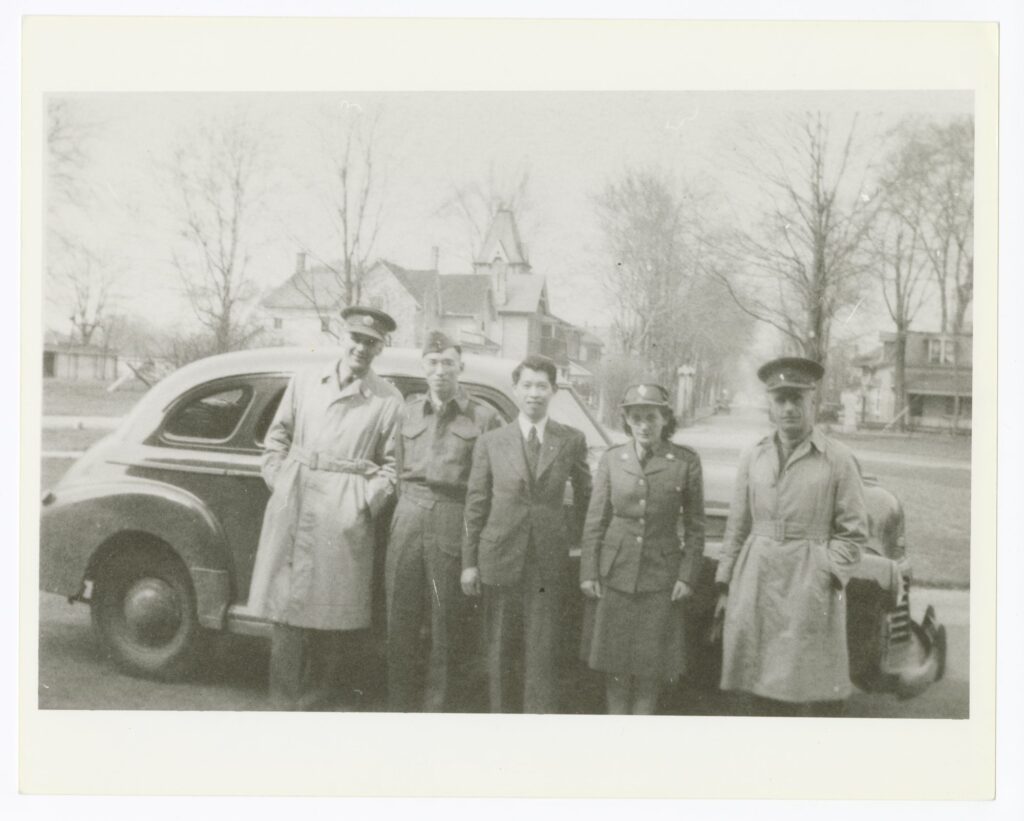
    Enlistment began in March in Toronto. Eiji Yatabe, one of the first nisei recruits, accompanied Lieutenant Cecil Thomas and Major H.J. Duchesnay throughout southern Ontario to recruit other nisei over three days. Many of the recruited Japanese Canadians had been interned by the government they were now pledging to serve. Some nisei that signed up were disowned by their families, who were very bitter over the internment (Broadfoot, 1977). Some of the nisei who enlisted had brothers in Japan who were fighting on the opposite side.  Two of the enlisted soldiers came directly from internment camps to volunteer (Ito, 1984, p. 250).  The greatest regret of the recruits was that enlistment was for linguistic purposes only, rather than combat.

    Recruiting team, February, 1945. Second Lieutenant Cecil Thomas (left), Eiji Yatabe, Minoru Yatabe, CWAC driver, Major H. J. Duchesnay, in Kensington Market area, Toronto. Roy Ito Collection. 2001.4.4.5.15

    Min Yatabe said:

    “When the enlistment decision was announced, most nisei lads welcomed it as an opportunity to demonstrate our loyalty to Canada and thus show our community in a good light to the country of our birth.”

    Nisei recruits were placed in two groups – the so-called India group under the British officer Captain Mollison, and the S-20 group, sent to Brantford for basic training and then to the S-20 Japanese language school prior to service. The India group included the 12 who had previously volunteered, plus 23 who were sent to India soon after (Oki, 1967). Three nisei who lived in the Okanagan (outside of the Protected Area) were sent to Melbourne, Australia (Ito, 1984, p. 191).

  • Demand for Translators

    In 1944, the Allies were intensifying their campaign in the South Pacific, as the European War was winding down. Demand for Japanese Canadians in the Forces came from outside Canada rather than from Canada. Australia and Britain were in dire need of Japanese-speaking translators in Southeast Asia to question Japanese POWs and to translate Japanese documents. Canada was the only country in the British Empire with any substantial Japanese-speaking population. Many locations around the Pacific Ocean needed the services of Canadian nisei.

    Three years earlier, the US army had set up a Japanese-language training school (Military Intelligence Service Language School, MISLS) for interpreters and translators at Fort Savage, Minnesota, and later at Fort Snelling, Minnesota (Nakamura, 2024, Denfield, 2015).  By 1946, approximately 6000 students, mostly nisei, had trained at the school (Ito, 1984, p. 162).  They served at many locations around southeast Asia, translating captured documents, interrogating prisoners, intercepting radio messages, and communicating with civilians and soldiers. They were essential in the post-war occupation of Japan. 

    Fifteen Canadians (of non-Japanese ancestry) enrolled in the one-year language course. Most of the fifteen were found to be unsuitable students.  Their lack of education and long absence from study made it impossible for them to learn the language quickly (Lamarsh, 1967).

    General Charles Willoughby, G-2 intelligence chief, described the language training American nisei received: “The nisei saved countless Allied lives and shortened the war by two years.  General Douglas MacArthur said, “Never in military history did an army know so much about the enemy prior to actual engagement (National Japanese American Historical Society, undated)”.

    General Douglas MacArthur set up the Allied Translator and Interpreter Service (ATIS) in 1942.  ATIS became the largest military intelligence centre assisting in the war against Japan. It was based, at consecutive times during the war, in Australia, Dutch New Guinea, and the Philippines. ATIS translated seized Japanese items and provided interpreters for the interrogation of prisoners. A large proportion of ATIS staff were American nisei (seayourhistory, undated). In 1944, the Southeast Asia Translation interrogation Centre (SEATIC) was established to interrogate Japanese prisoners-of-war and to translate captured Japanese documents. SEATIC urgently required qualified linguists in order to become fully operational (Ito, 1984, p.163).  Allied and Canadian forces were enrolling non-Japanese in their 12-month Japanese language school and attempting to graduate them as expert interpreters and translators (Theurer and Oue, 2021, p. 231).

  • Acknowledgement of Service

    Acknowledgement of Service

    Acknowledgement of Service

    The service of the nisei in the Second World War was not publicized by the Canadian government.  They were not given any special awards or ceremonies and their work was not publicly recognized in the way that the military service of nisei (such as the soldiers of the 100th Infantry Battalion and 442nd Regimental Combat Team) was highlighted in the US.

    “The nisei contribution to the Canadian war record rested – through no fault of their own – upon what was a short and far from glamorous period of accomplishment; moreover, its impact on race relations in Canada was almost negligible (Adachi, 1976, p. 195)”.

  • End of the Second World War

    End of the Second World War

    END OF THE SECOND WORLD WAR

    Trooping Depot; Deolali, India, ca. 1945. These men are nine of the 12 in the first group of Nisei sent to India. Courtesy of Patti Kagawa, daughter of Tatsuo Fred Kagawa. Front row L to R: Sid Sakanashi, Jin Ide. Middle row: Frank Moritsugu, Harold Hirose, Albert Takimoto, Edgar Iwamoto. Back row: Elmer Oike, Tatsuo Fred Kagawa, Ernie Oikawa.

    Albert Takimoto was in the first group of Japanese Canadians who was enlisted by Captain Mollison to served in the British Army. He had been the first to be contacted by Mollison, and was the first volunteer in the group.  A graduate of UBC, he was also designated as the leader of the group of twelve (Ito, p. 235, Theurer, page 240).  He worked as a radio broadcaster at SEAC in Ceylon.  He reported news items in Japanese four times at day (Ito, 1984, p. 236).  The broadcasts were aimed at Japanese troops in the field (Theurer and Oue, 2021, p. 240) in Burma and Thailand.  When Albert learned about the apocalyptic bombing of the city of Hiroshima on August 6, 1945, he used a dictionary to quickly translate the words “atom bomb” into Japanese and decided on genshi bakudan for use by Radio Ceylon.  That was the first use of the expression genshi bakudan and it has become the accepted Japanese term (Theurer and Oue, 2021, p. 240). 

    Edgar Iwamoto, who was in the second nisei group sent to India, was shocked to learn about the fate of Hiroshima, where he had lived from the ages of four to sixteen with his aunt. He was sure that his aunt, friends, neighbors, and relatives in the city were all dead (Ito, 1984, p. 246).

    After a second catastrophic bomb was dropped on Nagasaki, the Emperor of Japan announced on August 14, 1945 in a radio broadcast that Japan should surrender. The Second World War came to a sudden end.

    Nisei Affairs, a journal published by The Japanese Canadian Committee for Democracy, printed an editorial on Victory in Japan Day, expressing relief on Japan’s surrender and the effect of the war on Japanese Canadians: “Ever since the Japanese war machine invaded China, we Japanese Canadians have lived under the shadow of her guilt even though we had no part in her crime (Nisei Affairs, 1945, p. 2)”

    As the war ended, the work of the nisei in southeast Asia shifted to liaising with Japanese soldiers in locations that Japan had previously captured.  Nisei had to accept official surrenders and intercept soldiers who had committed war crimes (Moritsugu, 2015); they had to question surrendered personnel to determine what the Japanese had learned about the work and plans of the Allies.

  • Service in Europe Before Pearl Harbor

    Service in Europe Before Pearl Harbor

    Service in Europe Before Pearl Harbor

    Between 1942 and 1945, Japanese Canadians were officially banned from participating in the armed forces of their own country, although many tried very hard to enlist. Despite the ban, 32 nisei served in the Canadian military in the Second World War during that period.