Category: The Second World War: The War at Home

  • Opposition to Enlistment

    Opposition to Enlistment

    Opposition to enlistment of Japanese Canadians in the Canadian military came from many directions: the Canadian public, the government, and from the families of internees.

    From 1942 until 1945, Japanese Canadians were banned from participating in the Canadian Forces, although many tried very hard to enlist and were turned down. Despite the ban, 32 nisei served in the Canadian military at this time, as nisei outside of BC had been able to enlist before Pearl Harbor. Many of this group experienced combat in Europe.

    At a conference in Ottawa on January 8 and 9, 1942, the issue of nisei serving in the armed forces was raised. The 32-member Pacific Joint Services Committee, representing the army, navy and air force recommended nisei enlistment, but the five committee members from BC were strongly opposed and suggested instead that able-bodied male adult Japanese nationals be removed from the province (Theurer and Oue, 2021, p. 133). On January 10, Ian Mackenzie, the chairman, sent a private letter to Prime Minister King stating his opinion that nisei should not be permitted to enlist (Ito, 1984, p.141).

    There had been a tentative plan proposed at the same conference to organize a Civilian Corps of Japanese, which would allow nisei to participate in the war effort. An Order-in-Council was passed by the Cabinet in February 1942, but due to anti-Japanese public opinion, the plan was dropped (Ito, 1984, p. 144-145).

    Soon after, Order-in-Council P.C. 1486 was introduced, and the removal of all “enemy aliens” began from the Protected Zone in BC.

    The Japanese Canadian Committee for Democracy promoted the service of nisei in the Canadian army in order to demonstrate their loyalty, stating that nisei were willing to fight against Japan if necessary (Ito, 1984, p. 195). In January 1945, a raucous public meeting was held in Toronto in order to discuss this issue. The chairman, Eiji Yatabe, discussed the well-known success of the Japanese American 100 Battalion and 442nd Regimental Combat Team as an example of why nisei should demonstrate their loyalty to their country (Obata, 2000; Ito, 1984, p. 195). 

    “I can recall violent threats, false accusations, and angry shouting matches in every direction. It was chaos. Finally, it came to a vote. Should the JCCD seek the elimination of the government policy barring Japanese Canadians from the Armed Forces? Those present at the meeting overwhelmingly rejected our proposal. I couldn’t believe the response. Then in a moment of spontaneity, the entire executive stood up and resigned en masse right then and there and almost all the male members of our JCCD executive volunteered to serve overseas once the restrictions against us were lifted (Obata, 2000)”.

    The executive members who resigned, then enlisted soon after, included Roger Obata, George Tanaka, and Eiji Yatabe. Kinzie Tanaka (who was born in Japan) was later accepted for enlistment but did not serve due to the end of the war (Ito, 1984, p. 305).

    “The conflict within our community arose from the fact that some people felt very bitter towards the Canadian government because of the expulsion, incarceration, and relocation ordeal, and wanted nothing to do with helping out a country that had treated its own citizens so shamefully (Obata, 2000)”.

    Some nisei who enlisted were disowned by their families, who were very bitter over the internment (Broadfoot, 1977, p. 305).

    “First, they won’t let us join up when we’re in BC. Then they kick us out of the place like we’re no good and spies and they put us in camps all over the country, and then when the British say they want us, they raise a fuss and say ‘No, these men are Canadian citizens.  They go to war like Canadians’.  Funny business (Broadfoot, 1977, p. 307)”.

    In 1944, the BC Security Commission office in Toronto was collecting names and Identity numbers of nisei who were willing to enlist in the army for General Service, but did not publicize this fact.  Lists dated November 13, 1944 and December 13, 1944 include the names of nisei located in Alberta, Manitoba, Ontario and Quebec.

    The irony that nisei were volunteering to serve the country that was persecuting them was expressed in an editorial by Allan P. Allsebrook of Kaslo in the October 28, 1944 issue of the New Canadian newspaper. The editorial was written in response to an anti-Japanese letter posted in the Nelson Daily News.

    “Is he aware that the majority of our able-bodied young nisei — homeless, driven, bewildered, shamelessly robbed of their possessions, reviled, spat upon, and humiliated…are ready and willing to vindicate their honour and loyalty to Canada by enlisting for service?  But our priceless politicians will have none of them (Allsebrook, 1944).”
  • Internment

    Internment

    The forced removal of Japanese Canadians had started on the day that Pearl Harbor was attacked, with the removal of 39 respected Japanese nationals from the community to Prisoner-of-War camps.

    Eventually, 20,000 citizens would be uprooted and forcibly moved.

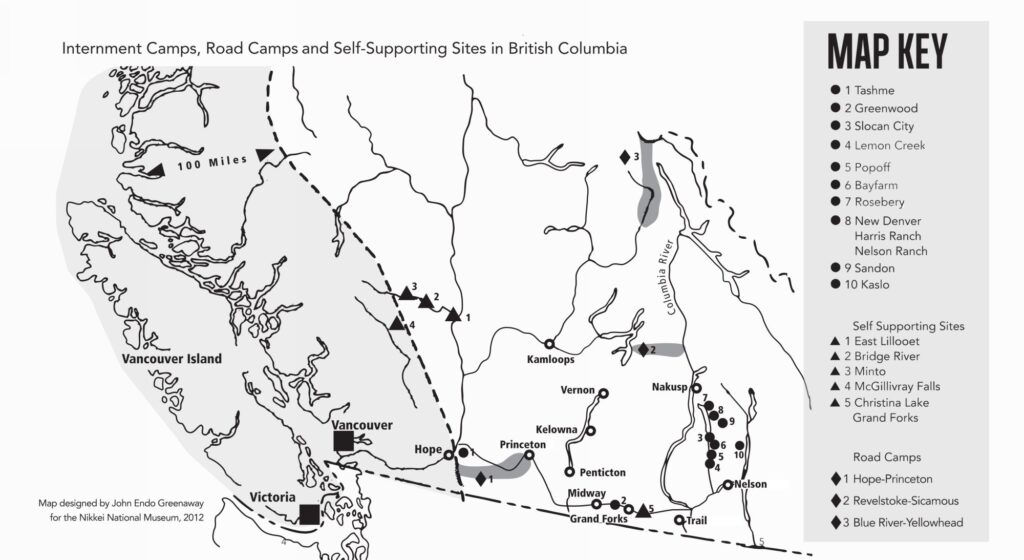
    Facing pressure from British Columbia politicians, the Cabinet of Mackenzie King passed Order-in-Council P.C. 365 on January 16 which created a 100-mile Protected Zone extending from the BC coast. Male enemy aliens (Japanese nationals) aged 18-45 were removed from this zone beginning on February 24 and sent to work camps in the Rocky Mountains west of Jasper (Ito, 1984, p. 142, Theurer and Oue, 2021, p. 136). 

    On February 7, 1942, all male Japanese Canadian citizens between the ages of 18 and 45 were ordered to be removed from the Protected Zone.

    On February 24, 1942, Order-in-Council P.C. 1486 was introduced, requiring all people of Japanese origin, regardless of citizenship, to be removed from the Protected Zone. Japanese nationals, naturalized Canadians, and Canadian-born citizens were all considered to be enemy aliens.  Japanese women who were married to white men were allowed to stay in the Protected Zone.  A curfew was established. Japanese Canadians were prevented by law from owning land or growing crops.

    On March 4, 1942, the BC Security Commission was created to oversee the evacuation (Suzuki, 1987, p. 59).

    In March 1942, Order-in-Council P.C. 1665 was introduced. Japanese Canadians were ordered to turn over property and belongings (plus items that ‘evacuees’ could not bring with them) to the Custodian of Enemy Alien Property as a “protective measure only.” Homes, farms and properties of Japanese Canadians were seized by the Custodian.  Vehicles, cameras, radios, and firearms were confiscated.

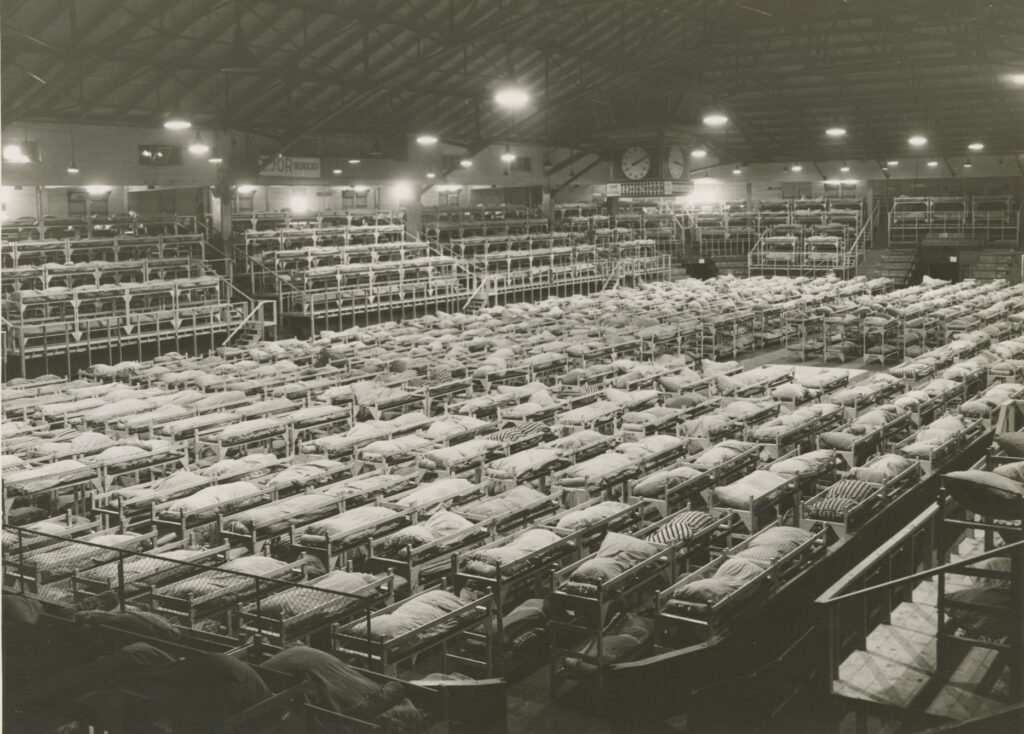
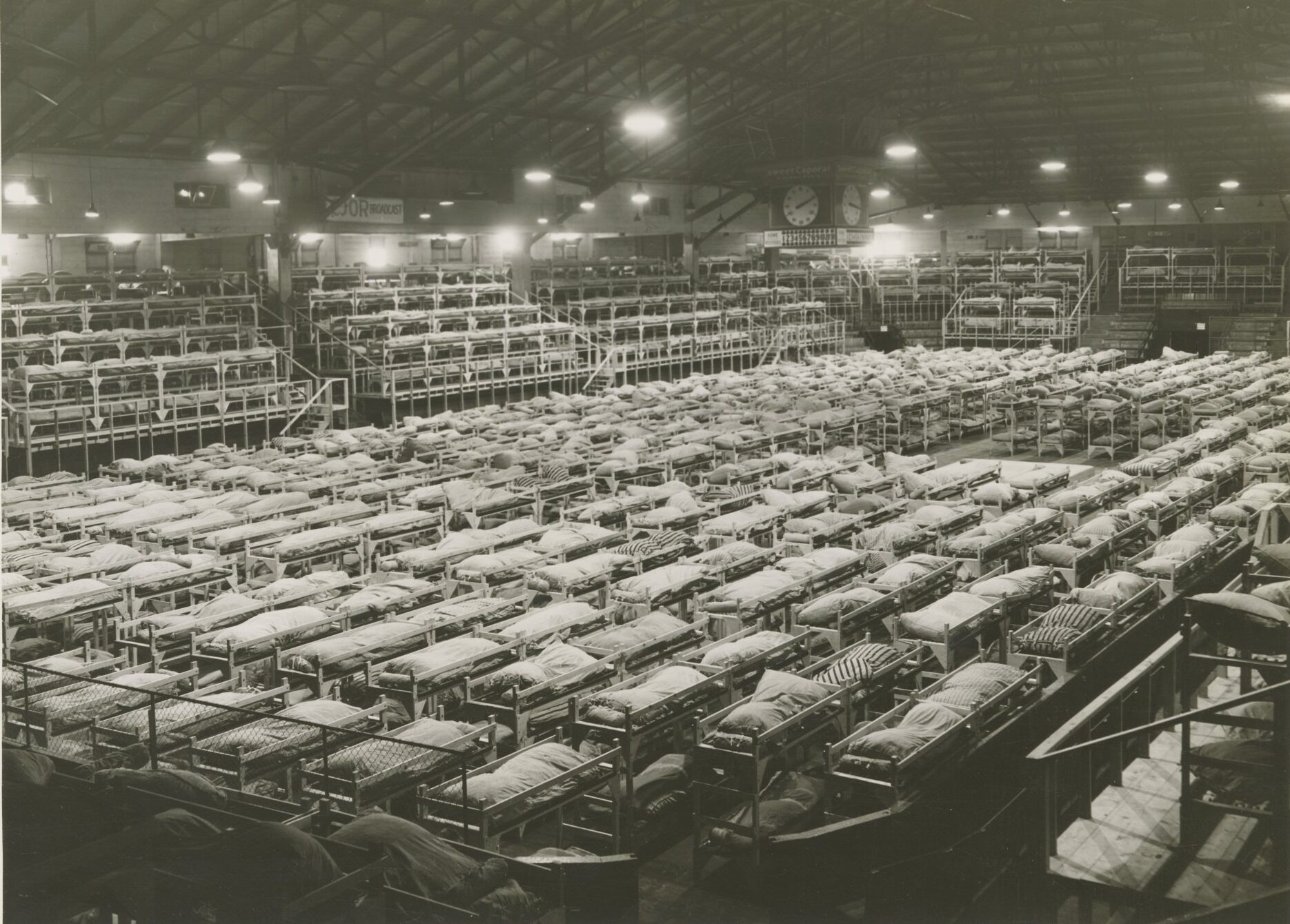
    Building K, Men’s Dormitory (Formerly Forum); Hastings Park, Vancouver, BC, circa 1942. Photographed by Leonard Frank. Alex Eastwood Collection. NNMCC 1994.69.3.18.

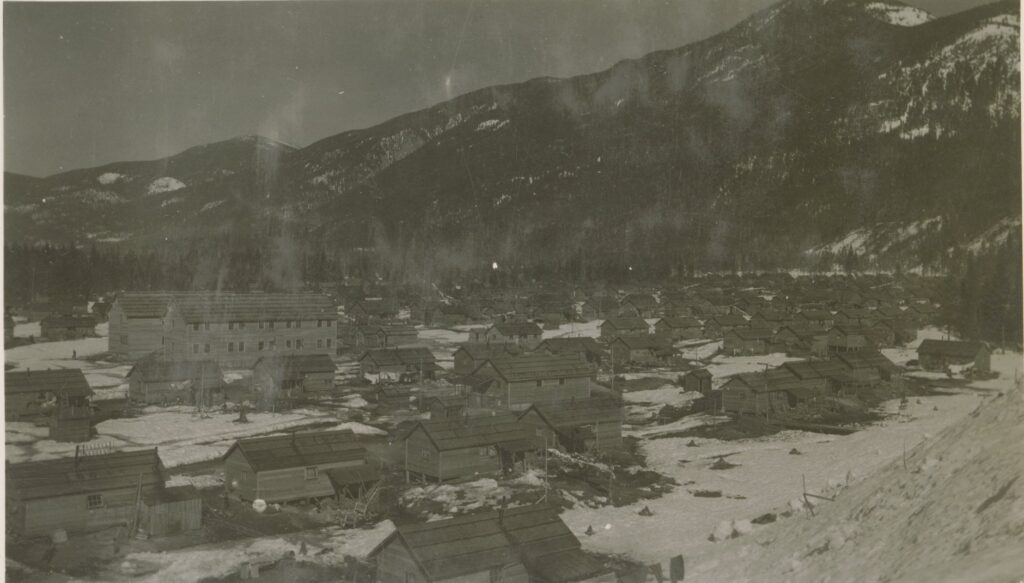
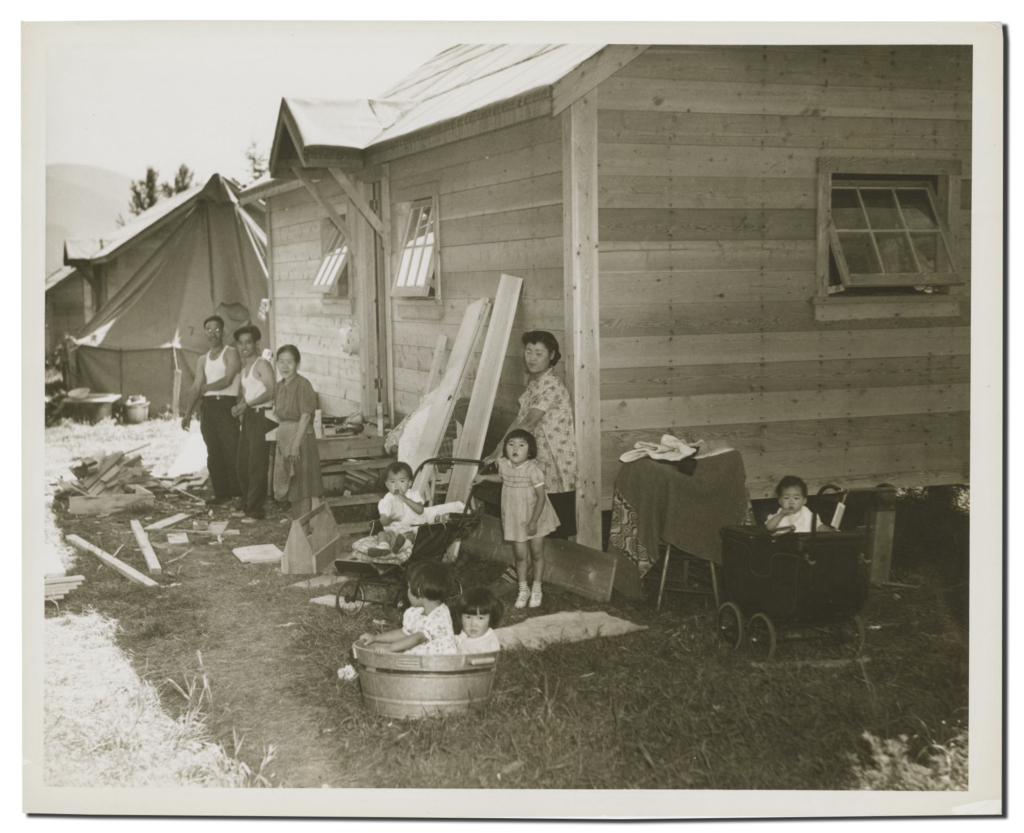
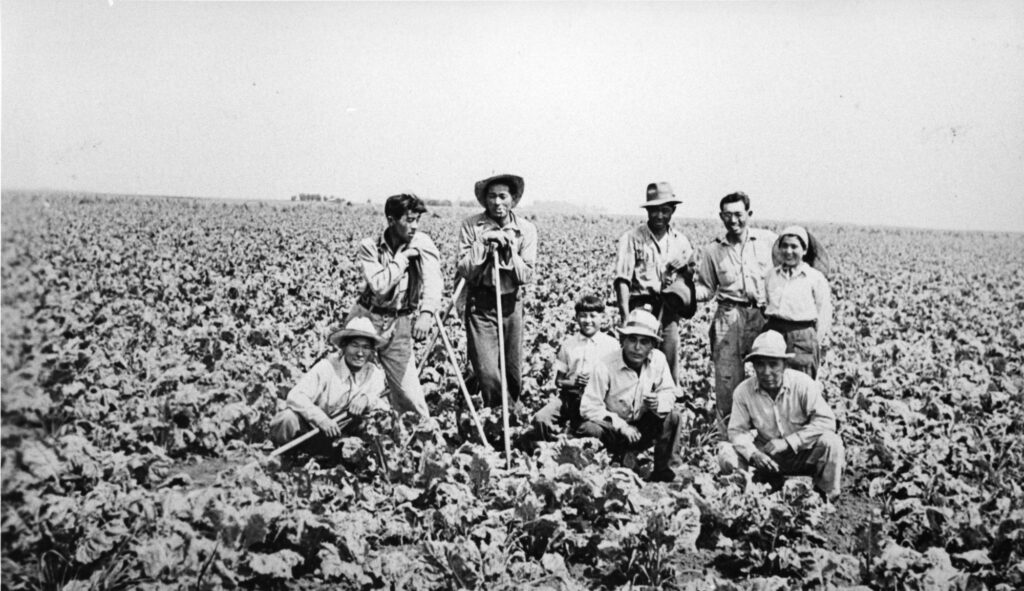
    Temporary detention of Japanese Canadians at the livestock building of Vancouver’s Hastings Park began. Able-bodied men were sent to road construction camps around the country and women, children and elderly people were forced to go to internment camps, most of which were ghost towns in the BC interior, outside the Protected Area. Living conditions in the camp were very crowded and many families were unprepared for the cold winters in tents and poorly insulated buildings. All mail was censored. Families who wished to stay together were sent to sugar beet farms in Alberta, Manitoba, and Ontario to work and live under very harsh conditions.  Some people were only given 24 hours to pack their belongings and leave. Adults were limited to 150 pounds of baggage, and children, 75 pounds. Those who protested about denial of their rights were sent to the Petawawa and Angler POW camps in Ontario, surrounded by barbed wire and armed guards.

    Issei veterans from the First World War learned that winning the franchise in 1931 and various medals for their bravery did not protect them from internment.  Land, including farms, that the veterans had been granted from the Soldiers Settlement Board in 1919, was confiscated and sold during their internment. Only one First World War veteran, Zennosuke Inouye, regained his land after internment.

    The provincial and federal governments argued about schooling for children in the internment camps.  The federal government finally hired inexperienced nisei teachers for grades 1 to 8. The young children were taught by high school graduates who had taken a one-month intensive teaching course. High school students paid for correspondence courses or paid fees to attend schools. In some cases, they attended classes organized by Catholic, Anglican, and United churches.

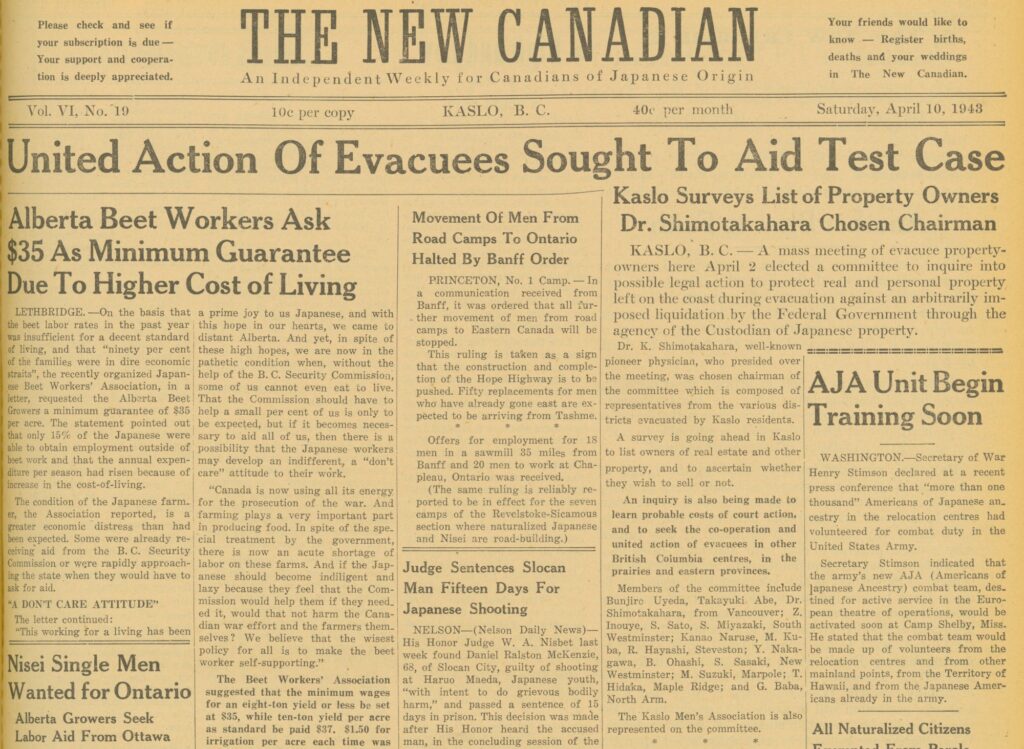
    The New Canadian Newspaper remained open and was moved to Kaslo, one of the ghost towns. The New Canadian became a bilingual English/Japanese newspaper and was essential in maintaining communication between those who were scattered in many locations. It was also used by the Canadian government to publish public announcements to the scattered Japanese Canadian community.

    Newspaper article from The New Canadian, United Action Of Evacuees Sought to Aid Test Case, 10 April 1943, page 1. The New Canadian Newspaper Collection. NNMCC 2010.6.

    Removing the Japanese from the workforce had a major impact on BC’s economy. The fishing boats and equipment seized from the Japanese were quickly sold, and the boats were soon operating with non-Japanese crews. In June 1942, the Director of Soldier Settlement was allowed to purchase or lease vacated farms. The Custodian of Enemy Alien Property sold the boats and farms belonging to the internees without their knowledge or consent (Theurer and Oue, 2021, p. 186). Internees received money from the sale, but most received far less than market value once various agents, lawyers and other middlemen were paid. Internees needed the money to pay for the costs of their own internment. 

    By the end of 1942, Japanese Canadians had been forcefully removed to the following locations:

    12,029 prison camps in the BC interior

    945 labour camps

    3991 sugar beet farms in the prairies and Ontario

    1161 self-supporting camps outside the Protected Zones

    699 prisoner-of-war camps in Ontario

    42 deported to Japan

    111 incarcerated in Vancouver

    105 hospitalized in Hastings Park, Vancouver

    Overview of Lemon Creek, BC, circa 1942. Nancy Nishibata Collection. NNMCC 2010.49.4.
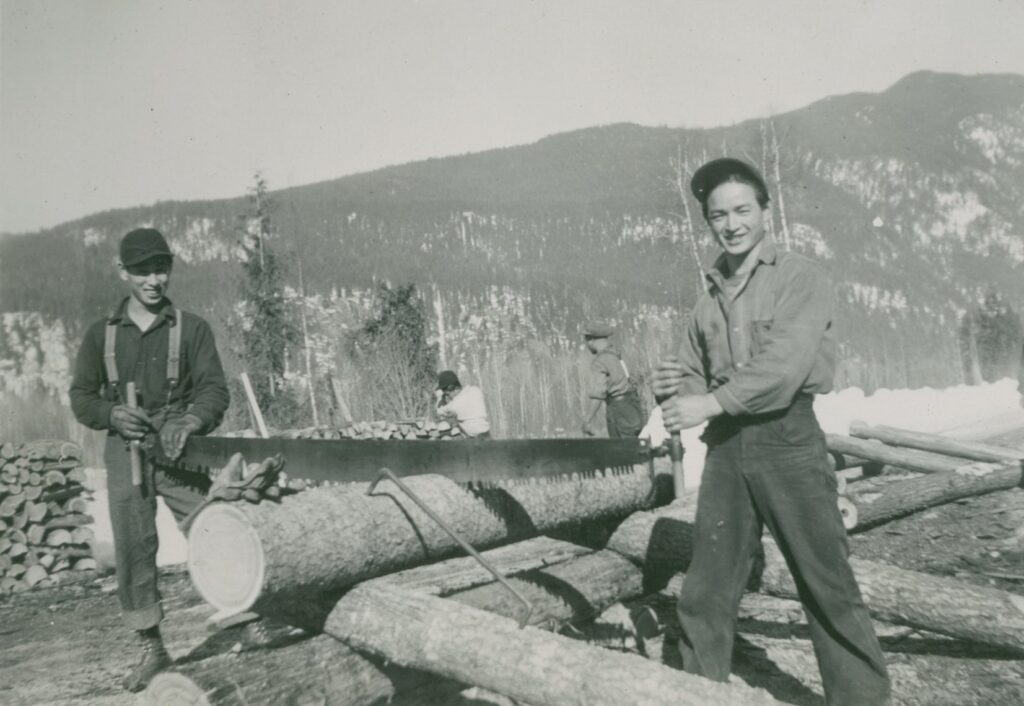
    Unidentified Japanese Canadian men working at labour camp, [Solsqua, BC], circa 1945. Thomas Sawayama Collection. NNMCC 2017.11.1.2.40.

    Approximately 2,000 Japanese Canadians were living outside the Protected Zone and allowed to remain in place, but subject to registration, restriction of activities, travel, and confiscation of prohibited items. 1359 were provided with special work permits that allowed them to work inside the Protected Zone (Nikkei National Museum and Cultural Centre, undated).

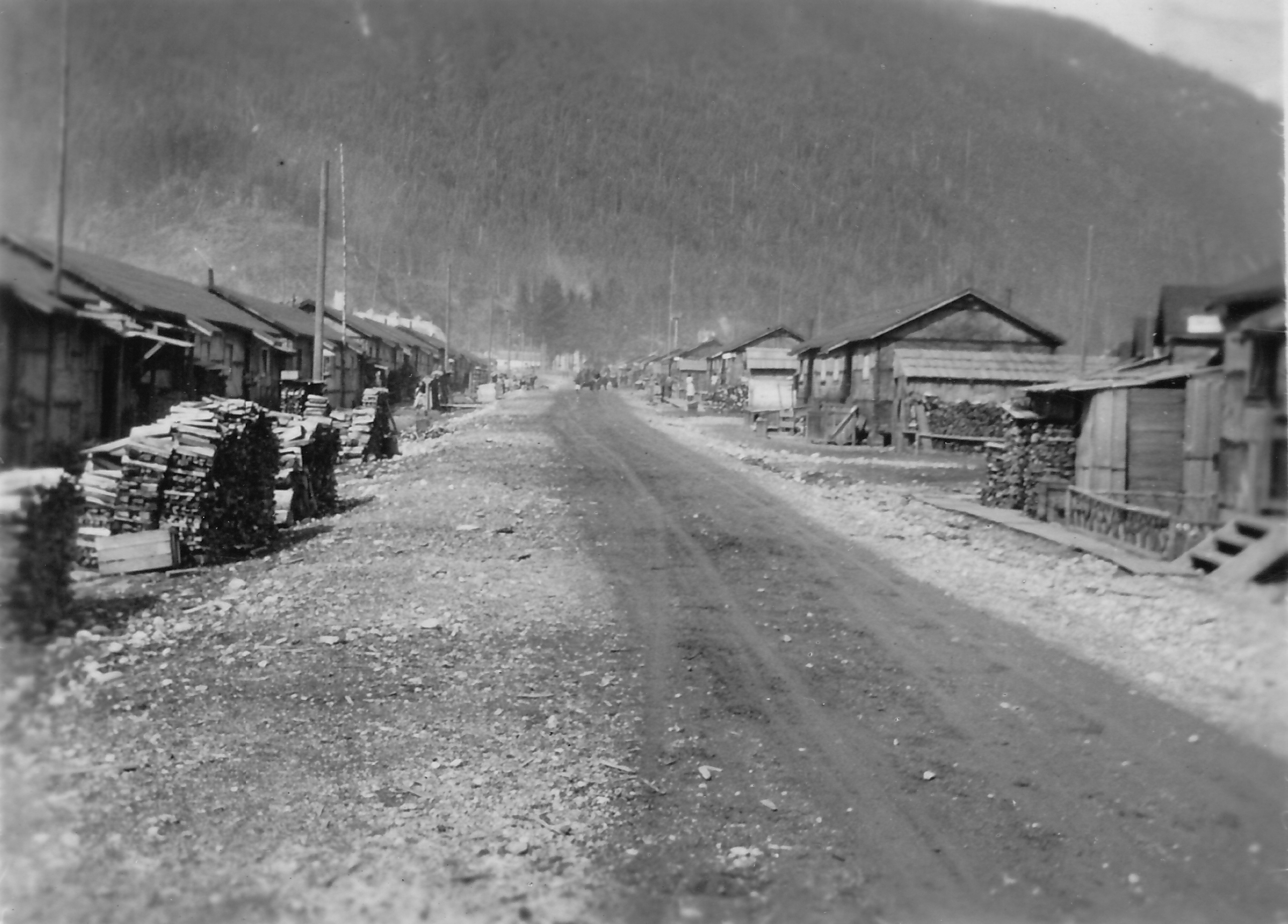
    An avenue in Tashme; Tashme, BC, circa 1942. Eiji Yatabe Collection. NNMCC 2018.36.1.8.39.
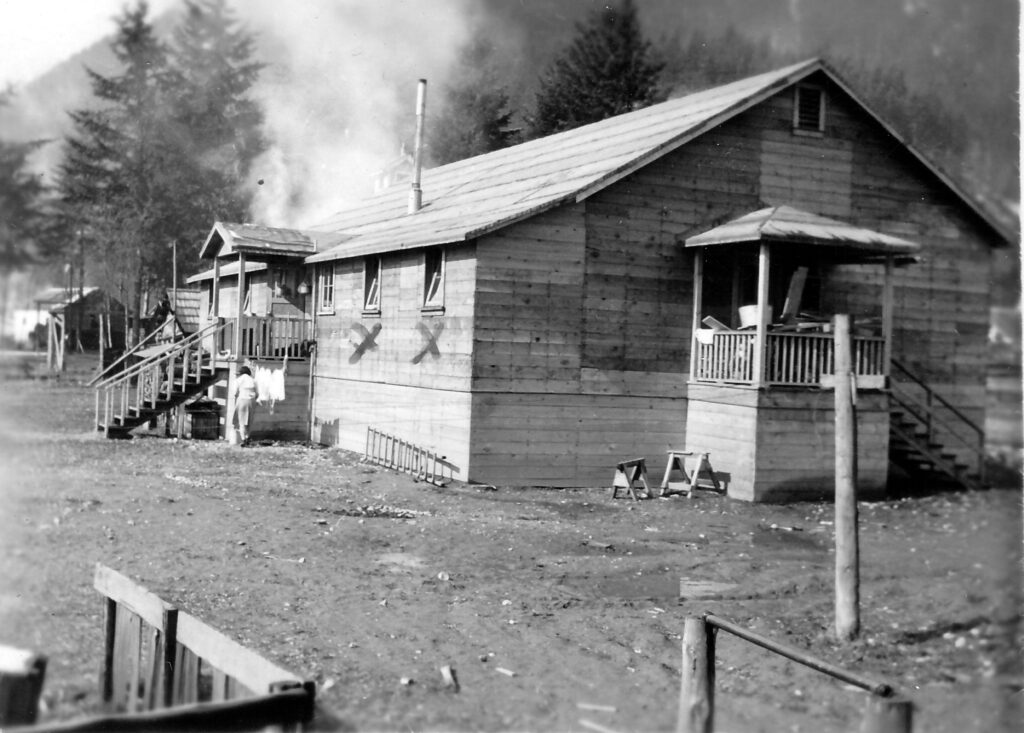
    Tanaka “Abode” in Tashme; Tashme, BC, circa 1942. Eiji Yatabe Collection. NNMCC 2018.36.1.8.37.
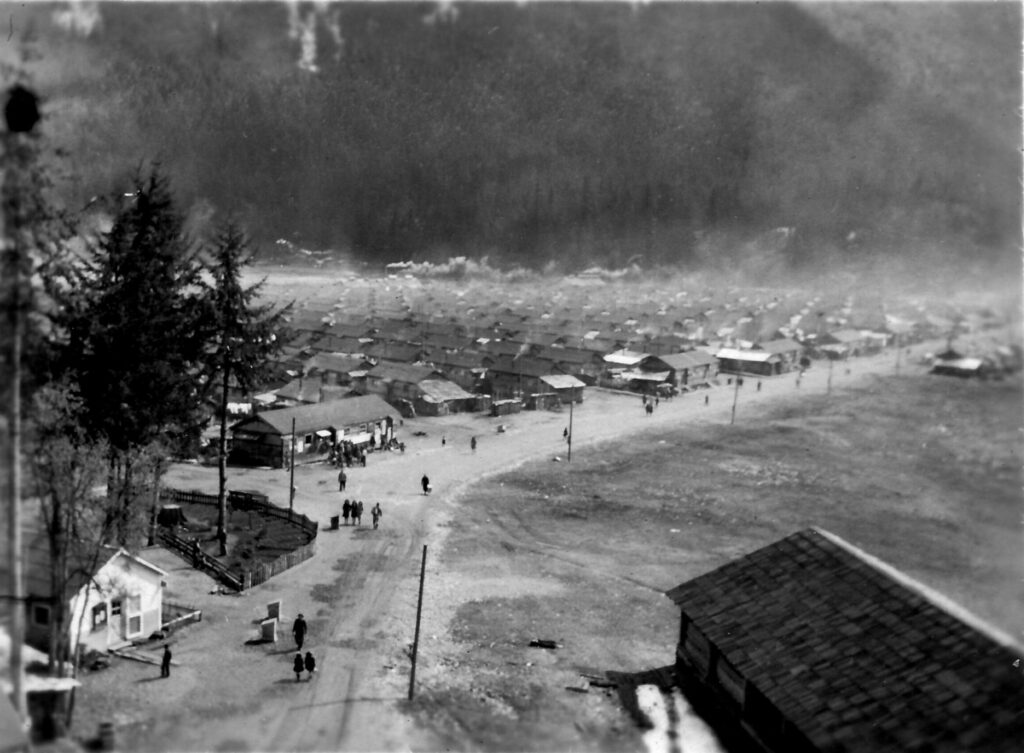
    Aerial photograph of boulevard in Tashme, BC, circa 1942. Eiji Yatabe Collection. NNMCC 2018.36.1.8.40.

    In 1943, the Custodian of Enemy Alien Property began to sell other belongings of internees without their consent. 

    British Columbians did not want the Japanese Canadians to return to BC and constantly lobbied to have the internees moved eastward or deported to Japan.  In order to encourage settlement in eastern Canada, improvements to the camps were discontinued (Theurer and Oue, 2021, p. 189).  People were allowed to leave the camps if they agreed to settle east of the Rocky Mountains. “BC.’s characterization of Japanese Canadians as dangerous subversives had been so effective that few people actually wanted them living in their communities, complicating the government’s efforts to settle evacuees in the east.  For most of the Japanese, leaving the camps voluntarily was not an inviting prospect because they faced discrimination, uncertain employment prospects, and unjust living restrictions (Theurer and Oue, 2021, p. 190)”. They were afraid they would experience the same racial prejudice that they had encountered in BC.

    Japanese “evacuees” find themselves in new settlement – Slocan area; New Denver, BC, circa 1942. Photographed by Leonard Frank. Alex Eastwood Collection. NNMCC 1994.69.4.16.

    The Japanese Canadian Committee for Democracy was organized in 1943 by BC nisei (mainly UBC students) including George Tanaka and Roger Obata, who had moved from BC to Toronto. It helped Japanese Canadians with resettlement and with problems such as the loss of their property and belongings. It also fought against the deportation of internees to Japan. The Cooperative Committee on Japanese Canadians, comprised of YWCA council members and church societies, was also established in 1943 to help internees from BC with resettlement (Anonymous, undated).

    Outdoor Portrait of a Group of People in a Field of Sugar Beets with Farming Tools at Tully’s Farm, Manitoba, 1944. Original source: Mrs. T. Hosaki. Canadian Centennial Project Fonds. NNMCC 2010.23.2.4.139.
  • Pearl Harbor and Aftermath

    Pearl Harbor and Aftermath

    “On December 7, 1941, an event took place that had nothing to do with me or my family and yet which had devastating consequences for all of us – Japan bombed Pearl Harbor in a surprise attack. With that event began one of the shoddiest chapters in the tortuous history of democracy in North America. More than twenty thousand people, mostly Canadians by birth, were uprooted, their tenuous foothold on the West Coast destroyed, and their lives shattered to an extent still far from fully assessed. Their only crime was the possession of a common genetic heritage with the enemy (Suzuki, 1987, p. 11).

    “The nisei hadn’t anticipated the treachery of the devastating ‘sneak attack” on Pearl Harbor on December 7, 1941.  That attack confirmed every bigot’s belief in the inherent deceit and untrustworthiness of the Japanese race (Suzuki, 1987, p. 56).

    At the time of the Pearl Harbor attacks, three-quarters of Japanese Canadians were either naturalized or native-born Canadians (Izumi, 2024). 

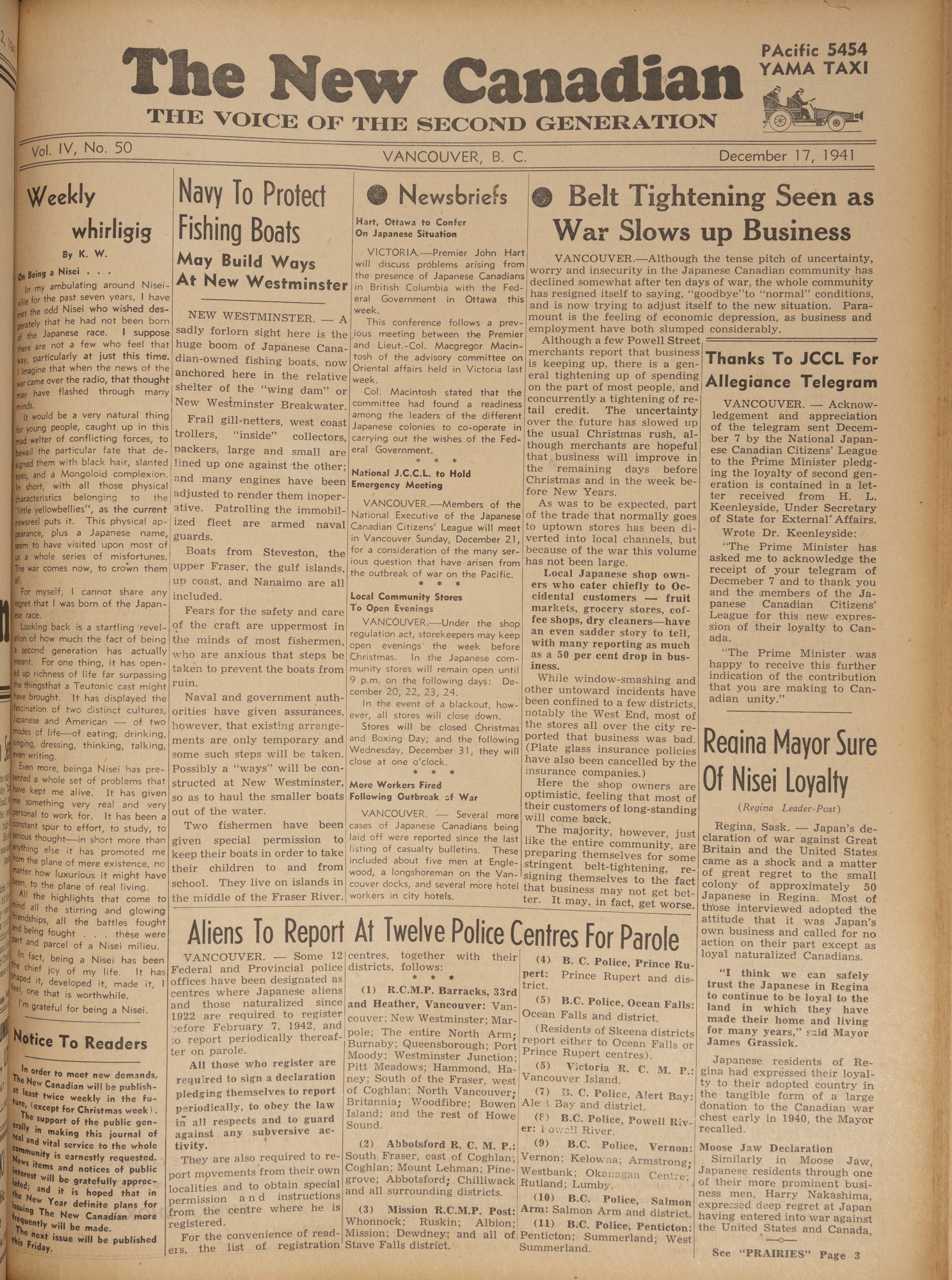
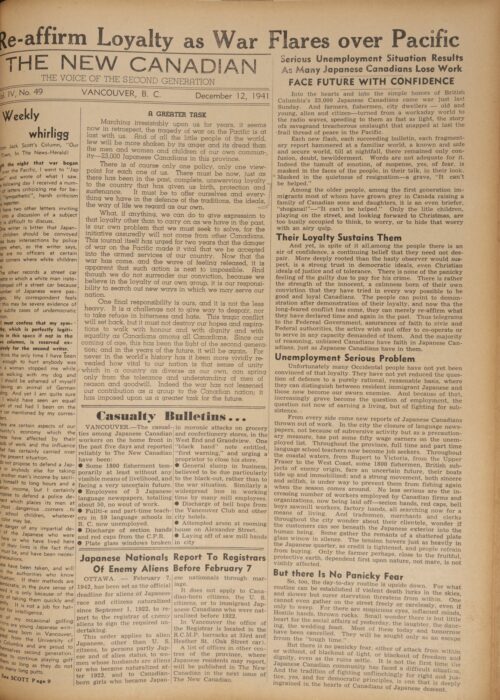
    There were immediate repercussions on the JC community. All three Japanese language newspapers were shut down.  Japanese language schools were closed. 39 respected leaders within the Japanese Canadian community were dragged on December 7 from their homes to the Vancouver Immigration building, then moved to P.O.W. camps in Seebe, Alberta, and Petawawa, Ontario, eventually being incarcerated in July 1942 in the Angler P.O.W. camp in Ontario (Okazaki, 1996). The 39 included a Buddhist minister, manager of a logging company, Japanese language teachers and Japanese language newspaper editors. They were considered “fifth columnists” by the RCMP because they were powerful and influential. 1200 Japanese fishing boats were confiscated; boats were towed to a dispersal centre and many boats were damaged. Licenses of Canadian citizens of Japanese descent were suspended. There were mass firings of hotel, railway, mill, and factory workers throughout the west coast. Homes and businesses owned by Japanese families were vandalized. On December 16, the lantern on the Japanese Canadian War Memorial in Stanley Park was extinguished. The lantern was finally relit 44 years later, on August 2, 1985 by First World War veteran Sergeant Masumi Mitsui (Wakayama, 2005). Everyone of Japanese descent aged 16 years and older, regardless of citizenship, was ordered to register with the Registrar of Enemy aliens.

    “The newspapers were full of reports of Japanese espionage and sabotage on the west coast. ‘Japs go home’ signs appeared.  The Chinese people started wearing ‘I’m Chinese’ buttons to make sure they were not mistaken for Japanese and assaulted.  The declaration of war against Japan caused panic and enabled irrational fear and racism to influence decisions and actions at every level, from local school boards to the federal government in Ottawa (Theurer and Oue, 2021, p. 128)”.

    In January of 1942, nisei at the University of British Columbia who were enrolled in the Canadian Officer Training Corps were ordered to turn in their uniforms. The 72 Japanese Canadian students at UBC, mainly nisei, were urged to leave (Ito, 1984, p. 138).  They were unable to complete their university studies or missed their graduation ceremonies when they were sent away from Vancouver later in 1942.

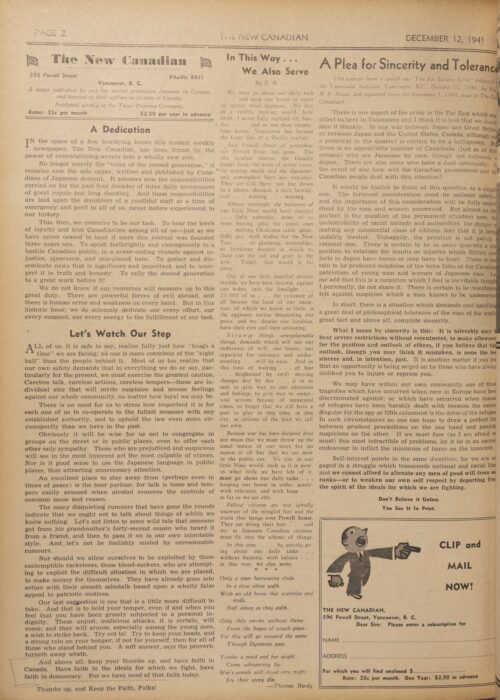
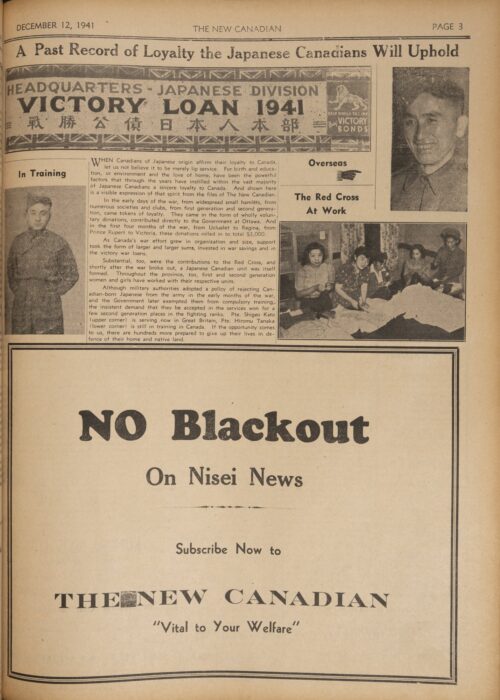
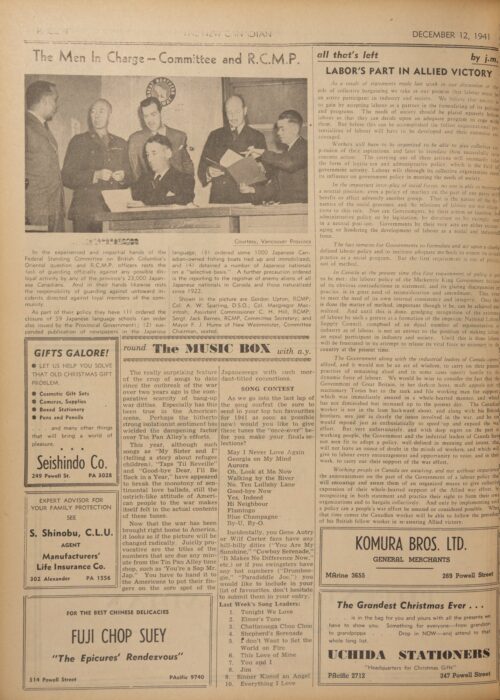
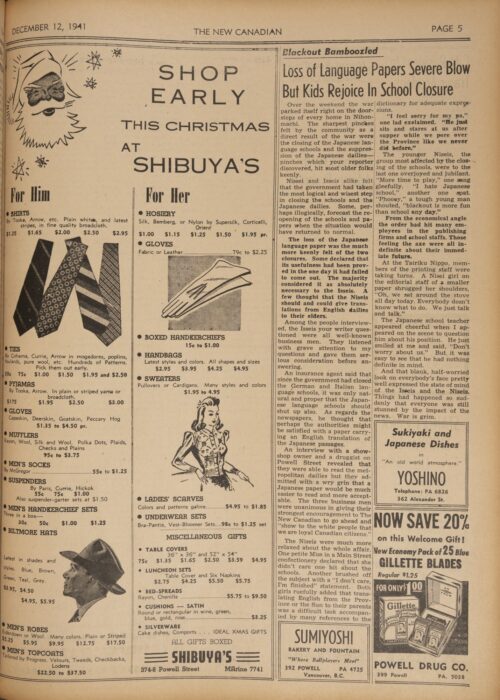
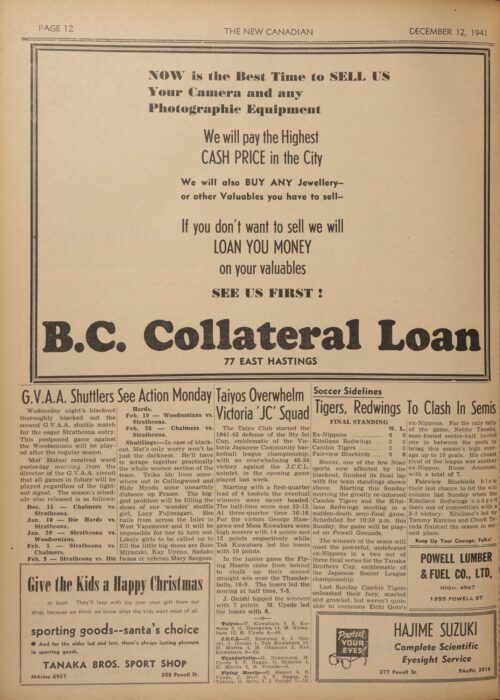
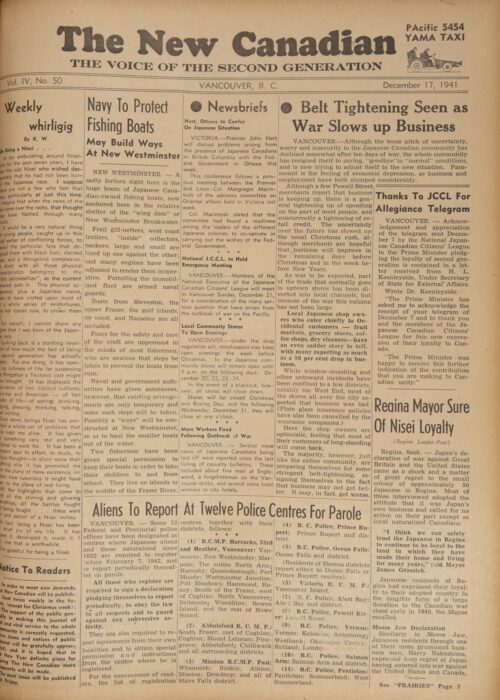
    The New Canadian, 12 December 1941, pages 1-5 and 12. The New Canadian Newspaper Collection. NNMCC 2010.6. The New Canadian, 17 December 1941, page 1. The New Canadian Newspaper Collection. NNMCC 2010.6.

  • Enlistment Denied

    Enlistment Denied

    Many nisei in BC attempted to sign up at recruiting stations at this time. They were turned down with no reason given for the refusal (Theurer and Oue, 2021, p. 119).  Nisei were willing to sacrifice their lives to fight for the very rights and privileges that were being denied to them.

    A Special Committee Meeting was held on October 1, 1940 to discuss whether Japanese and Chinese in British Columbia should be called up for military training.  Dr. H. L. Keenleyside, one of the committee members, stated “the most deplorable aspect of the situation was the way in which the politicians (at various levels) and other people in the public eye persisted in making allegations about illegal entries, espionage, unfair competition and other offences with no substantiation for the accusations (Ito, 1984, p. 115)”.

    In 1940, conscription for Home Defence began in Canada, and nisei began receiving orders to take medical examinations for compulsory military training (Ito, 1994, p. 108).  Although medical examinations were completed, no call for training followed (Adachi, 1976, p.188, Broadfoot, 1977, p. 298).  The reason behind the hesitation to permit nisei to enlist was the franchise.  Vancouver City Council, led by Alderman Halford Wilson, had asked Ottawa to ensure that nisei who enlisted in the Canadian forces would not get the franchise (Adachi, 1976, p. 189, Ito, 1984, p. 108).

    On January 8, 1941, Prime Minister King announced that a special investigating committee had recommended that persons “of the Japanese race” be exempted from military service. The decision was made, said the Prime Minister, based not on “mistrust of their patriotism” but on the dangerous anti-Japanese hostility in British Columbia (Adachi, 1976, p. 189).  Again, the JCCL pledged cooperation. Many nisei were disappointed at being turned down again. The exemption isolated Japanese Canadians even further from the mainstream of Canada.  Protests from nisei organizations were met with the statement from the Department of External Affairs that Japanese were being excluded to prevent unspecified “unfortunate incidents” (Adachi, 1976, p. 193).

    Nisei in BC could see that relations between Japan and Canada were becoming increasingly frayed.  They anticipated more surveillance and restrictions on their movements, but they naively believed that their Canadian citizenship would protect them from further harm.

  • Start of the Second World War

    Start of the Second World War

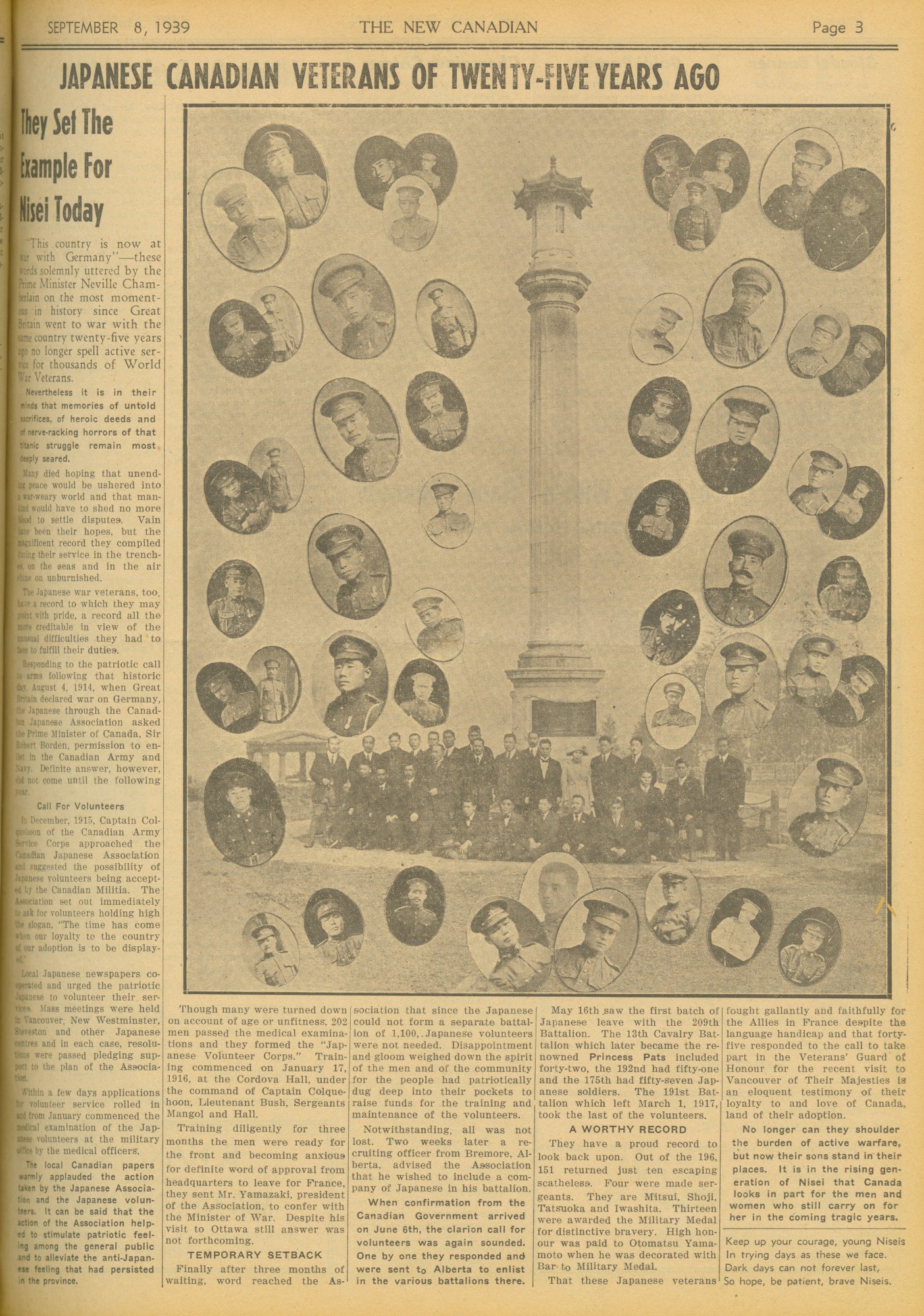
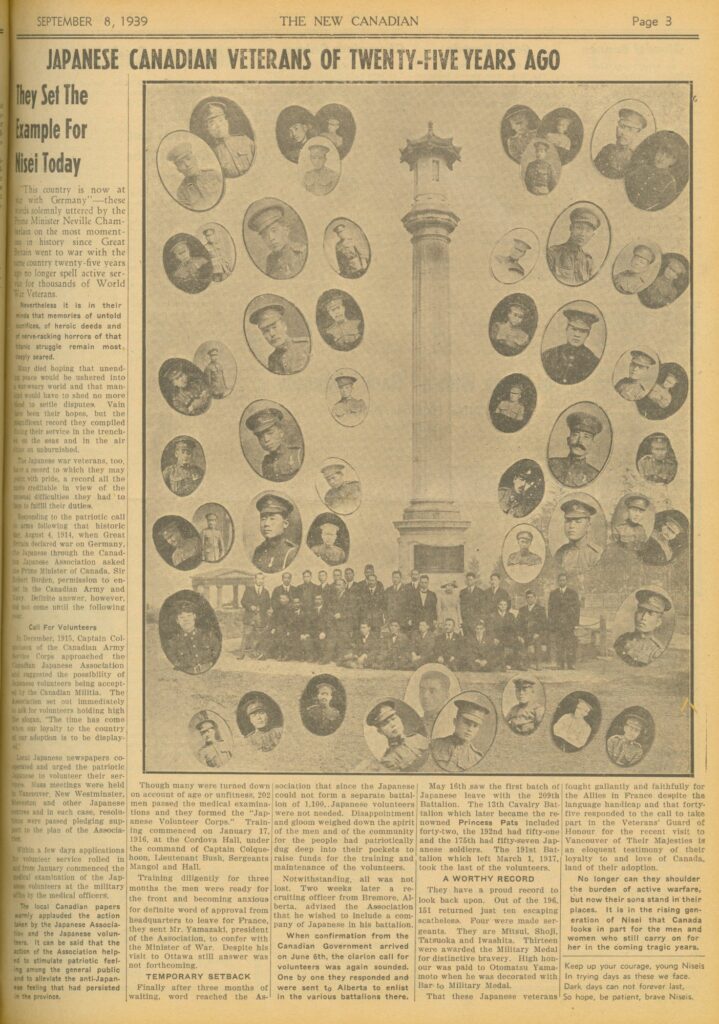
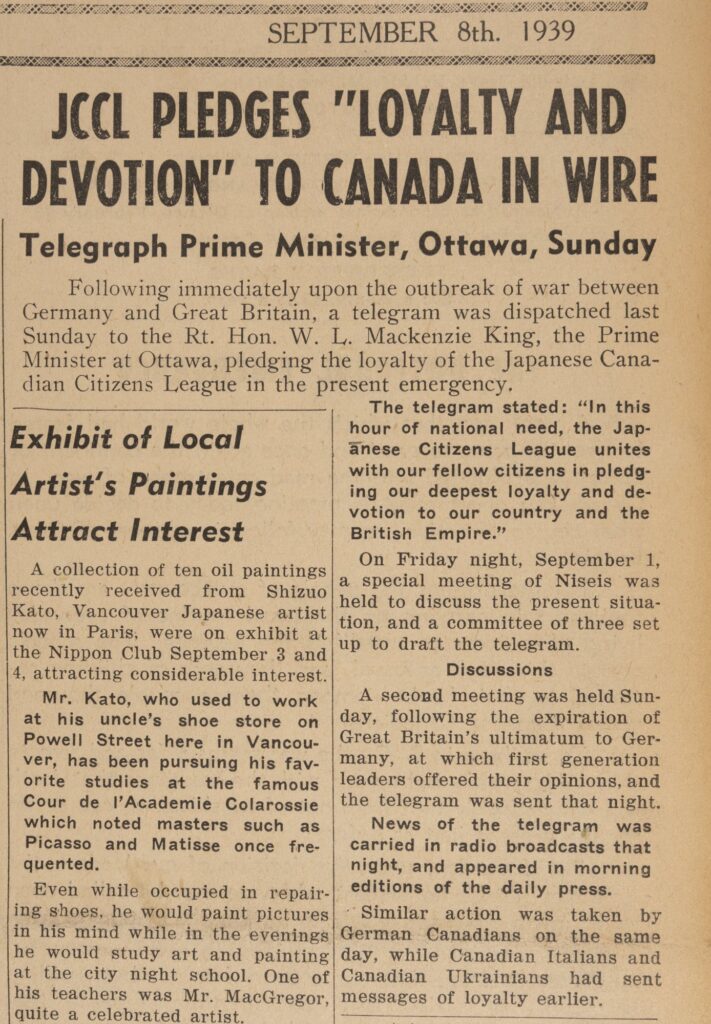
    In 1939, when Canada declared war against Germany, the New Canadian newspaper devoted a full page covering the issei who had fought for Canada during the First World War. Nisei were reminded of the sacrifices made, including the 54 who did not return (The New Canadian, September 8, 1939)”.

    Newspaper article from The New Canadian, Japanese Canadian Veterans of Twenty-Five Years Ago, 8 September 1950, page 3. The New Canadian Newspaper Collection. NNMCC 2010.6.

    All 45 members of Vancouver’s Canadian Legion Japanese Branch #9 offered their services for home guard duty during wartime (The New Canadian, April 15, 1939).

    Newspaper article from The New Canadian, JCCL Pledges “Loyalty and Devotion” to Canada in Wire, 8 September 1939, page 1. The New Canadian Newspaper Collection. NNMCC 2010.6.
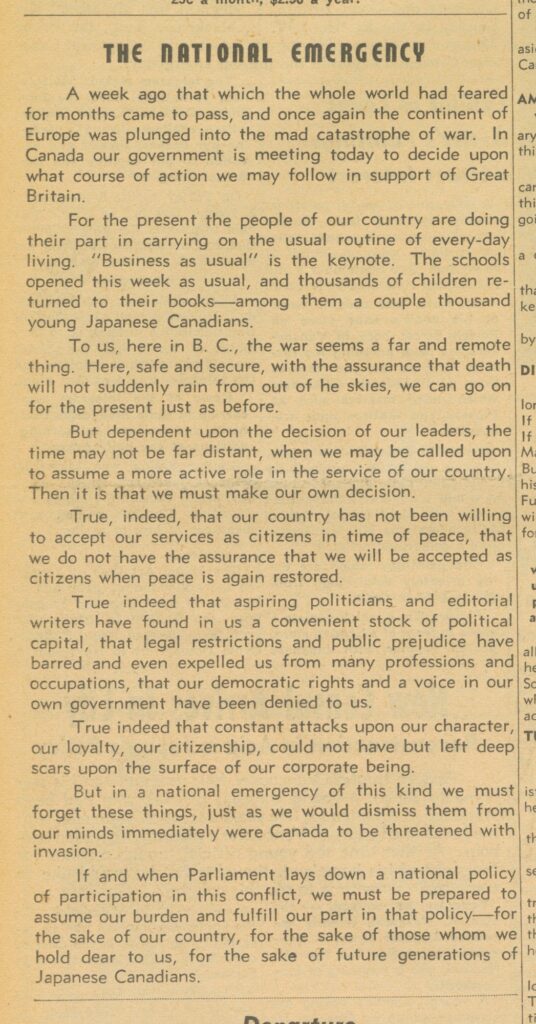
    Newspaper article from The New Canadian, The National Emergency, 8 September 1939, page 2. The New Canadian Newspaper Collection. NNMCC 2010.6.

    J.S. Woodsworth, leader of the Co-operative Commonwealth Federation party (CCF, precursor to the New Democratic Party), said in the House of Commons, responding to their offer: “I would have been almost ashamed, had I been Prime Minister, to read a telegram from the Japanese Canadians pledging their loyalty, when we refuse to Canadian-born Japanese the same treatment that we give to other Canadians (Adachi, 1976, p.188)”.

    Roy Matsui recalled some of his non-Japanese friends in Vancouver becoming increasingly unfriendly as the war progressed. (Sedai interview, August 16, 2010, JCCC, 36:40)

    On September 2, a goodwill flight was made by a Japanese plane, the Nippon, over Vancouver. It was making the longest round-the-world flight at the time. The commander of the Royal Canadian Air Force Western Command tried to discourage the flyover, claiming it was intended to stir up patriotism among issei and to remind the Japanese in Canada of Japan’s air power (Ito, 1984, p. 106).

    In the summer of 1940, Commissioner Mead of the RCMP observed that Canada would likely experience more anti-Japanese activity than Japanese activity against it (Theurer and Oue, 2021, p. 120).

    Alderman Halford Wilson, on the other hand, warned that highly trained Japanese soldiers could mass along the west coast, causing “trouble and possible disaster (Theurer and Oue, 2021, p. 120)”.

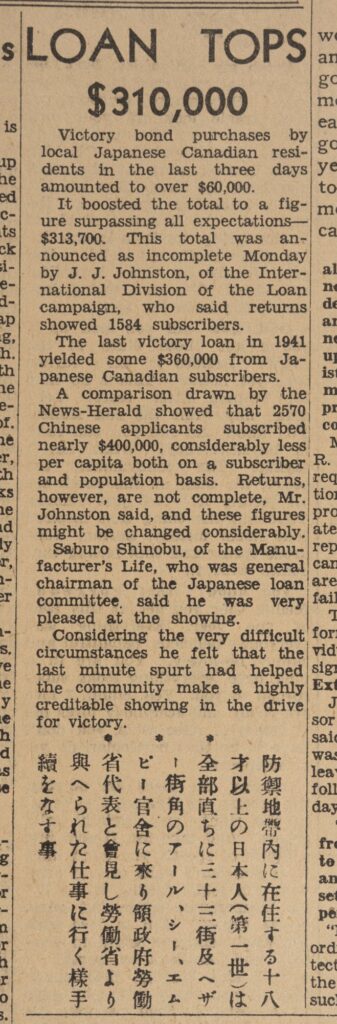
    Newspaper article from The New Canadian, Victory Loan Tops $310,000, 9 March 1942, page 1. The New Canadian Newspaper Collection. NNMCC 2010.6.

    Canada began a War Loan Drive in 1940, which was supported by Japanese communities in BC. By the summer of 1941, $340,000 had been raised (Adachi, 1976, p. 188) to support Canada’s war effort.  In March 1942, the amount raised by the Japanese community for that year had already reached $310,000.

    The intelligence branch of the Royal Canadian Air Force, Western Command issued a report in June 1941 on the Japanese problem in British Columbia. It was concerned about war starting in the Pacific.  The report was full of pessimism and exaggerated warnings about the behaviour of the nikkei in British Columbia, with no evidence supplied. The report also made no mention of the virulent anti-Japanese attitudes that had been building up for years in Canada.

    “It seems reasonably certain that Hitler has promised British Columbia to the Japanese when the time comes to carve up Canada…

    “In the Prince Rupert-Skeena River area the Japanese were for a time cocky with the increasing German successes.  Of late this cockiness has died down in proportion to the increase of construction of forts and bases and other defence preparations there”.

    One part of this report was implemented later that year, when Japanese forces attacked Pearl Harbor – the report had recommended that 50 “agitators and suspected leaders” from the Japanese community in British Columbia be interned at the declaration of war (Ito, 1994, p. 214).